

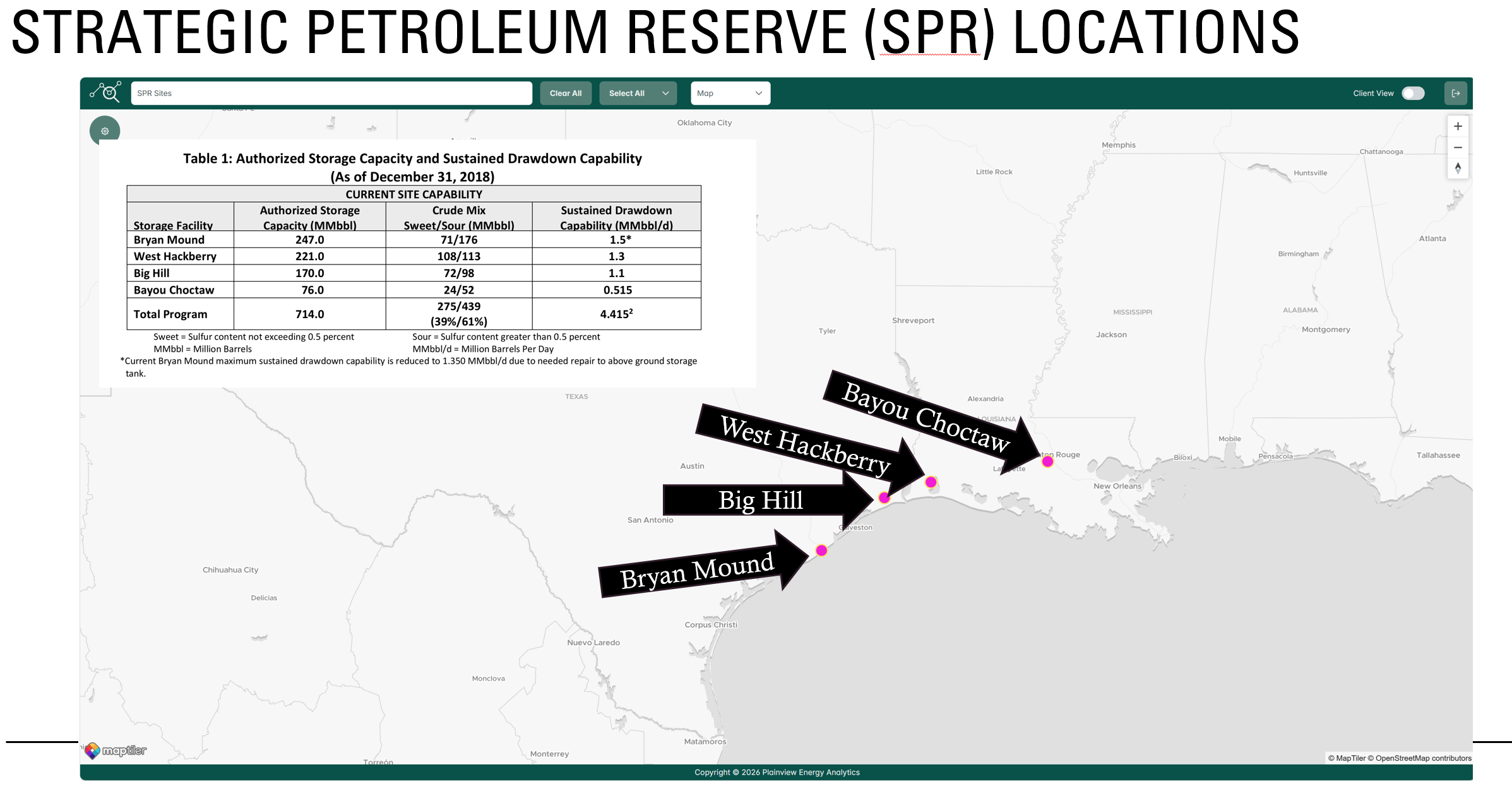
The U.S. Strategic Petroleum Reserve (SPR) consists of over 700 million barrels of crude oil storage capacity in four major underground storage facilities along the Gulf Coast, providing critical emergency crude oil supplies. The largest is Bryan Mound near Freeport, Texas, with 247 million barrels capacity and a maximum drawdown rate of about 1.5 million barrels per day. West Hackberry in Louisiana holds 221 million barrels, Big Hill offers 170 million, and the smaller Bayou Choctaw near Baton Rouge has 76 million barrels capacity. These sites primarily store a mix of sweet and sour crude in massive underground salt dome caverns located 2,000 to 4,000 feet below the surface, rather than conventional above-ground tanks.
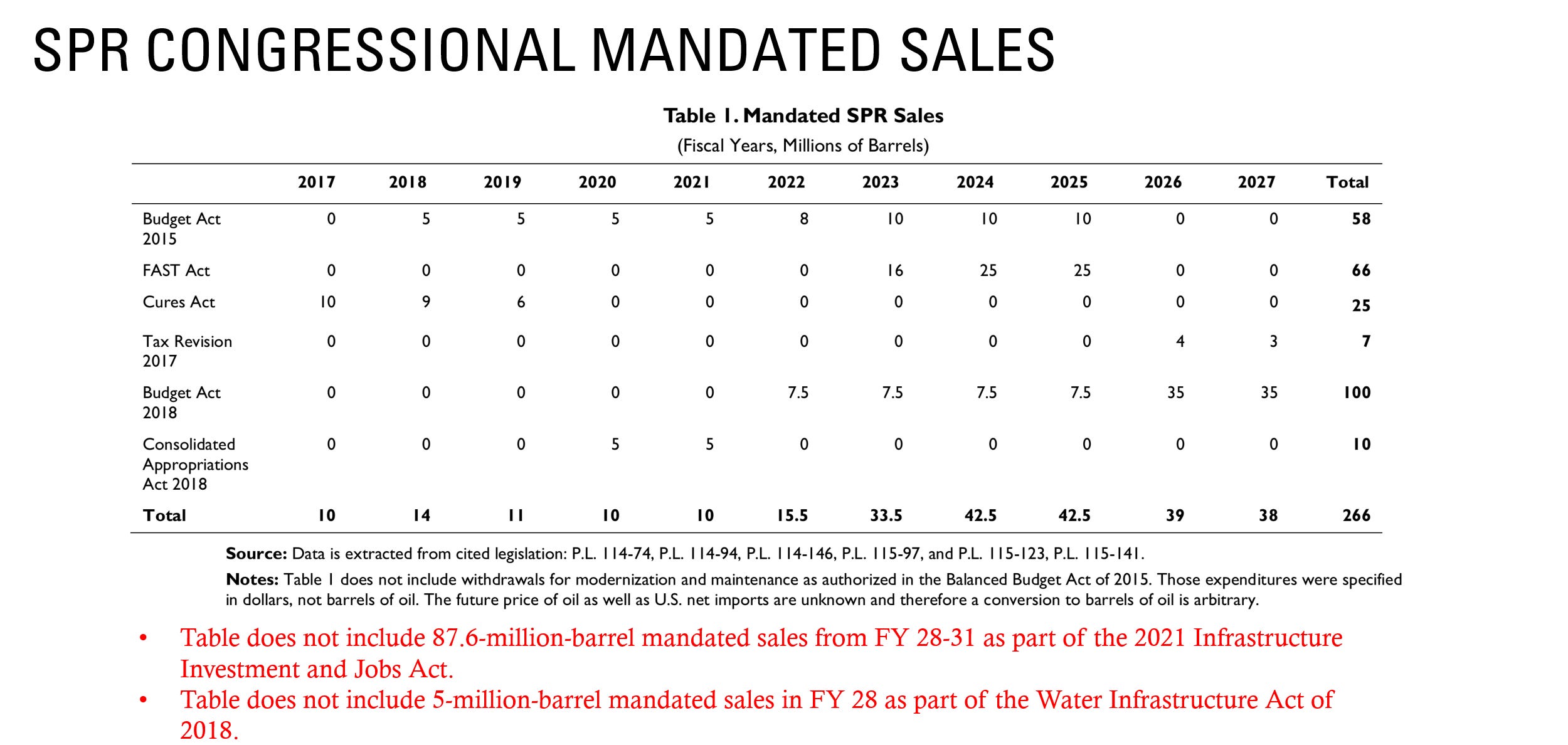
Historically, the SPR reached near-full capacity of approximately 700 million barrels about a decade ago. Levels have declined steadily due to congressionally mandated sales attached to various budget and infrastructure bills across multiple administrations (see table below).
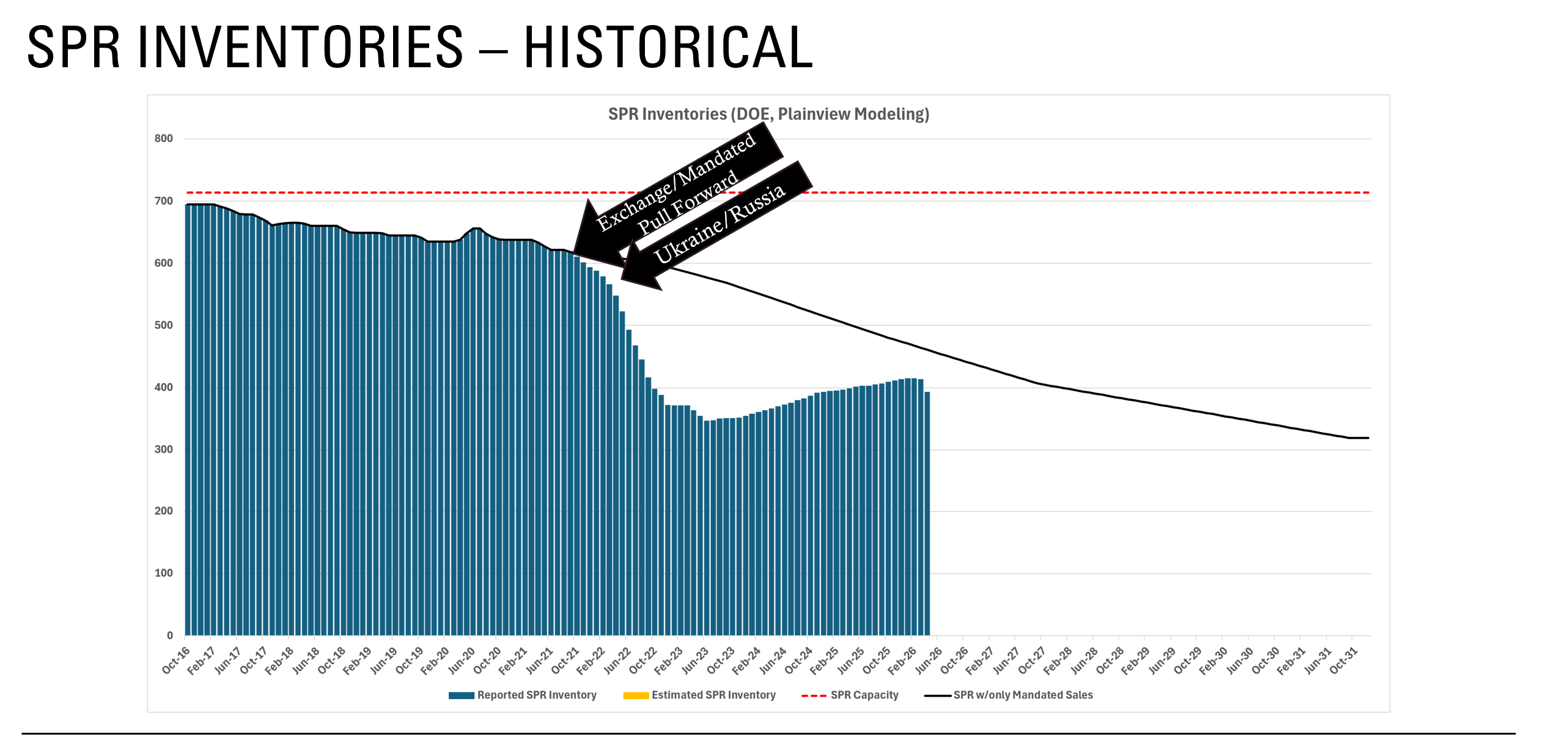
These sales effectively turned the SPR into a budgetary tool to help offset spending or tax measures. A significant acceleration occurred in 2021-2022 during the Biden administration, when emergency sales in response to the Russia-Ukraine war reduced inventories sharply from over 600 million to below 400 million barrels. Some of these sales were pulled forward from previously scheduled mandates (black line on graph below), and the administration later conducted some buybacks at lower prices, generating a profit for the U.S. Treasury.
In response to the Iran conflict in 2026, the Trump administration launched an oil exchange program rather than outright sales. Through multiple Requests for Proposals (RFPs), the Department of Energy is releasing over 170 million barrels for delivery primarily during the summer driving season (April-August 2026). In return, market participants must repay the oil from late 2026-2029 with a 18-24% premium in kind. This structure leverages market backwardation to increase SPR inventories beyond the congressionally mandated baseline levels (black line vs. yellow bars in graph below).
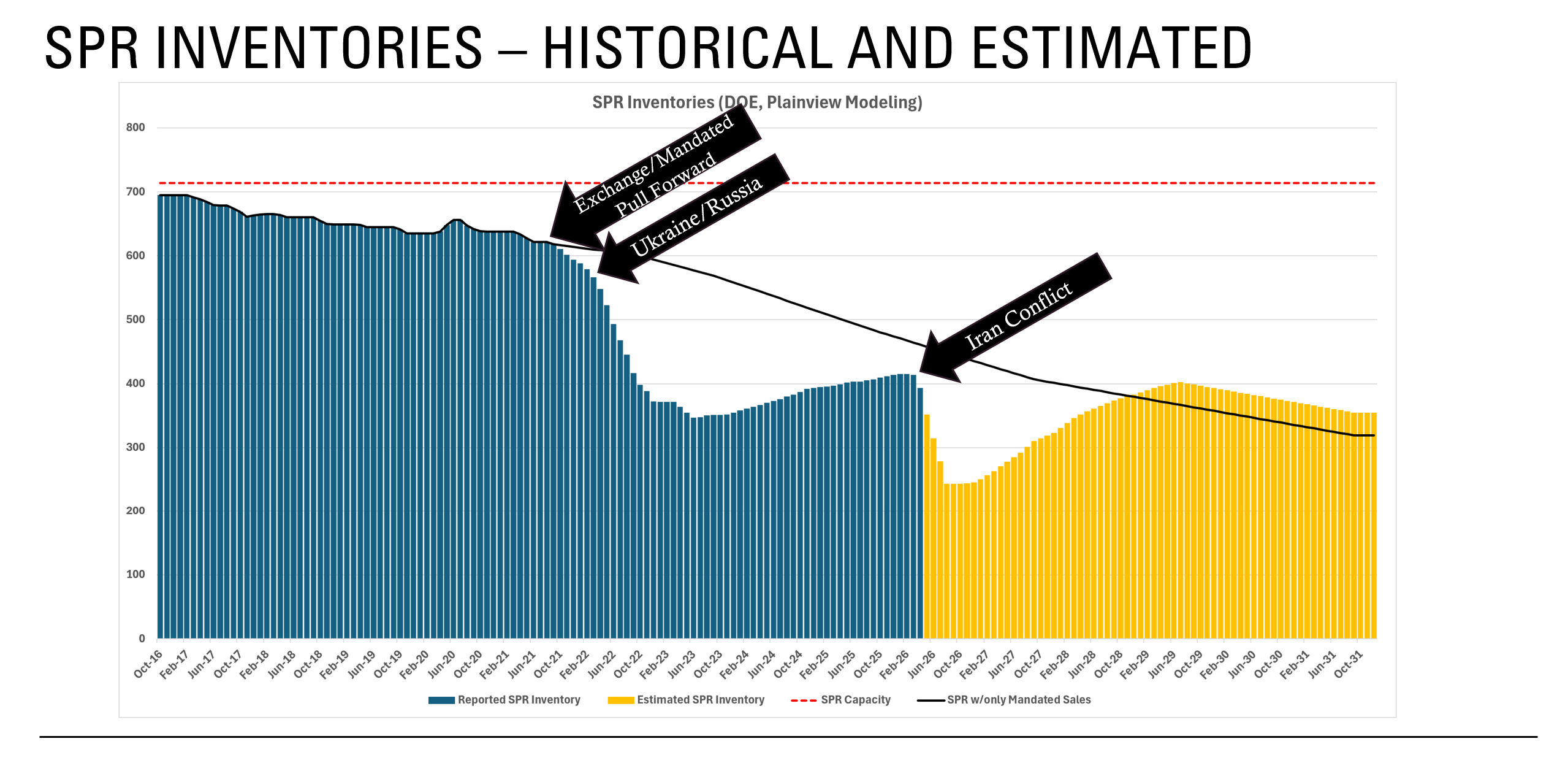
The current drawdown is helping mitigate oil price spikes amid global supply concerns, but it will leave the reserve at relatively low levels by late 2026. Refills starting in November of that year could provide supportive buying pressure in the physical market as participants purchase oil to meet their repayment obligations. While the exchange approach offers a mechanism to rebuild stocks higher than pure congressionally mandated drawdowns would allow, sustained low SPR levels still carry energy security risks if new disruptions emerge before full replenishment. Market participants should closely monitor the cadence of both the sales and subsequent returns under the exchange program, as it could have significant impacts on commodity and equity prices as well as U.S. and foreign geopolitical strategy.


