June 10th RFP Review: An Additional 40 Million Barrels Incoming
The Department of Energy (DOE) has issued what may be its final Request for Proposal (RFP) for crude oil exchanges from the Strategic Petroleum Reserve (SPR) this year, offering an additional 40 million barrels. If fully awarded, this would exhaust the previously announced 172-million-barrel maximum allocation. The withdrawal timeline spans from July through September, with crude drawn directly from two primary Gulf Coast sites: 15 million barrels from Bryan Mound, which is the largest SPR location, and 25 million barrels from Big Hill.
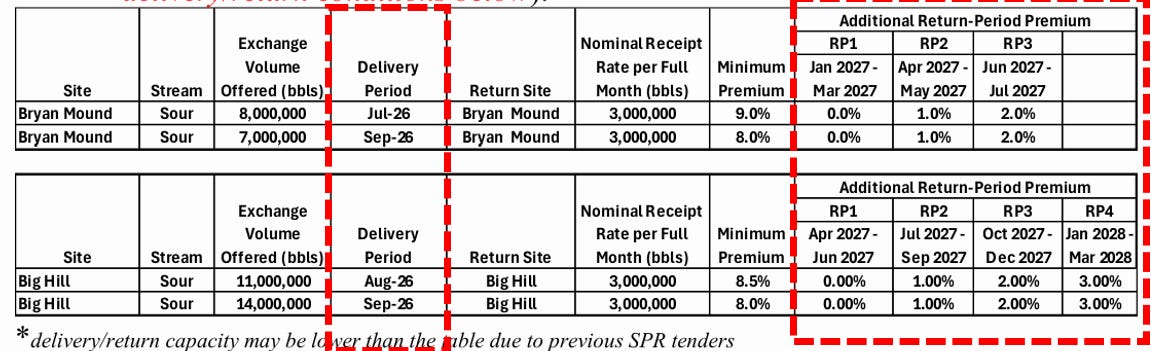
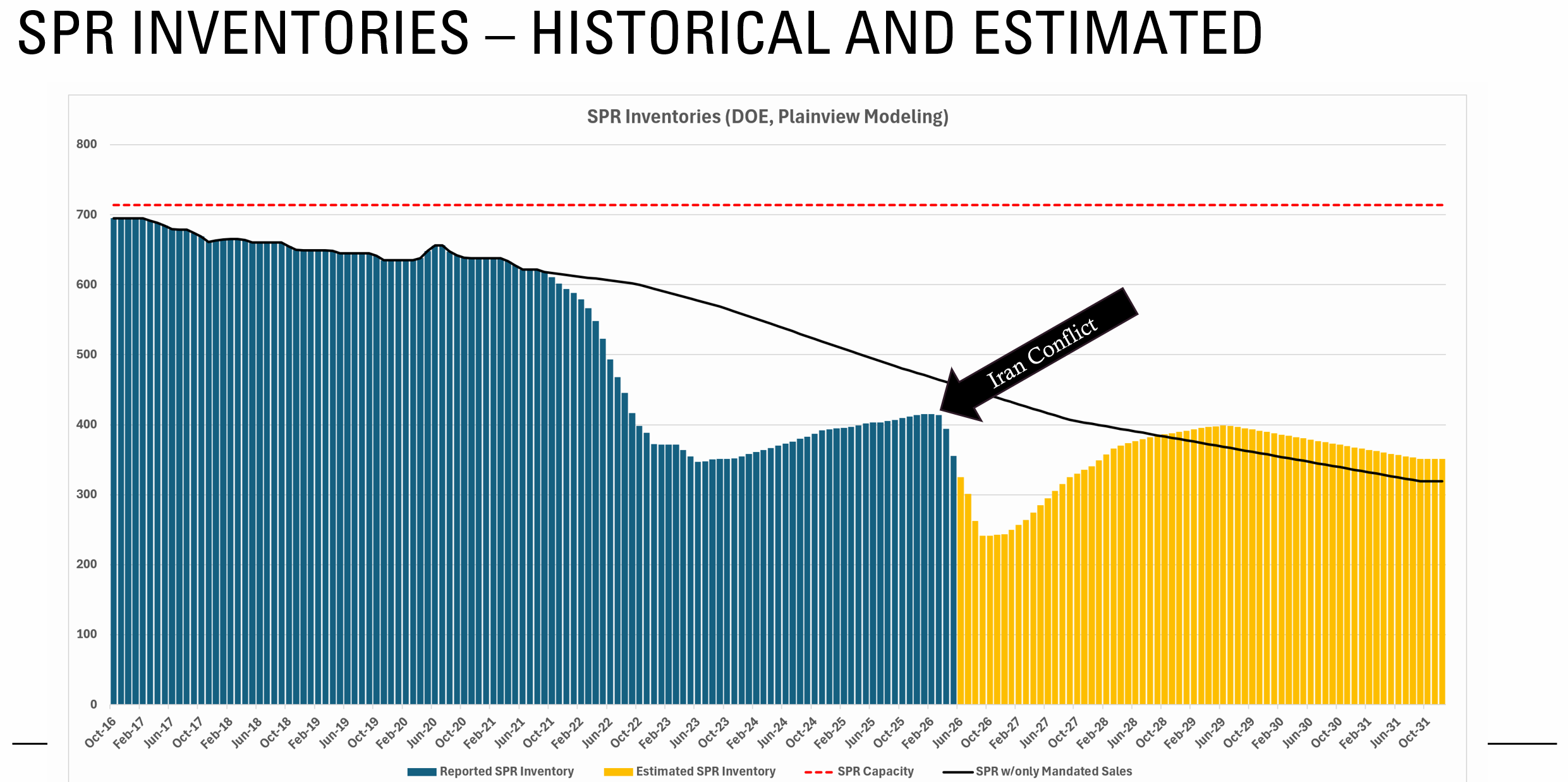
The physical barrels from this new tranche will exit the underground caverns during the summer months, with the replacement barrels scheduled to return primarily throughout 2027, stretching into the first quarter of 2028. This temporary drawdown creates a projected logistical “bottom point” for SPR inventory levels in September (see below graph). Crucially, the return structure requires that the oil be replenished at an 8% to 10% premium, which ultimately ensures a higher total volume of crude returns to the reserve than would have existed under standard, non-exchange congressional sales.
Infrastructure Deep Dive: Big Hill and West Hackberry
Like all the SPR sites, the logistics networks serving the West Hackberry facility in Louisiana and the Big Hill site in Texas utilize DOE-owned pipelines.
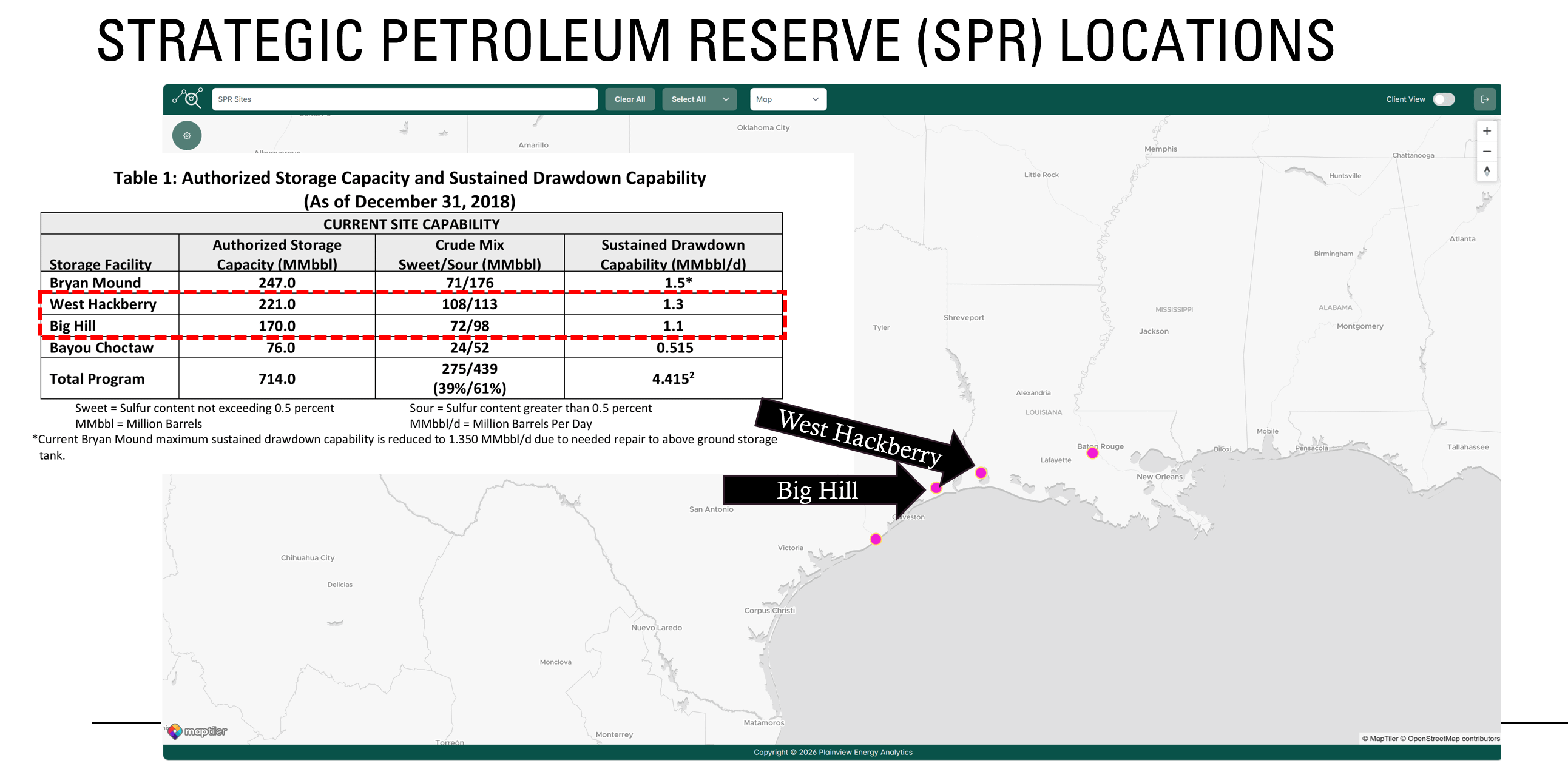
For the Big Hill facility, which boasts a total storage capacity of 170 million barrels across its subterranean salt caverns, crude oil distribution funnels primarily northward through a single proprietary bi-directional pipeline. This dedicated line terminates directly into Energy Transfer’s Nederland Terminal (see figure below). From this specific nexus point, the crude oil can be seamlessly directed across marine export docks to global markets or routed via third-party networks to local refineries, including Exxon Beaumont, Total Port Arthur, Motiva, and Valero Port Arthur.
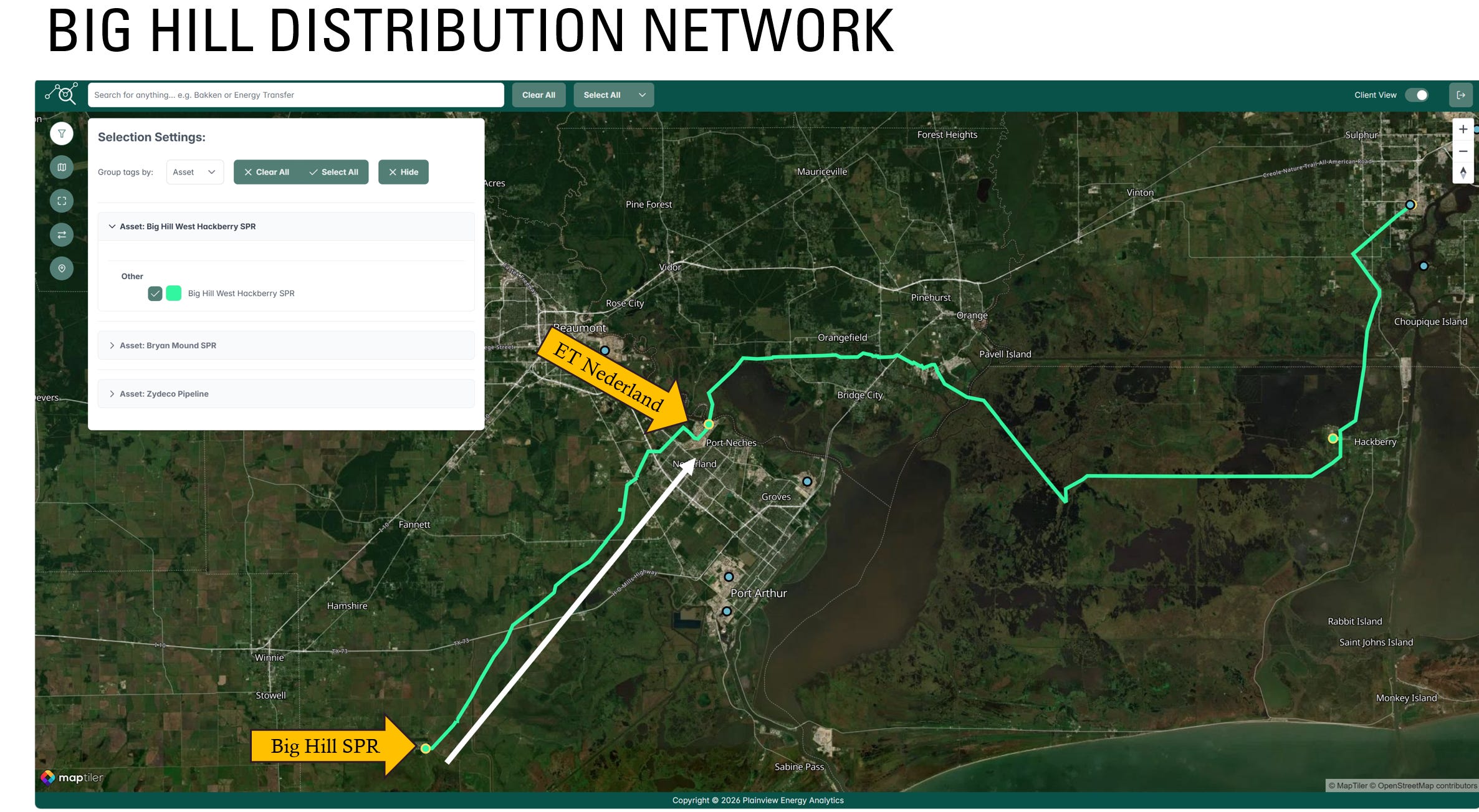
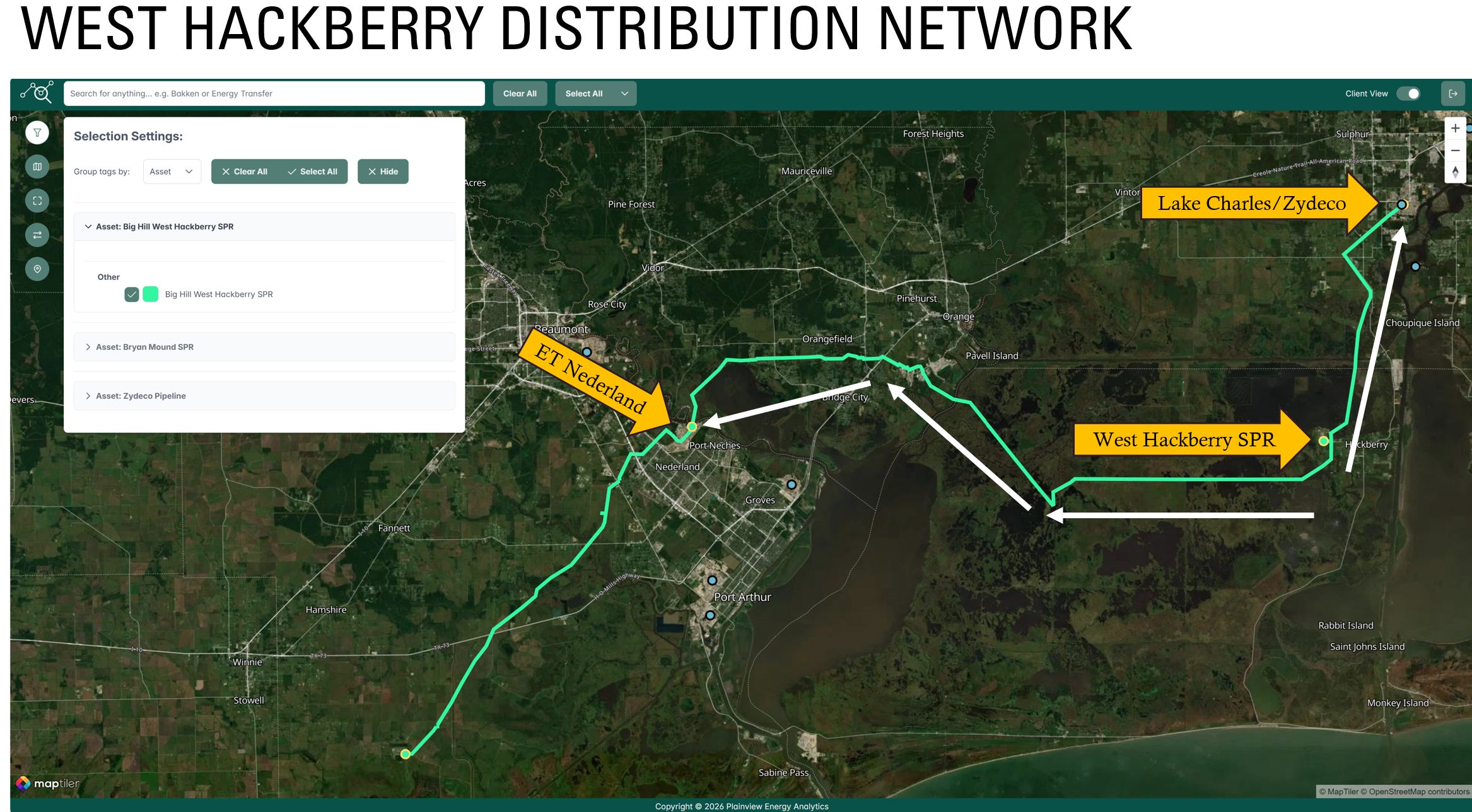
Further east, the West Hackberry site holds a 221 million-barrel capacity, storing a strategic mixture of both sweet and sour crude. West Hackberry is uniquely supported by two independent, bi-directional DOE pipelines that afford it dual-routing flexibility. Barrels can flow directly west to tie into the same Energy Transfer Nederland Terminal or migrate north into the Lake Charles refining hub to supply major refineries operated by CITGO and Phillips 66. Additionally, West Hackberry features a key interconnect with the Zydeco pipeline network, allowing operators to push crude deeper into the broader Louisiana refining matrix.