Why the June 2026 DOE Crude Oil RFP Failed: Rapidly Compressing Calendar Spreads
The Department of Energy’s (DOE) June 10, 2026, Request for Proposal (RFP), which offered 40 million barrels of crude oil from the Strategic Petroleum Reserve (SPR) sites at Bryan Mound and Big Hill, saw an incredibly weak market response. When the awards were finalized, only 0.5 million barrels of the 40 million offered were actually awarded to market participants. The current exchange program relies on a structure tailored heavily toward crude oil marketers, who borrow near-term barrels and agree to return them at a later date, along with an additional premium, essentially acting as interest paid in additional oil.
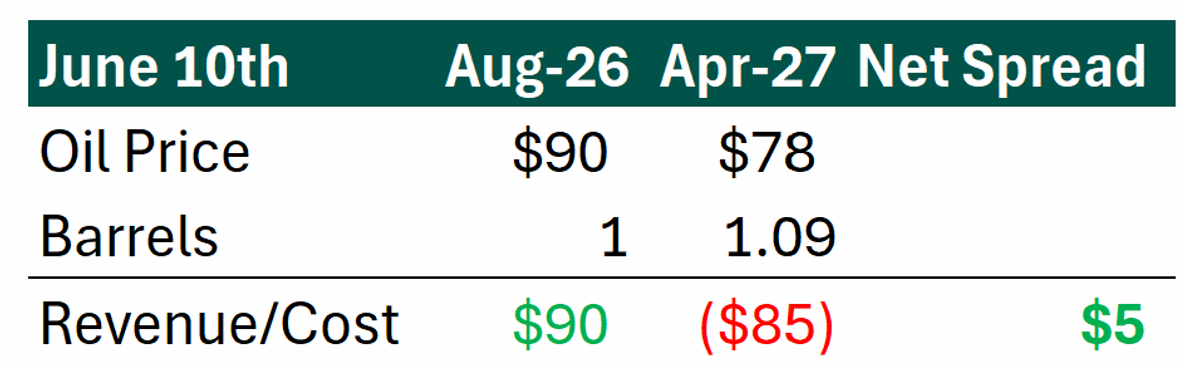
The extreme shortfall in awards for the June 10th RFP was not an administrative failure, but rather a direct result of rapid shifts in the global crude forward price curves. When the RFP launched on June 10, near-term August oil contracts traded at $90 per barrel, while mid-2027 contracts sat around $78, creating an attractive $5 per barrel net profit margin for marketers even after factoring in the 9% return premium (see table below).
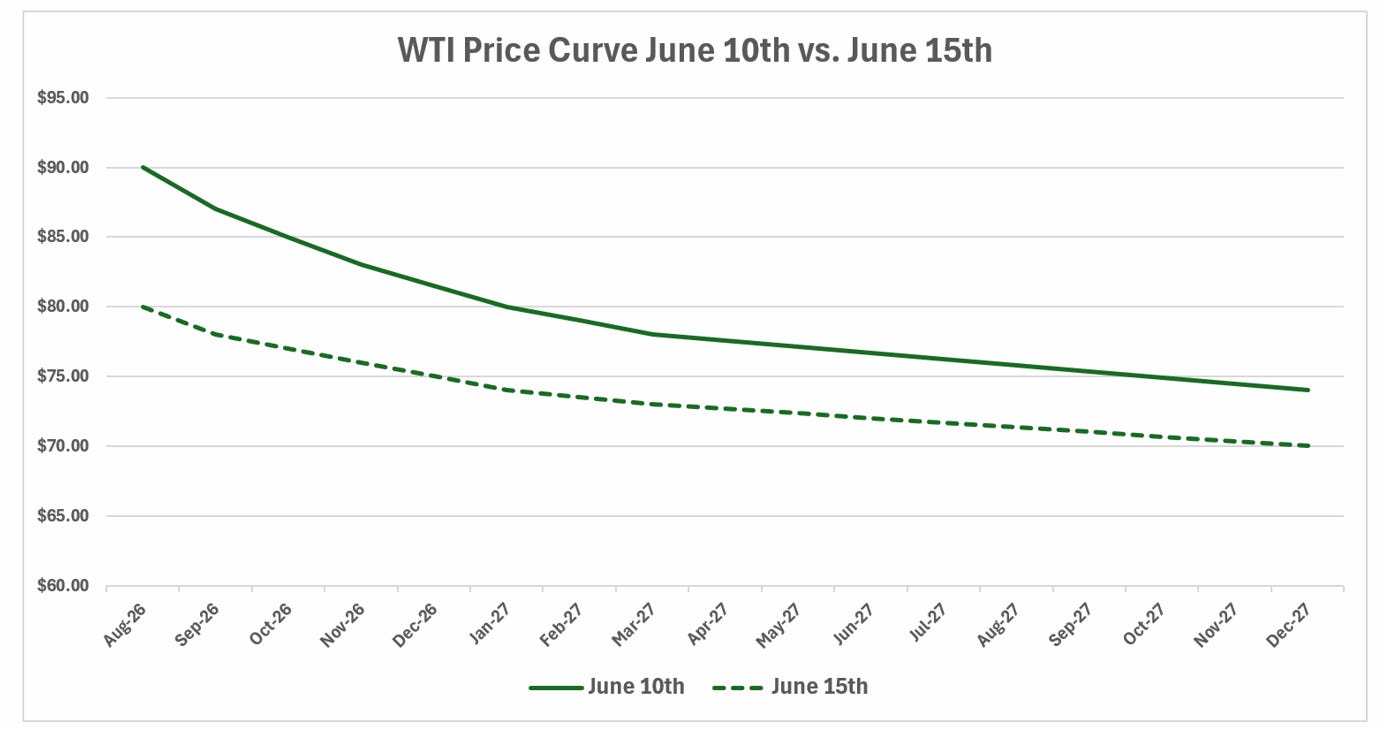
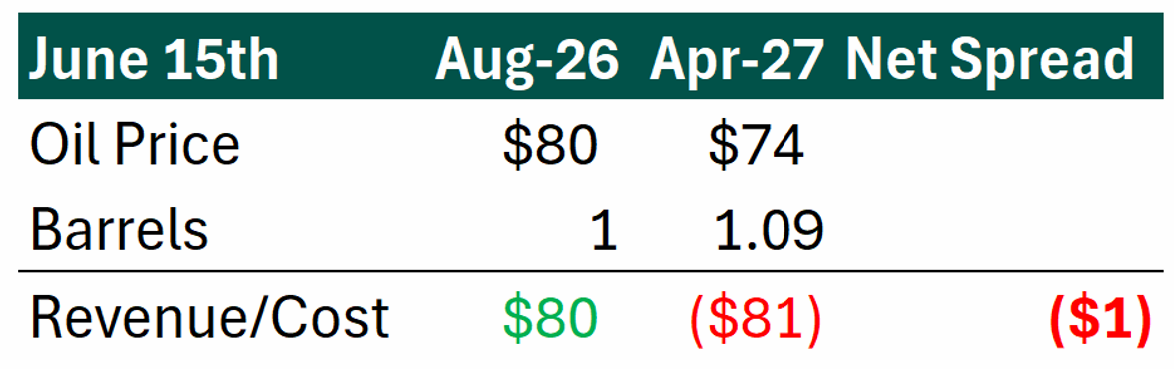
However, by the time bids were due on June 15, near-term crude prices collapsed to $80 per barrel while back-end prices held firmer (see graph below). This severe flattening of the curve completely erased the financial spread, leaving marketers with no financial incentive to participate in the exchange (see table below).
Bayou Choctaw SPR Infrastructure: Mapping Louisiana’s Deep Crude Connectivity
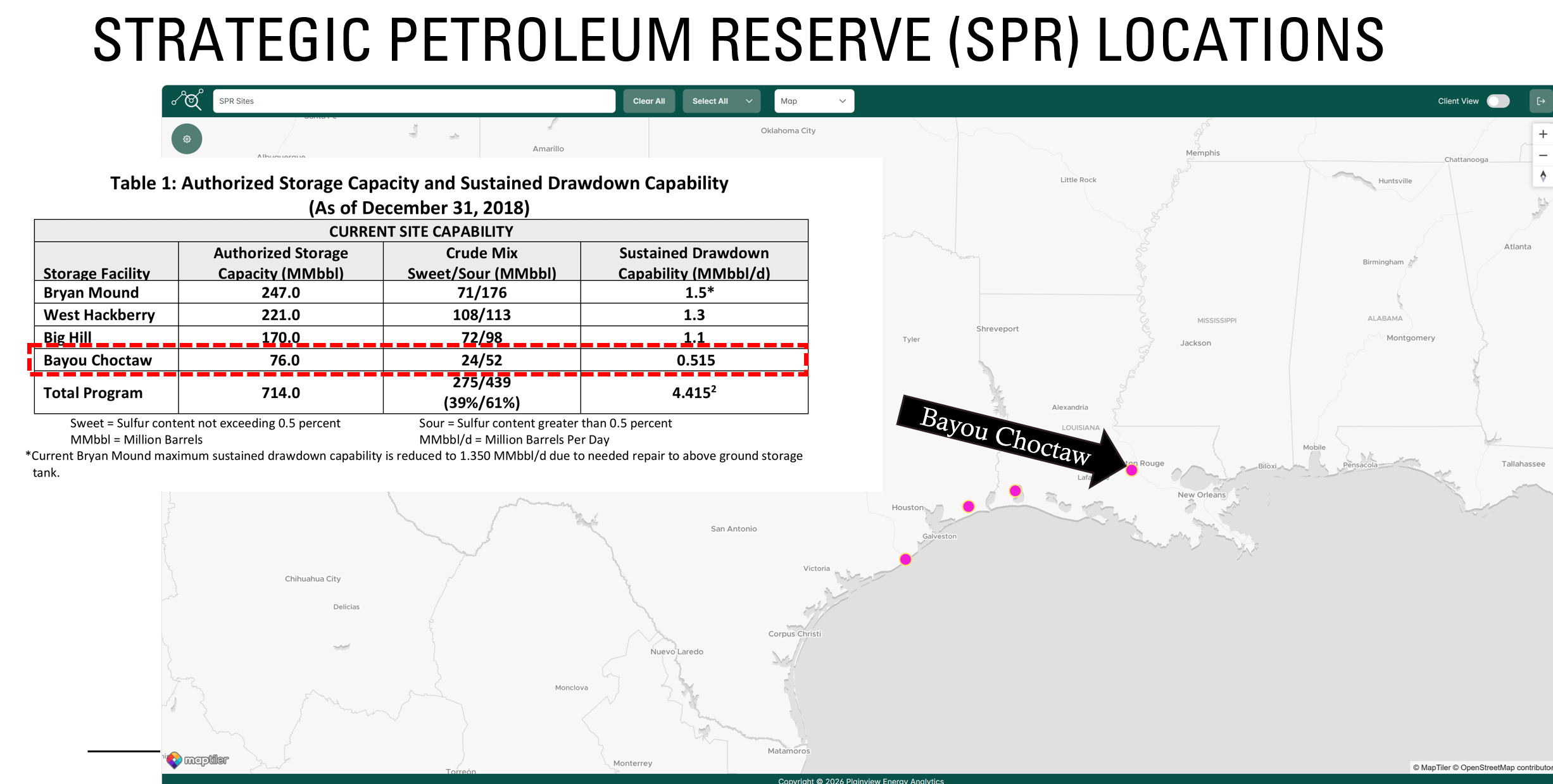
As the smallest of the primary Strategic Petroleum Reserve facilities, the Bayou Choctaw storage site in Louisiana holds a capacity of 76 million barrels. Situated southwest of Baton Rouge, its geographic layout offers exceptional distribution capabilities across the Gulf Coast and global markets.
The backbone of Bayou Choctaw’s immediate infrastructure is the DOE-owned, 36-inch bi-directional Red Stick Pipeline. Currently under a 20-year lease to Exxon running through 2040, this pipeline serves a dual purpose, moving commercial barrels up to Placid and Exxon’s Baton Rouge area refineries during standard operations and serving as the primary highway to draw down or replenish SPR reserves during releases/buybacks.
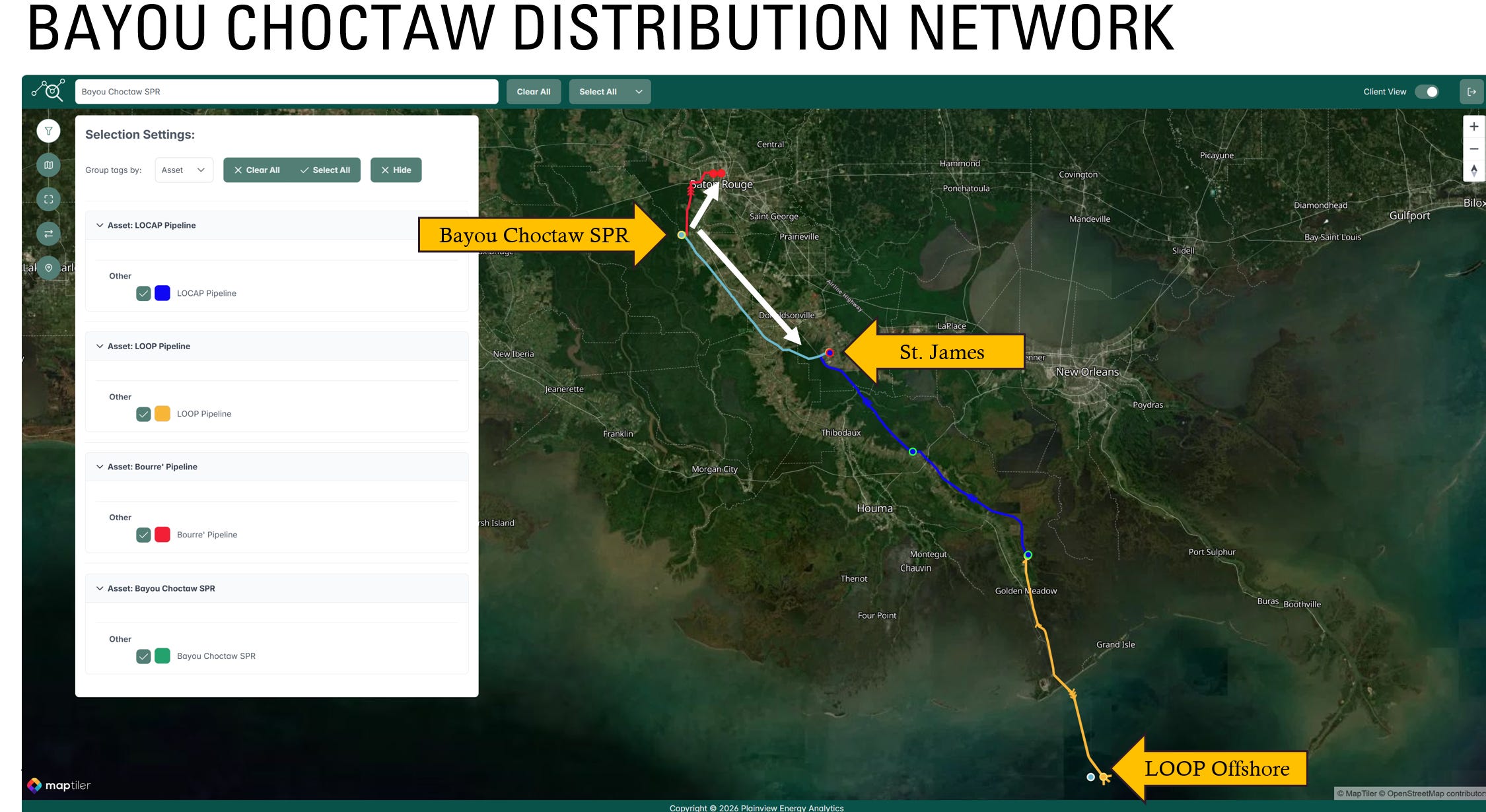
When the DOE mandates an SPR drawdown from Bayou Choctaw, crude flows south via the Red Stick Pipeline directly into the massive St. James Storage Hub along the Mississippi River (light green line in figure below). DOE infrastructure at St. James features two dedicated marine docks managed under the Exxon lease, giving the government direct access to load marine vessels or export crude globally via ocean-going tankers. Furthermore, Bayou Choctaw directly connects to the north via Placid’s one-way Bourre’ pipeline which provides access to Baton Rouge refineries (red line). For broader domestic distribution, the St. James hub links directly into major third-party systems like the LOCAP (dark blue line) and LOOP (orange line - Louisiana Offshore Oil Port) pipelines, allowing Bayou Choctaw reserves to directly or indirectly tie into nearly every refinery in Louisiana or load onto Very Large Crude Carriers (VLCCs) at LOOP’s deepwater terminal.