

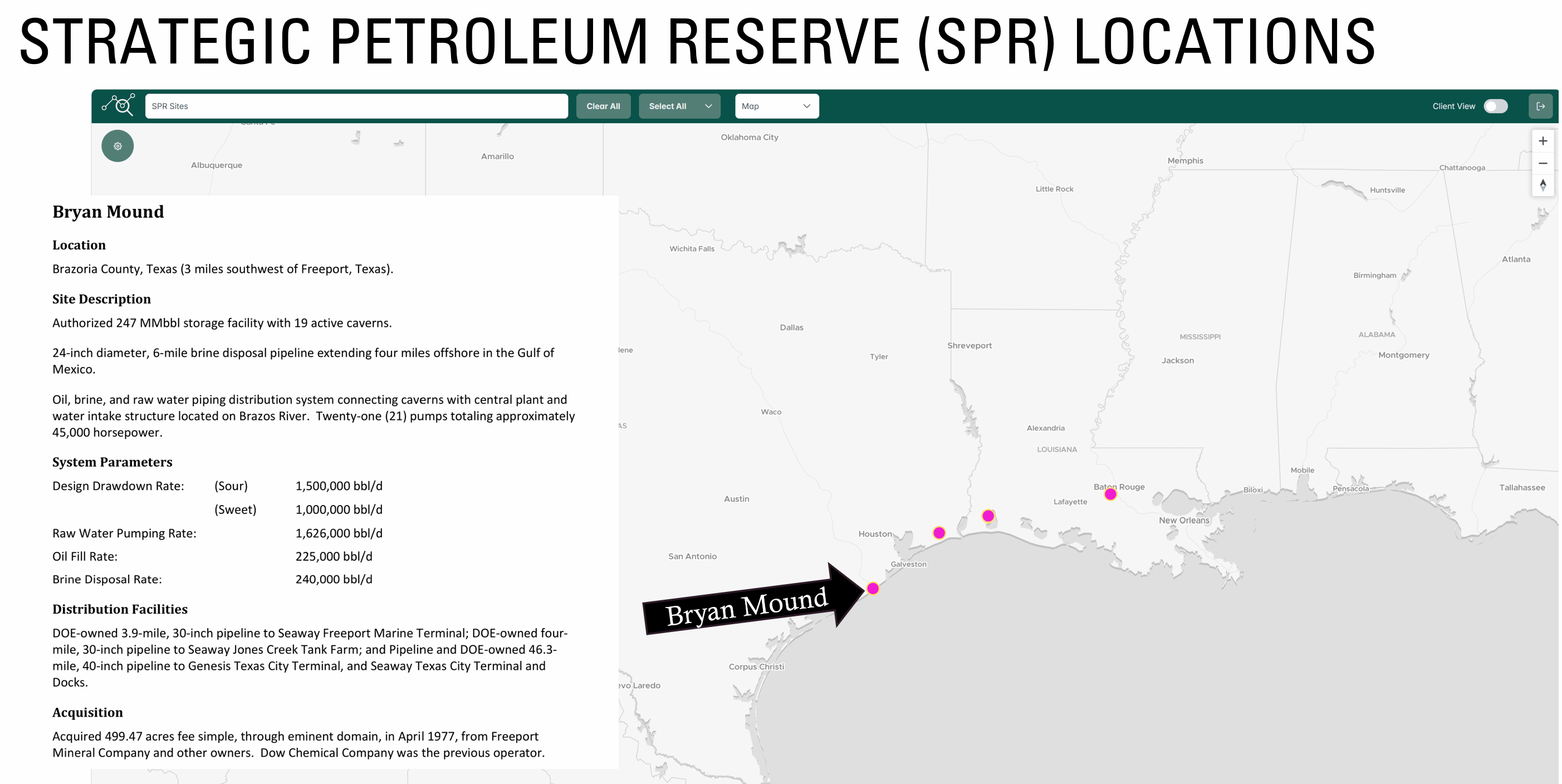
The Strategic Petroleum Reserve (SPR) relies on a complex network of underground salt caverns rather than traditional above-ground storage tanks to secure America’s emergency oil supply. Located southwest of Houston in the Freeport, Texas area, the Bryan Mound facility stands as the largest site within this system, boasting a storage capacity of 247 million barrels. Utilizing 19 active underground caverns, Bryan Mound can draw down up to 1.5 million barrels per day (bpd) during emergency releases, though refilling the caverns is a notably slower process, capped at a daily rate of 225,000 barrels.
At the heart of Bryan Mound’s distribution network are pipelines owned directly by the U.S. Department of Energy (DOE). In a unique public-private arrangement, Exxon holds a long-term lease on these pipelines extending through 2030, integrating them into its onshore Hoover pipeline system (HOOPS) to transport offshore oil to Texas City and Jones Creek. However, this lease includes a critical caveat: during an official SPR drawdown, the DOE receives absolute priority service, reclaiming use of the infrastructure to distribute emergency crude to the market.
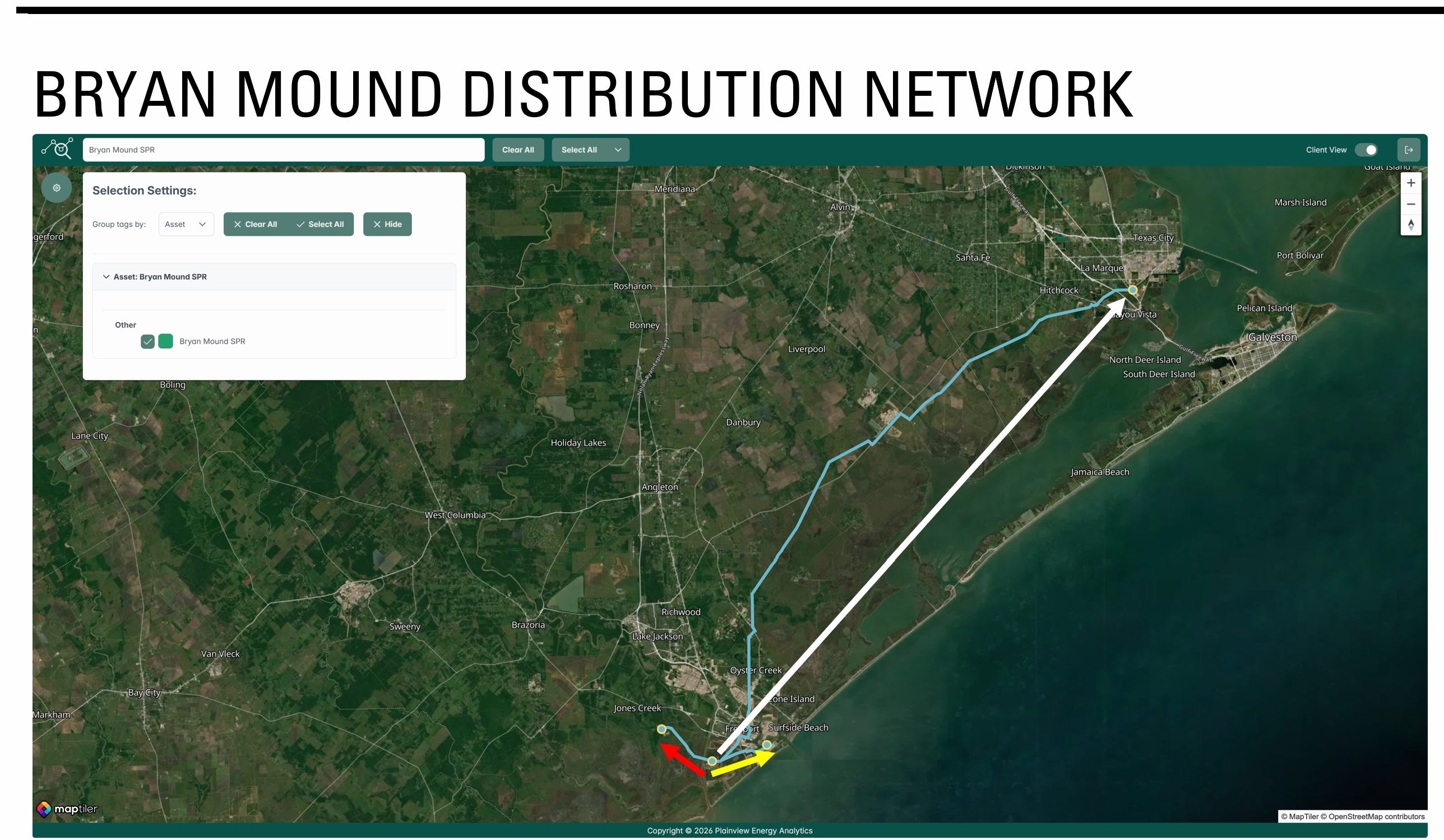
When oil is released from Bryan Mound, it primarily moves through three major midstream corridors:
The Seaway Freeport Dock (yellow arrow below): A 50-50 joint venture between Enbridge and Enterprise, this terminal facilitates direct exports to international markets or domestic U.S. ports via tankers.
Texas City (white arrow below): A 40-inch pipeline carries barrels north directly to major refining hubs, including Marathon’s Galveston Bay refinery and Valero’s Texas City refinery, as well as additional Seaway’s Texas City export docks and Genesis Energy terminals.
Jones Creek Storage Facility (red arrow below): This route connects to tanks owned by Phillips 66 and Seaway at Jones Creek. After being offline due to damage from Hurricane Harvey in 2017, this critical line was refurbished by Exxon and returned to service. This connection allows crude to access Phillips 66’s Sweeney refinery via a connecting pipeline or flow north toward Enterprise’s Echo Terminal via Seaway to reach the broader Houston refining complex.
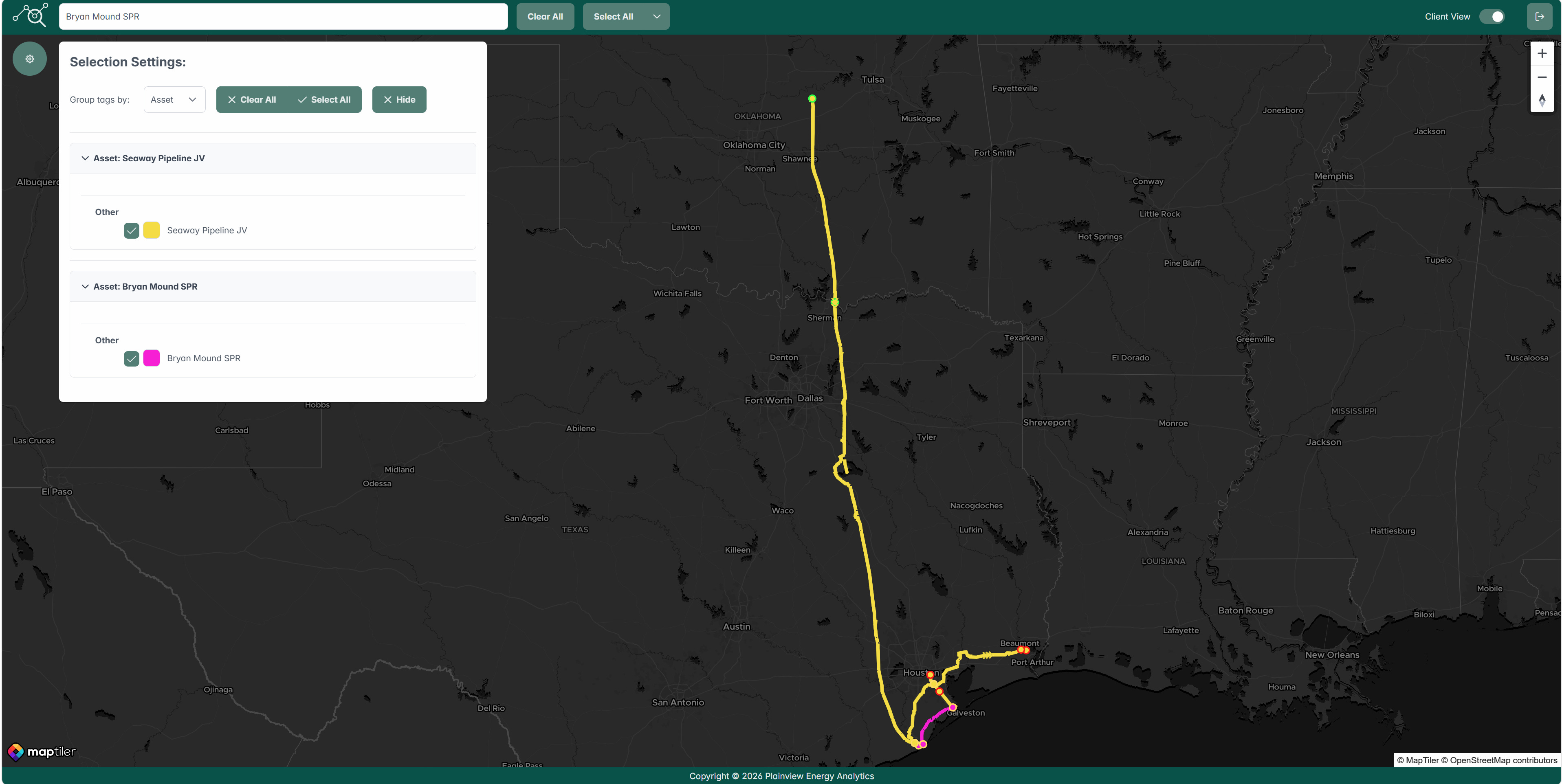
In what will be an ongoing theme in this deep dive series, the shifting dynamics of North American energy production have fundamentally altered how the SPR interacts with the broader grid. Before the domestic shale boom and the surge in Canadian crude imports, Bryan Mound had direct access to Midcontinent refineries via pipelines like Seaway, which originally flowed north (see below). Today, those infrastructure pathways have been reversed to bring a continuous surplus of oil south to the Gulf. While this reversal technically limits the SPR’s flexibility to physically pump oil north, the modern energy market handles disruptions through displacement, releasing SPR barrels along the Gulf to satisfy local demand, which in turn allows northern supplies from Canada and PADD 4 to remain in the Midwest in the time of supply disruptions.
Ultimately, whenever the federal government mandates an SPR release, such as the historic drawdowns under the Biden administration or structural exchange programs, midstream operators stand to see significant volume upside. In the case of withdrawals or refills at Bryan Mound, companies like Enterprise and Enbridge via the Seaway network, along with Exxon collecting midstream fees, are positioned to benefit.


