

Trans Mountain has filed an application with the Canada Energy Regulator for its Drag Reducing Agent (DRA) optimization project, designed to boost the pipeline’s capacity by approximately 10 percent and add about 90,000 barrels per day. The initiative involves installing 16 DRA units at 12 existing pump stations along the route. With a capital cost of just $9 million, this stands out as a highly economic and efficient upgrade. Construction is anticipated to require only a few months, with completion targeted for January 2027.
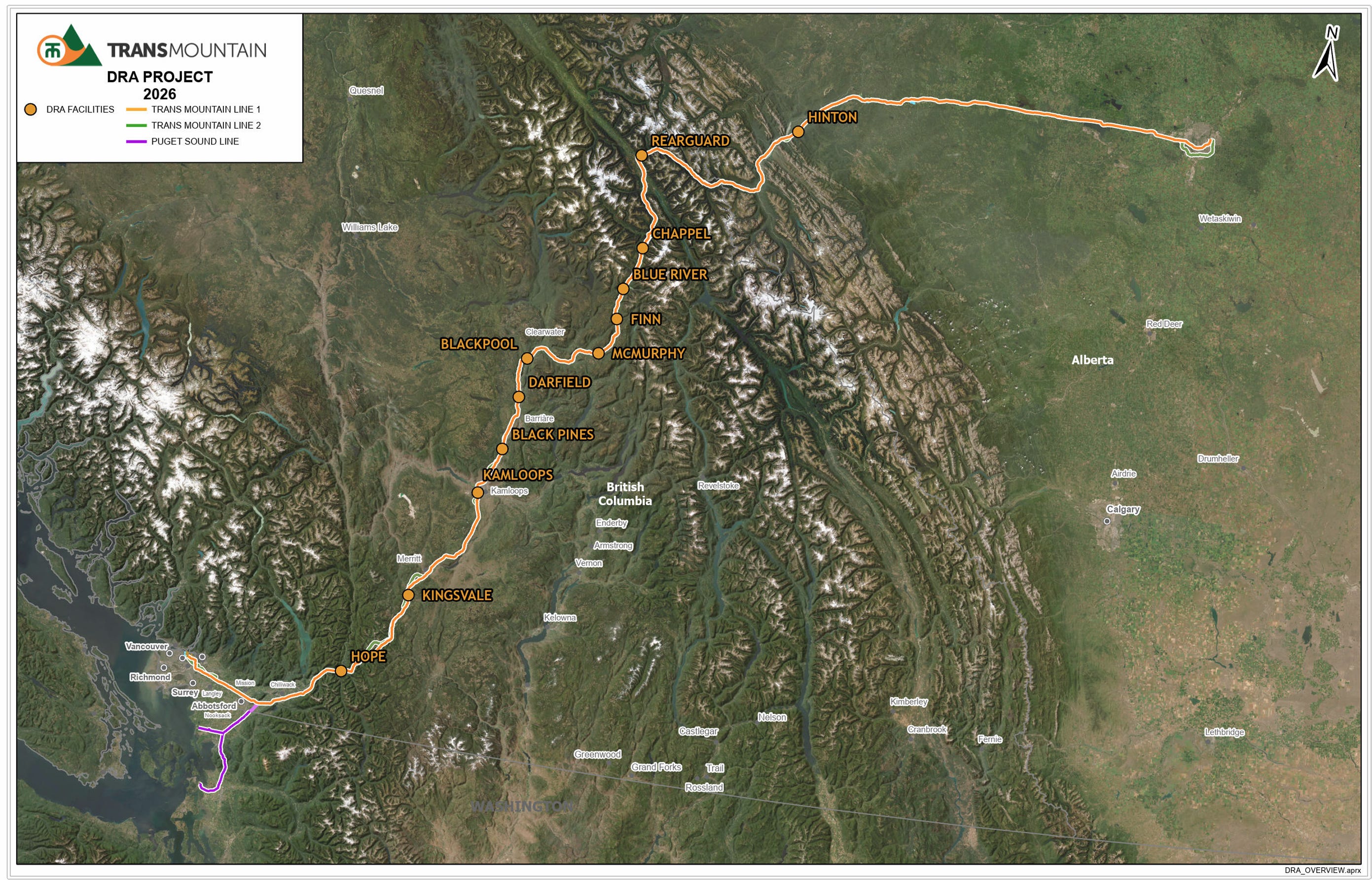
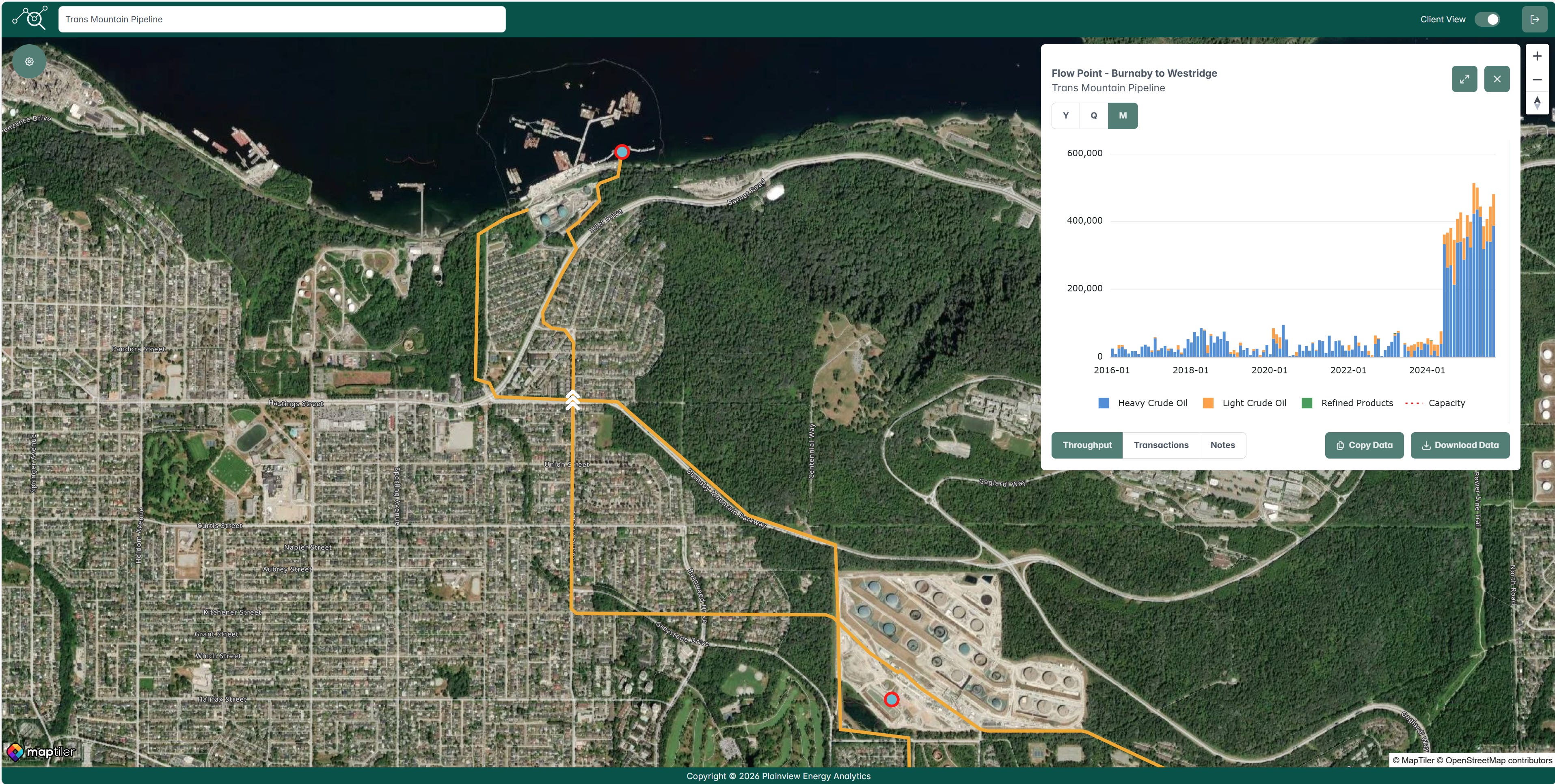
Since the major expansion came online in 2024, flows on the Trans Mountain Pipeline have steadily increased, reaching a record high of 815,000 barrels per day in September 2025. The system maintains a total capacity of around 890,000 barrels per day, but maximum exports from the Westridge Marine Terminal have remained just under 500,000 barrels per day, prompting ongoing questions about port-related constraints and the pipeline’s ability to sustain full utilization. The DRA project aligns strategically with ongoing dredging at the Westridge port, expected to conclude by the end of 2026 or early 2027. This work will resolve draft restrictions that previously limited Aframax tankers to about 70 percent capacity, enabling full loadings and potentially adding 200,000 to 250,000 barrels per shipment. Combined with the DRA enhancements, this could allow the pipeline to approach up to 980,000 barrels per day, effectively removing potential bottlenecks at the export point.
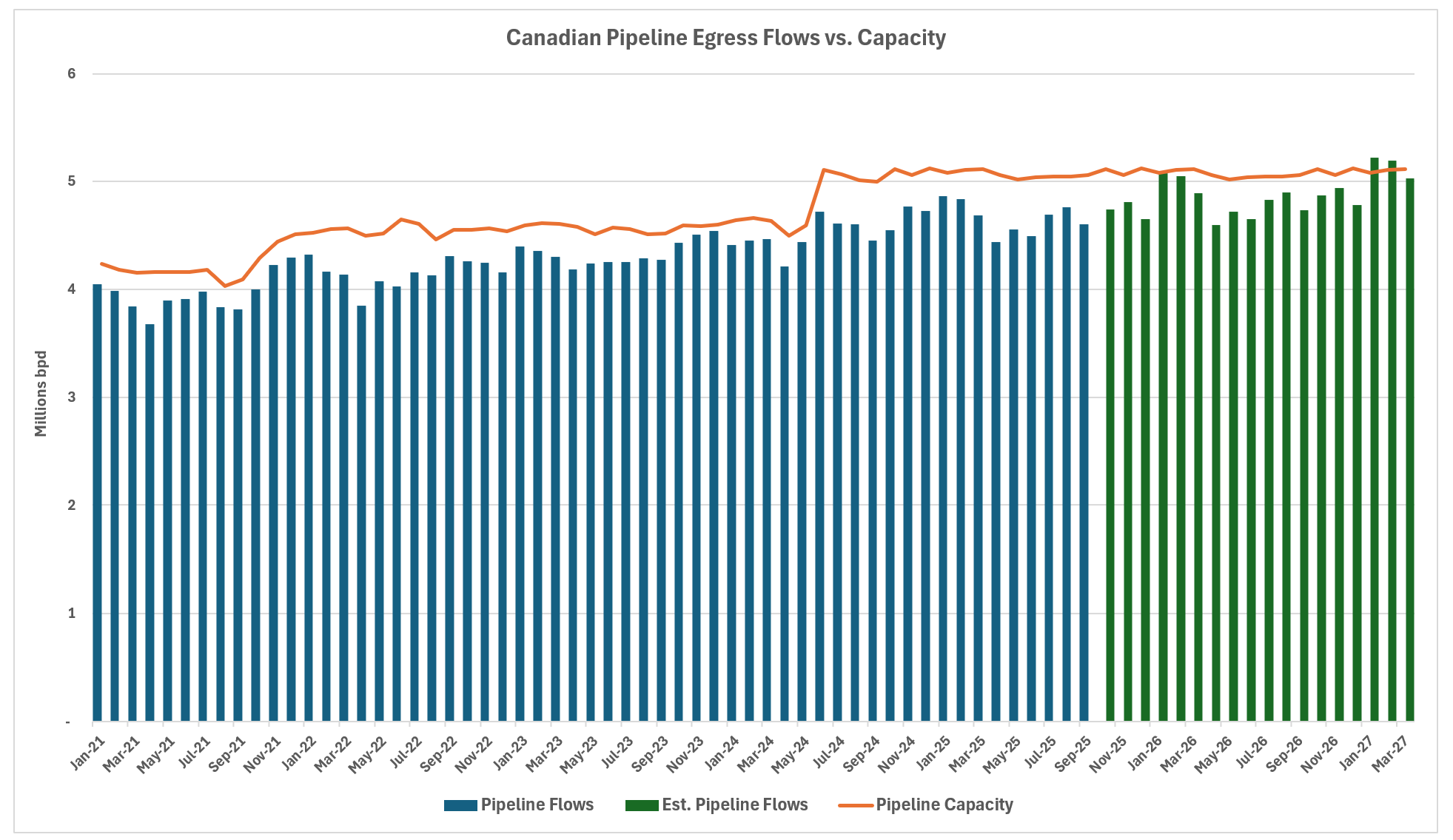
As we previously covered, Canadian producers have guided to around 3.0% percent exit-to-exit production growth from 2025 to 2026, translating to more than 100,000 additional barrels per day of supply. This incremental output is poised to fill much of the expanded capacity. Our modeling indicates that, absent this DRA project or other expansions, Canadian egress pipelines could exceed limits by early 2027, driven by sustained production increases and seasonal spikes from higher winter condensate blending requirements (graph below).
Looking forward, projects such as Enbridge’s Mainline Optimization Phase 1, anticipated sometime in 2027, will offer additional relief, although precise timing remains undisclosed. Trans Mountain has also outlined longer-term expansion possibilities, including a more substantial mainline pump station upgrade featuring nine expanded pumps, 11 new stations, and 30 kilometers of new pipe, which could deliver another 270,000 barrels per day of capacity. While more capital-intensive than the DRA initiative, these enhancements appear economically viable given the pipeline’s competitive committed tariffs of about $9 USD per barrel, which remain attractive in the context of growing long-term production.


