

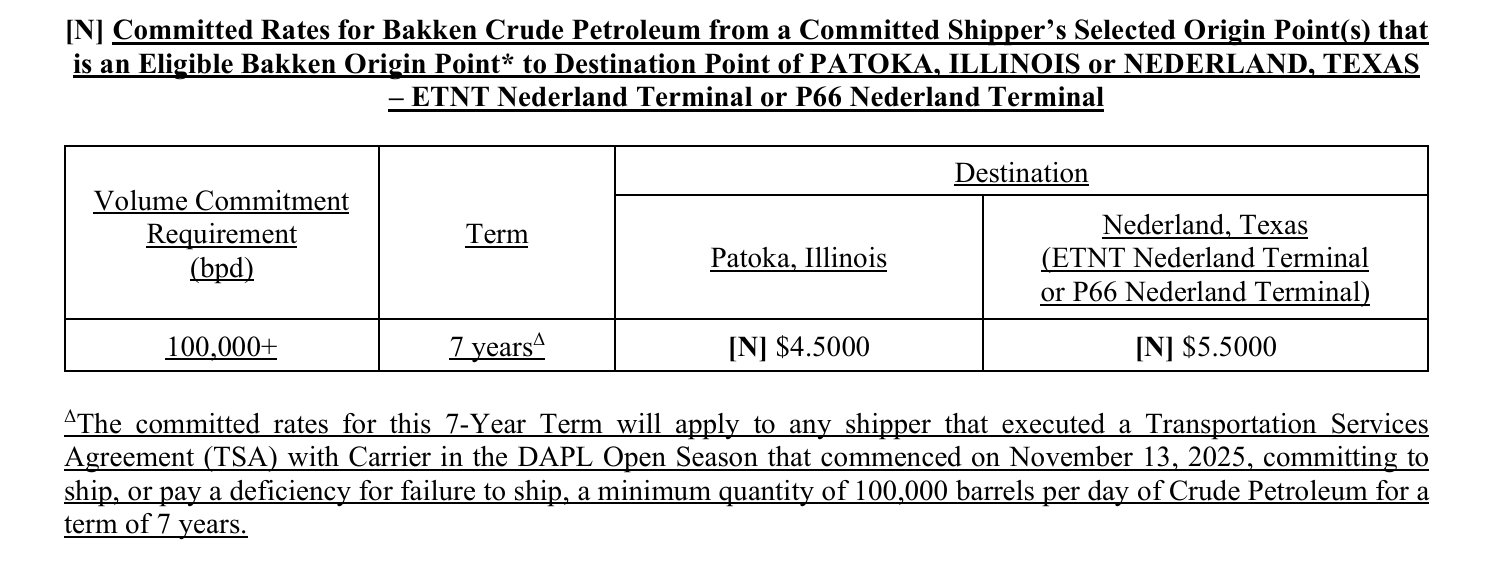
Dakota Access Pipeline (DAPL), operated by Energy Transfer, today disclosed new tariff rates following its open season for recontracting capacity. These rates apply to shippers committing to 100,000 barrels per day or more over a seven-year term. The joint tariff, which includes connectivity via the Energy Transfer Crude Oil Pipeline for extended reach, sets transportation at $4.50 per barrel from the Bakken region in North Dakota to Patoka, Illinois, and $5.50 per barrel to Nederland, Texas, on the Gulf Coast.
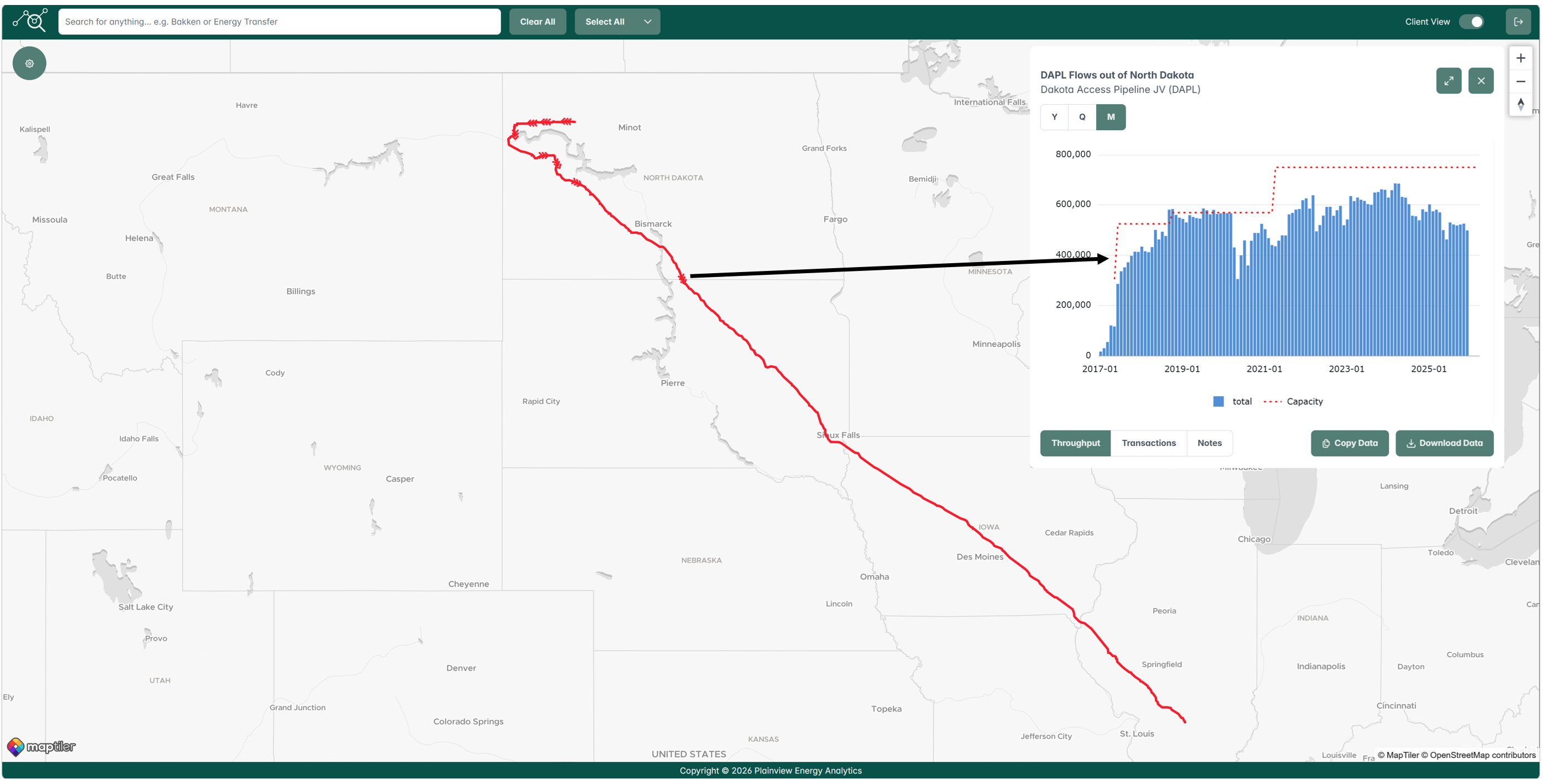
The Bakken crude oil egress market has grown increasingly competitive in recent years. Factors include post-COVID declines in production and aggressive competition among pipelines vying for volumes. DAPL flows peaked in 2024 and have since declined moderately, with some market share shifting to competitors like the Bridger Pony Express/Seahorse joint tariff offering, which delivers to Cushing, Oklahoma.
This competition prompted DAPL to offer more attractive pricing in its recontracting effort. Compared to prior rates, the new tariffs represent a reduction of approximately 15 to 20 percent for comparable large-volume, long-term commitments. Previous joint tariff rates to comparable destinations such as Patoka ranged from $5.00 to $6.25 per barrel. To Nederland, previous rates were around $6.50 or more for major volumes.
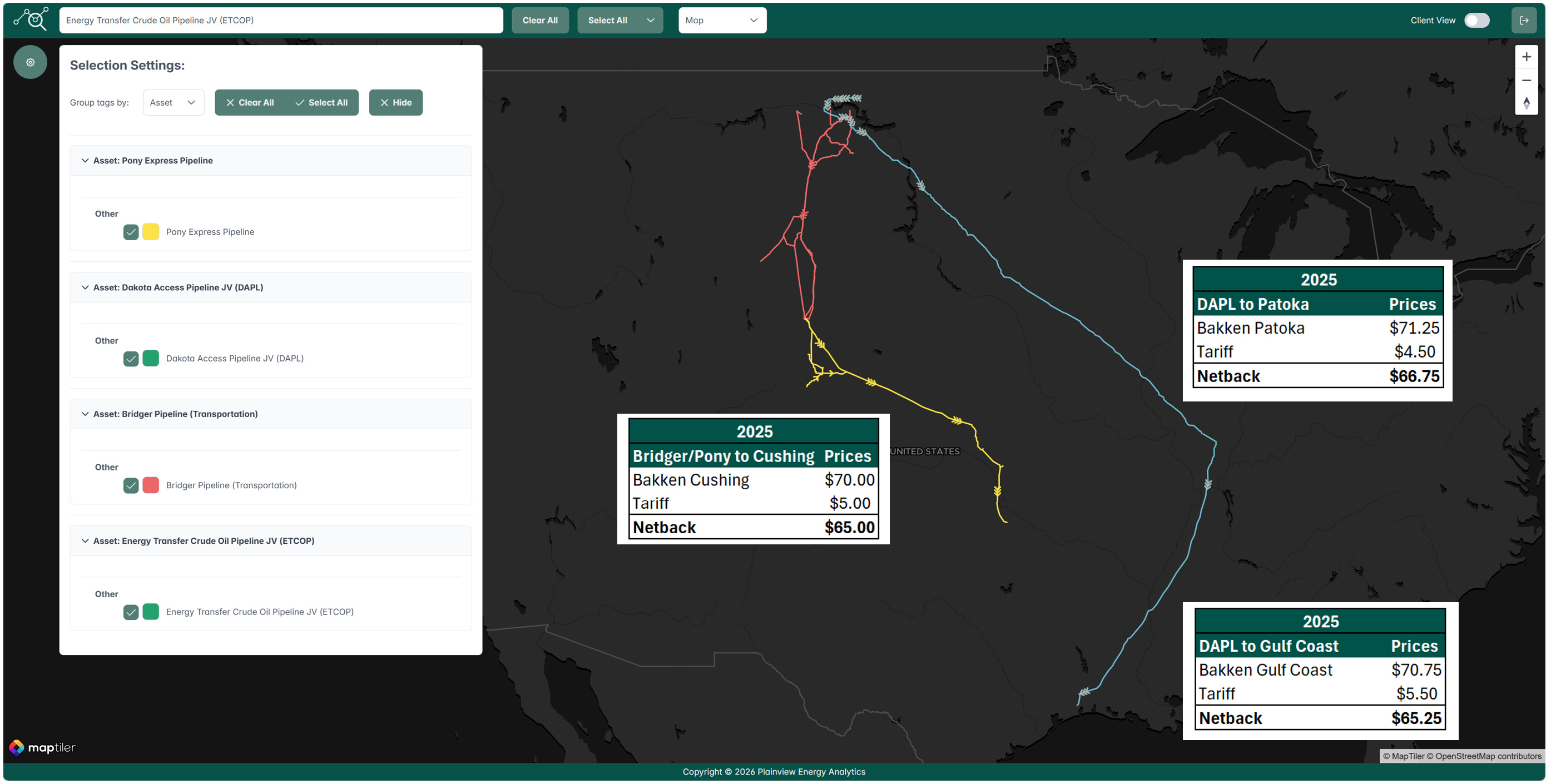
While lower tariffs reduce per-barrel revenue for the pipeline, they improve netbacks for shippers, meaning higher realized prices after transportation costs, particularly when compared to routing via competing pipelines. Indeed, Energy Transfer noted in its Q4 2025 earnings call that it successfully closed the open season on DAPL, adding incremental volume and extending commitments for some base customers beyond the mid-2030s, likely aided by these more attractive tariffs. With these adjustments, DAPL has reclaimed its position as one of the most economic outlets from the Bakken, offering competitive access to Midwest refineries and premium Gulf Coast markets.
Overall, the rate cuts reflect a strategic response to basin dynamics rather than a severe setback. They help retain and potentially grow volumes on DAPL, especially ahead of possible future enhancements like Mainline Optimization 2, which could boost throughput significantly and more than offset any revenue impacts from the lower rates. This recontracting supports long-term stability for DAPL in a challenging and competitive egress environment.


