

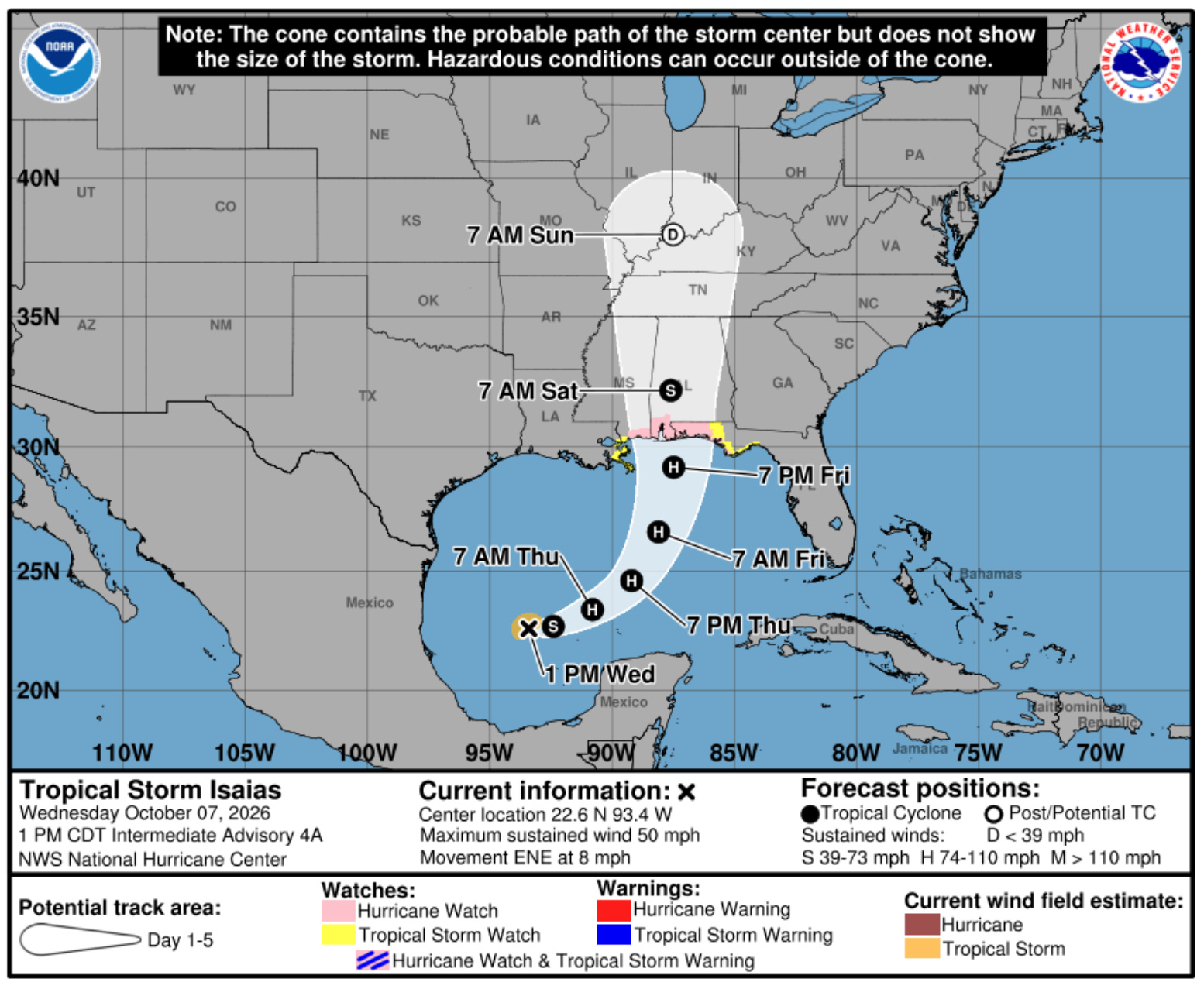
As Hurricane Isaias forms in the Gulf, energy markets and infrastructure operators are closely monitoring its trajectory to evaluate potential operational disruptions. Projected to make landfall as a Category 2 hurricane along the Eastern Gulf coast, the storm threatens oil infrastructure assets offshore and in Mississippi and Alabama. While major weather models and tracks from the National Hurricane Center remain subject to change before landfall, assessing current flow data and localized facility operations highlights where supply vulnerabilities are most concentrated.
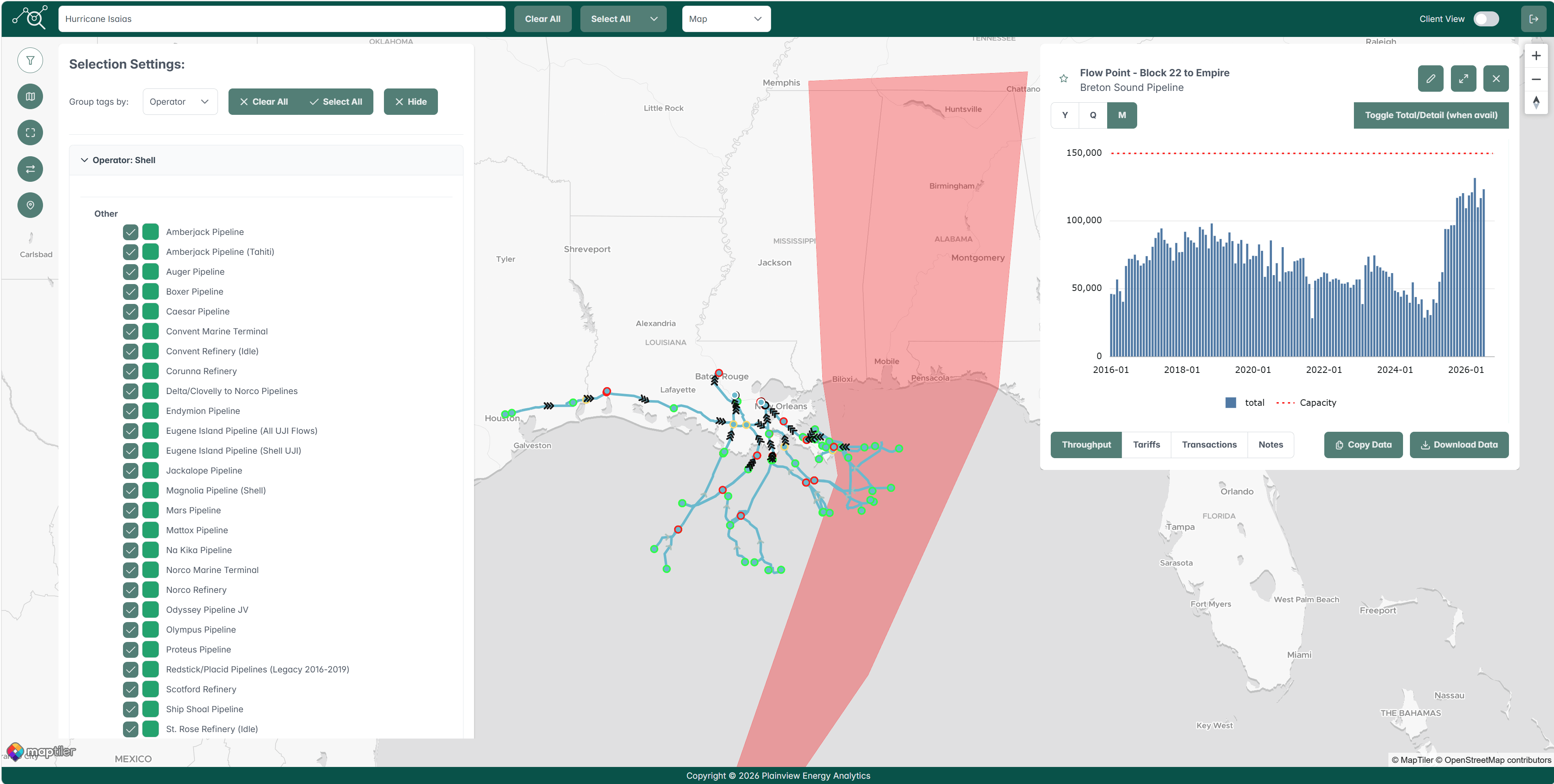
The most immediate operational impact centers on offshore crude oil production. Total Gulf output currently sits at approximately two million barrels per day, and we estimate roughly 500,000 barrels per day sit within the storm’s forecasted path. Key offshore infrastructure (shown in figure below) includes Shell-operated pipeline networks carrying around 300,000 barrels per day, alongside Williams’s Mountaineer pipeline and Chevron’s Breton Sound system, which together transport over 100,000 barrels per day from projects like Ballymore (shown in graph below). Crescent pipelines account for another 100,000 barrels per day. Facilities directly in the storm’s path face temporary shut-ins as a precaution, though swift recoveries remain typical provided physical infrastructure avoids heavy damage.
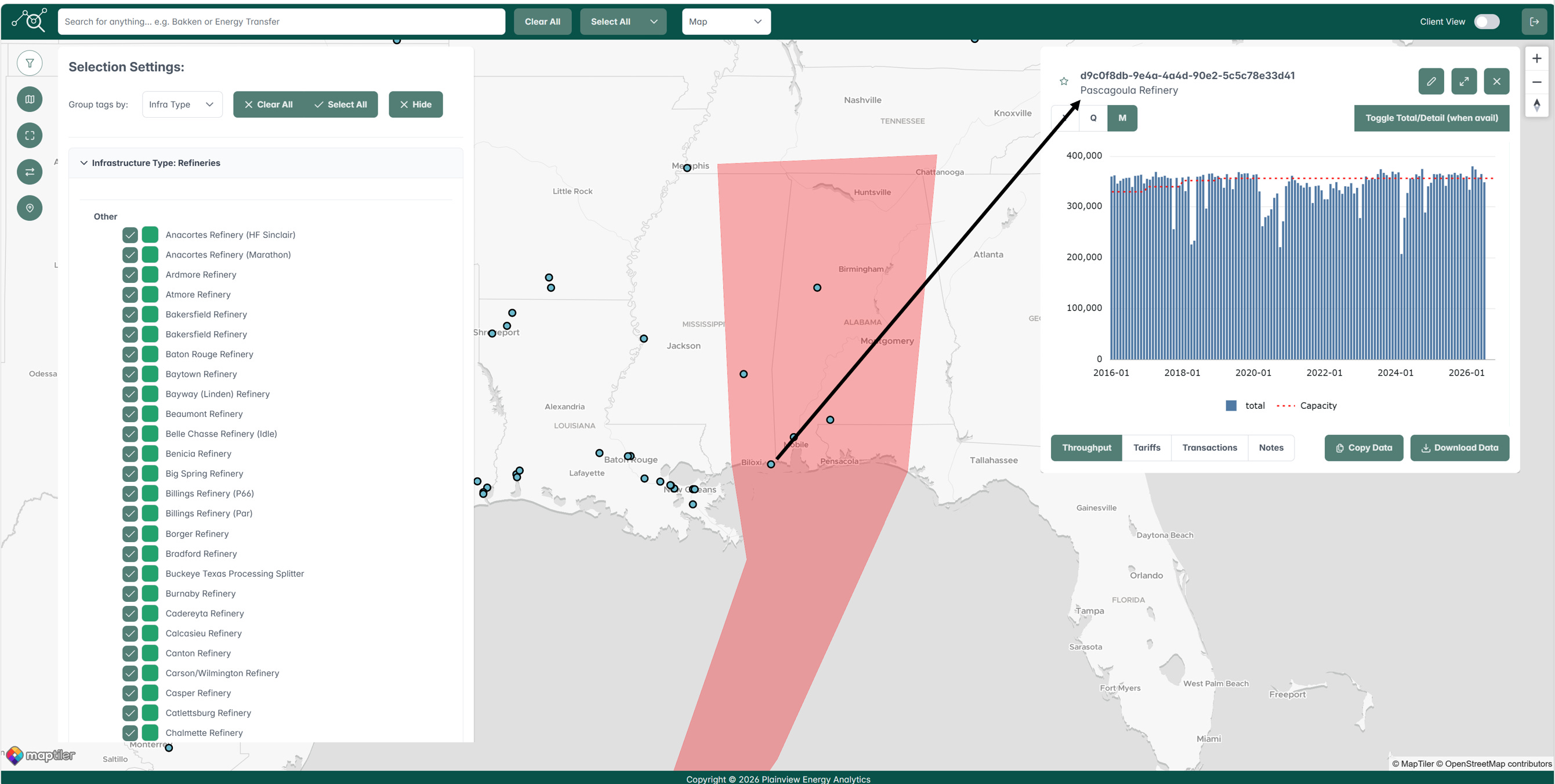
Beyond offshore extraction, onshore refining capabilities along the Gulf coast present a critical point of exposure. While high winds pose structural risks, storm surge and heavy flooding present the most severe operational challenges for onshore facilities. Chevron’s refinery in Pascagoula, Mississippi, represents the largest single facility in the path, processing roughly 350,000 barrels per day (see graph below). Capable of supplying approximately 2% of total U.S. diesel production, any prolonged disruption at Pascagoula would add immediate pressure to tight domestic and global fuel supplies. Smaller refining assets in the region, including Vertex’s facility in Mobile, Alabama, and Hunt Refining assets, also face potential impacts or operational pauses.
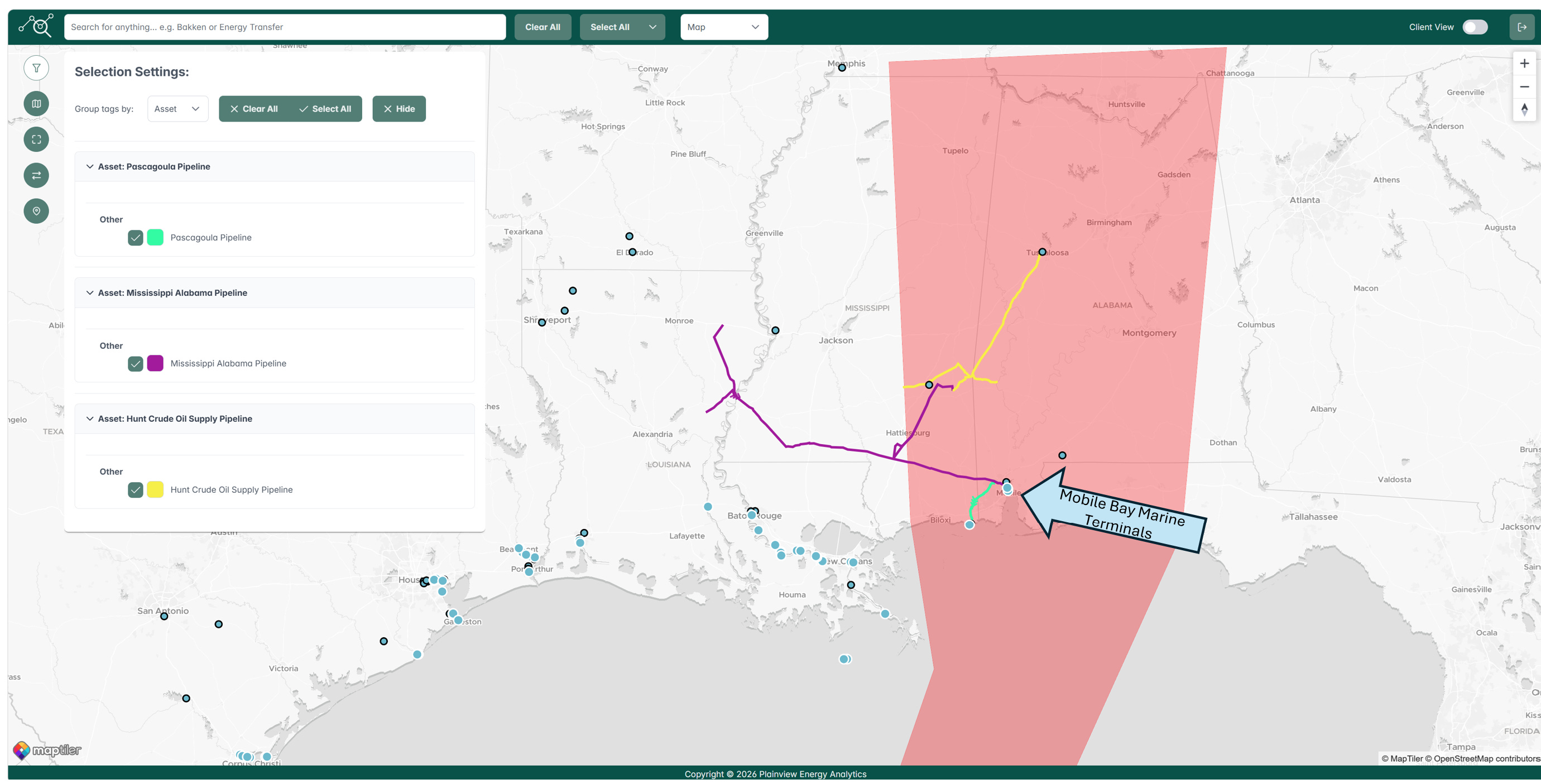
Regional energy supplies also rely heavily on maritime terminals and cross-regional supply chains. Critical import docks owned by Plains, Vertex, and Hunt located in Mobile Bay (see figure below) manage significant volumes of foreign imports and domestic barge/Jones Act traffic. These marine terminals feed key supply lines, which supply crucial crude inputs into regional refining facilities (see pipelines in figure below). Even if inland refineries escape a direct meteorological hit, localized flooding, power outages, or port closures around coastal terminals could choke off crude supply and throttle downstream production until marine transit safely resumes.
We will continue to monitor the track of the hurricane closely and provide further updates if the forecast shifts significantly to encompass additional infrastructure. Please reach out directly with any inquiries regarding specific asset-level data or localized impact analyses.
For questions or to request a trial of the platform please email: matthew.lewis@plainview-energy.com


