

Enbridge last week revealed the planned path for its Mainline Optimization 2 (MLO2) project, which aims to boost takeaway capacity for Canadian crude oil, especially heavy grades, toward the Gulf Coast. Building on the recently sanctioned Phase I, which adds 150,000 barrels per day (bpd) on the Mainline system (with 50,000 bpd staying in Midwest markets and 100,000 bpd moving via Flanagan South to the Gulf Coast), Phase II targets up to an additional 250,000 bpd of incremental full path capacity.
The project cleverly optimizes existing infrastructure by separating light and heavy oil paths on the Enbridge Mainline and Dakota Access Pipeline (DAPL). It involves redirecting up to 250,000 bpd of light oil southward through a reversal of Enbridge’s Bakken pipeline (previously flowing north from North Dakota to connect with the Mainline). This reversed segment delivers light volumes to the Berthold area in North Dakota, where they connect via a reversal on one of Enbridge’s North Dakota lines into DAPL, onward to Patoka, Illinois. From Patoka, these light barrels flow north via the Chicap pipeline to maintain light oil supply to Midwest refineries, particularly around Chicago, that previously relied on direct Mainline deliveries. This shifting of light barrels frees up space on the Mainline for additional heavy oil volumes.
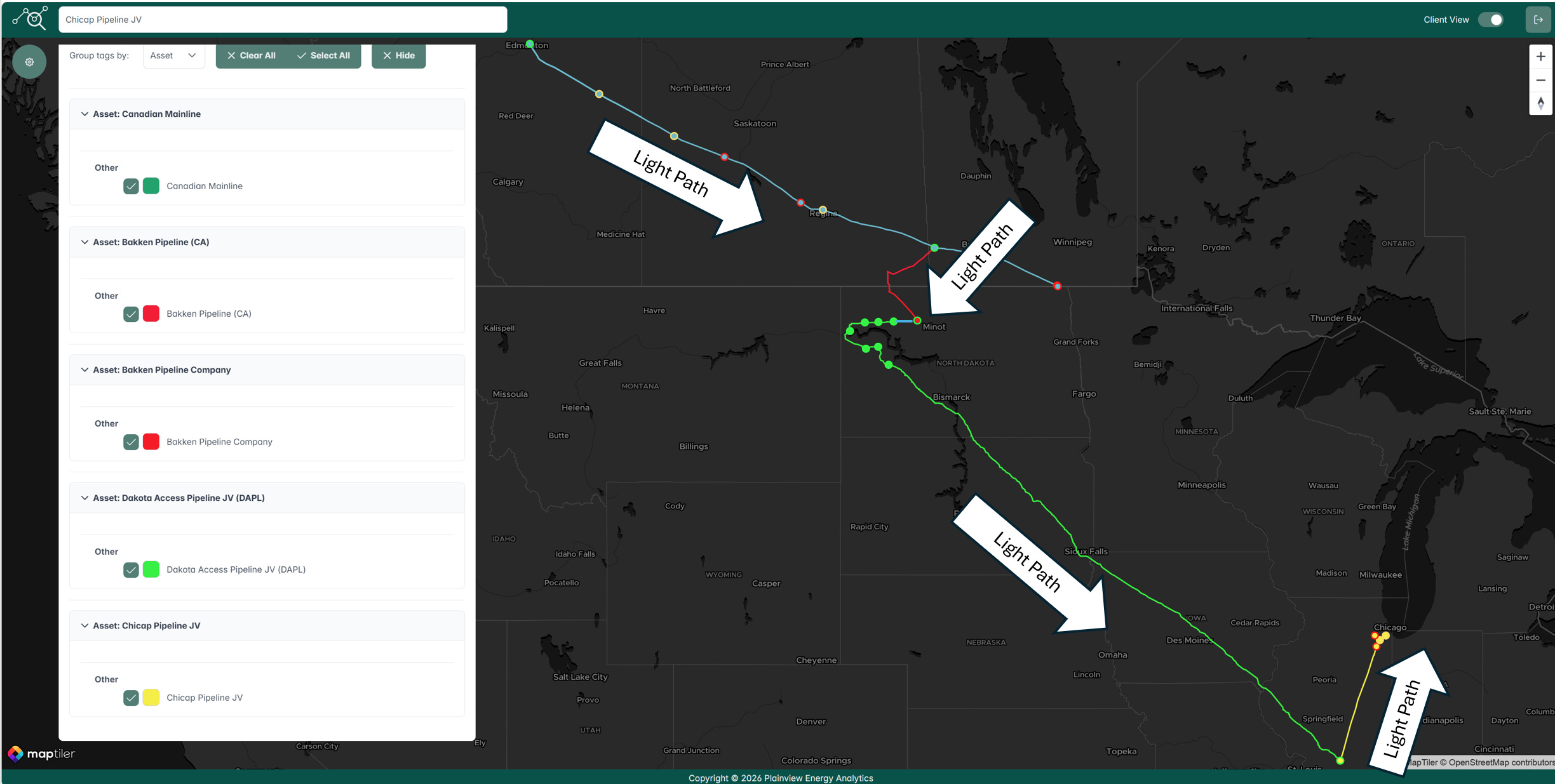
For the heavy oil path, incremental barrels flow the traditional southeast path on the Mainline to the Flanagan hub and connect into the Flanagan South Pipeline. Flanagan South (already expanding to 800,000 bpd capacity under MLO1) appears able to accommodate these incremental heavy barrels, potentially aided by a mix of light or medium grades allowing higher throughput than heavy only limits. The heavy crude then moves via Flanagan South to Cushing, Oklahoma, where it utilizes the Seaway Pipeline to reach the Gulf Coast. Seaway, with around 950,000 bpd total capacity across its two 30-inch lines (one newer and higher capacity), has some available space, though further optimizations or expansions may be needed to handle combined Phase I and II volumes without constraints.
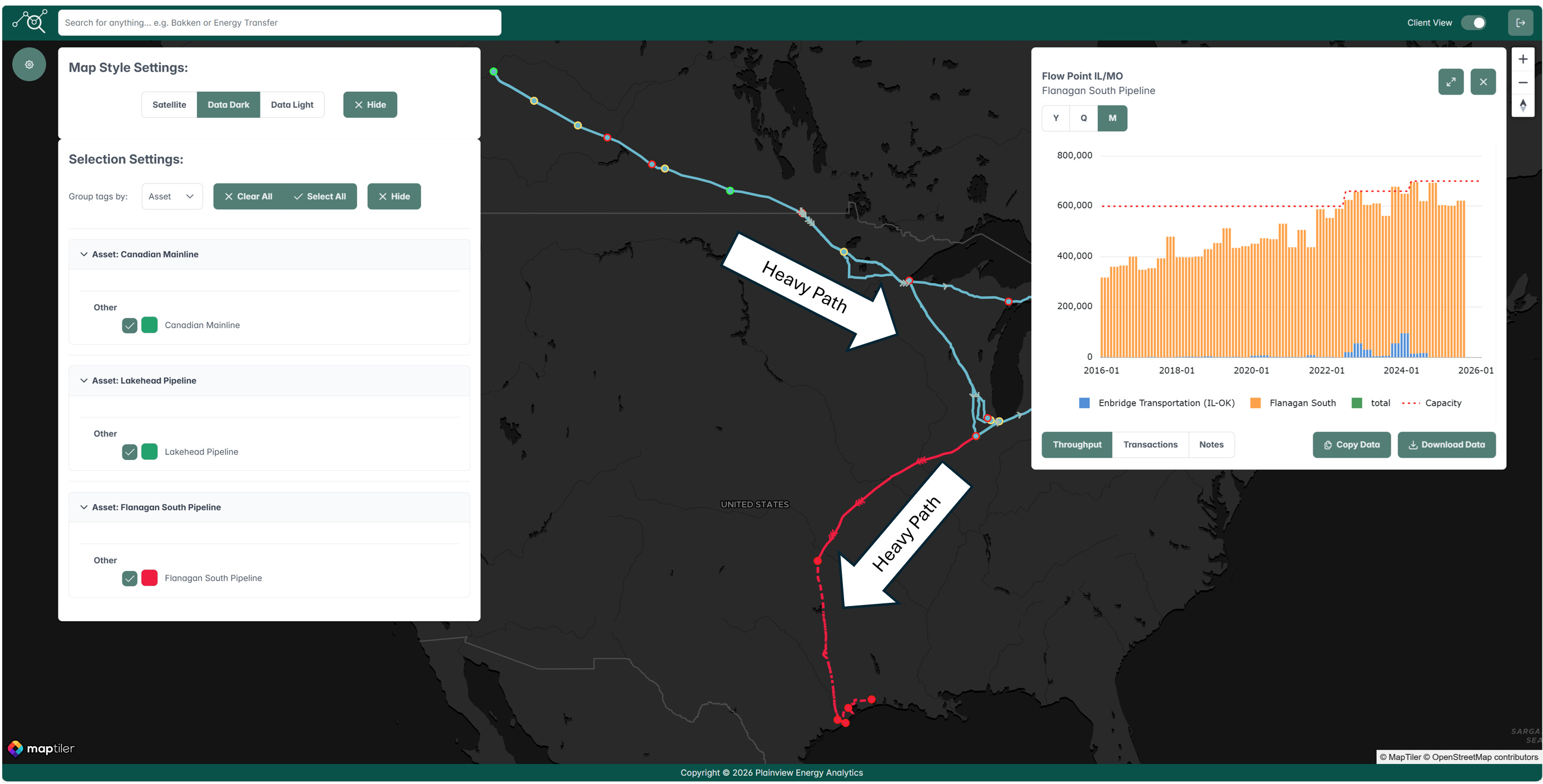
This approach leverages pipeline reversals, underutilized assets like Chicap (a 26-inch line with significant spare capacity), and existing partnerships (including with Energy Transfer on DAPL) to minimize new construction while maximizing efficiency. It offers a cost-effective solution compared to entirely new builds, though questions remain about tariff structures, particularly how shifted light oil routes via DAPL and Chicap compare economically to original Mainline rates.


