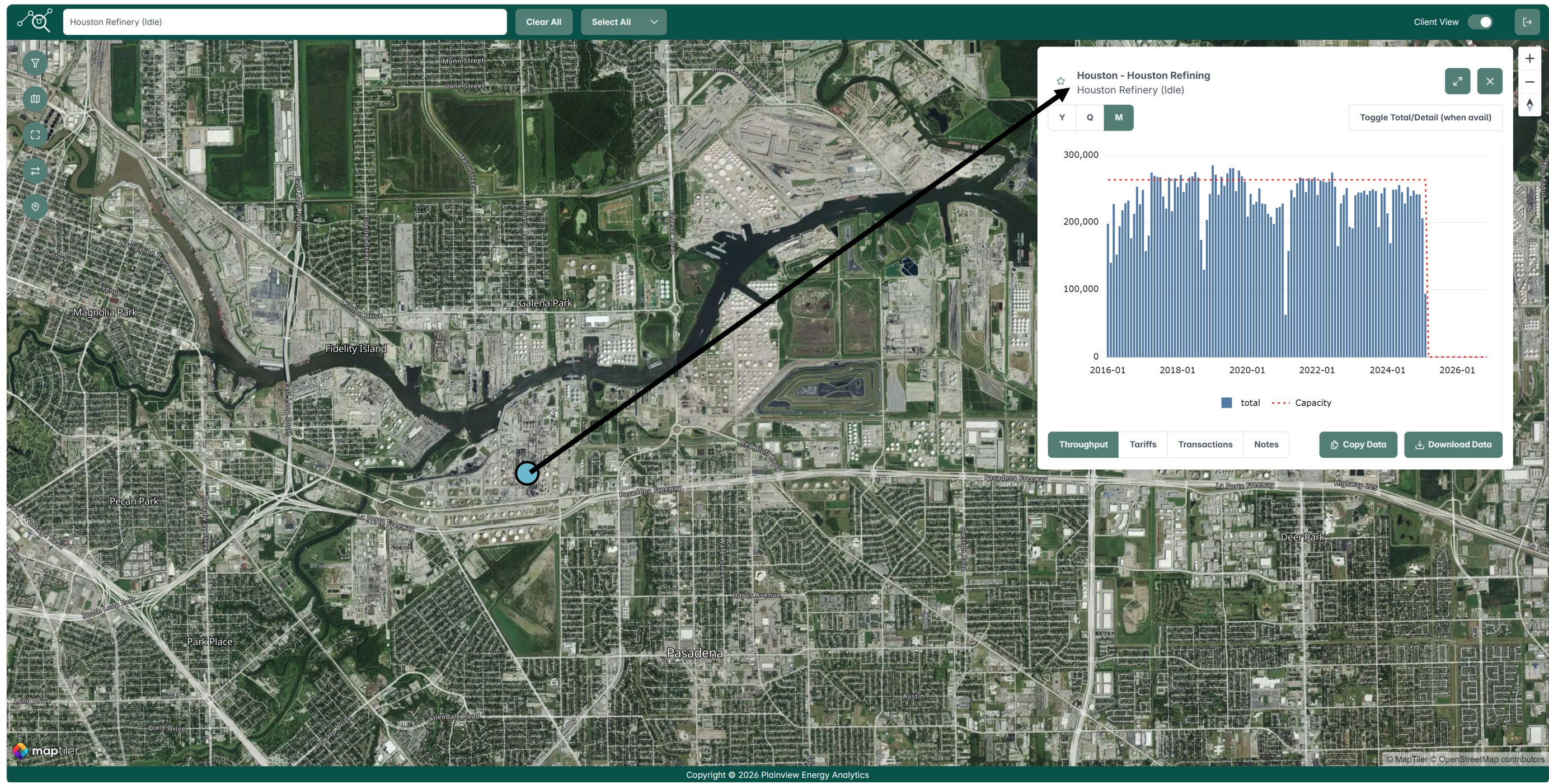
Valero has agreed to acquire LyondellBasell’s shuttered Houston refinery for $320.5 million, with closing expected in the fourth quarter of 2026, subject to regulatory approvals. LyondellBasell shut the plant in early 2025 (see graph below) as part of a strategic shift away from traditional motor fuels and crude refining and toward chemicals and plastics. The refinery’s age also weighed on the business. Built in 1918, it required significant capital investment and ongoing maintenance spending that squeezed margins.
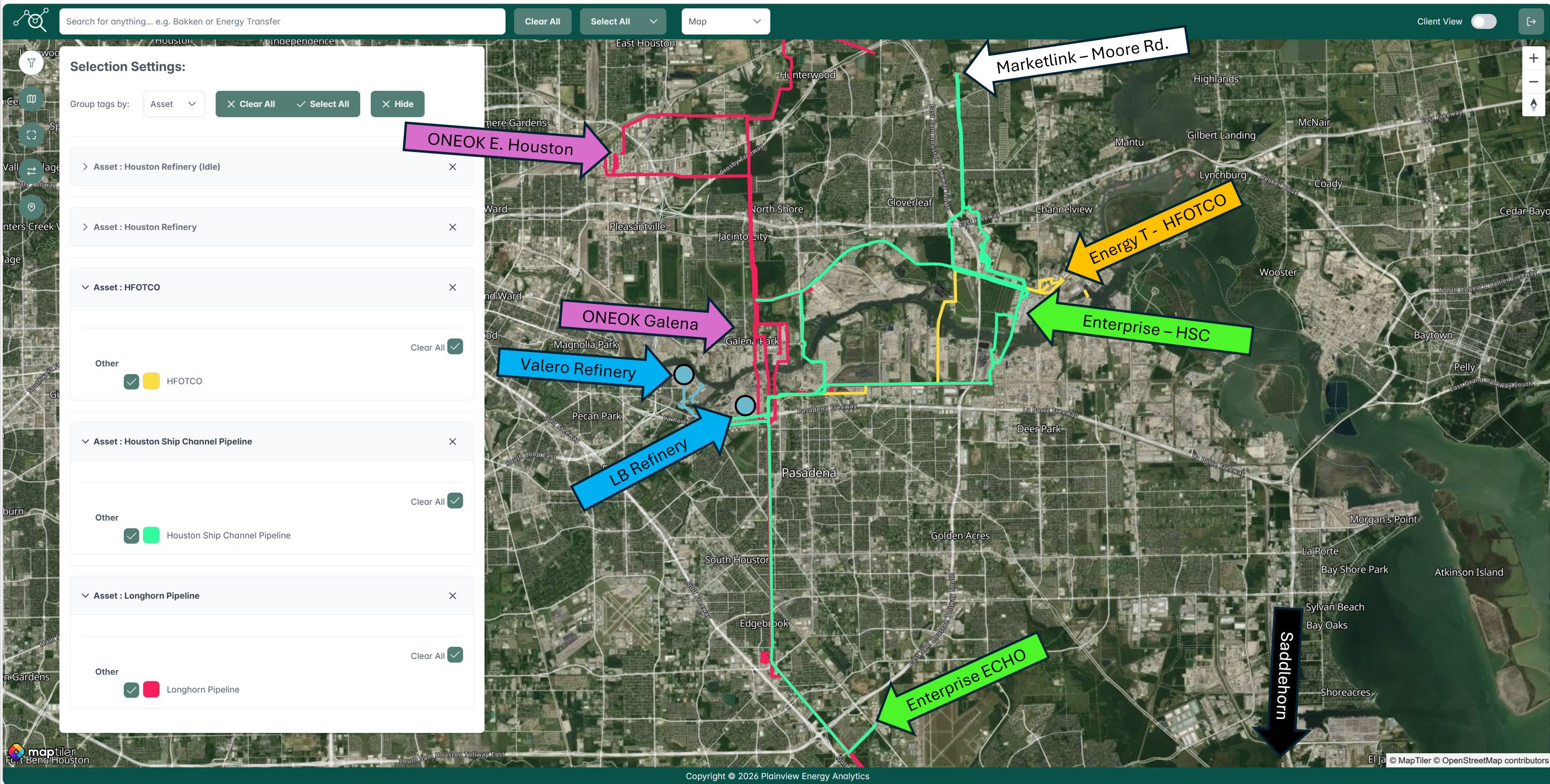
The refinery sits next to Valero’s existing Houston facility, which has a capacity of 205,000 barrels per day (b/d) and has run at essentially nameplate capacity in recent years. Both facilities (see blue arrows in figure below) are on the Houston Ship Channel, giving them a range of crude supply and logistics options. The LyondellBasell site was largely served by the Seaway Pipeline, co-owned by Enterprise and Enbridge, and by direct connections to Enterprise’s Houston Ship Channel terminal (Enterprise terminals in green arrows below). The facility also took crude from Energy Transfer’s HFOTCO assets (orange arrow) and has an indirect connection to the MarketLink and Keystone pipeline system (white arrow). Valero’s existing Houston refinery is largely served by ONEOK’s Houston distribution system, which ties into storage such as the Galena Park terminal and East Houston terminal (purple arrows). A Valero-owned last-mile pipeline connects all these systems to both refineries.
LyondellBasell’s refinery previously cited a capacity of roughly 265,000 b/d and ran mostly full, aside from several notable maintenance windows. Valero, however, expects to initially restart just 165,000 b/d of light sweet crude processing capacity by year-end 2027. That is a marked change for a facility where heavier crude appears to have made up more than 80% of the previous (2016-2025) inputs (see figure below).
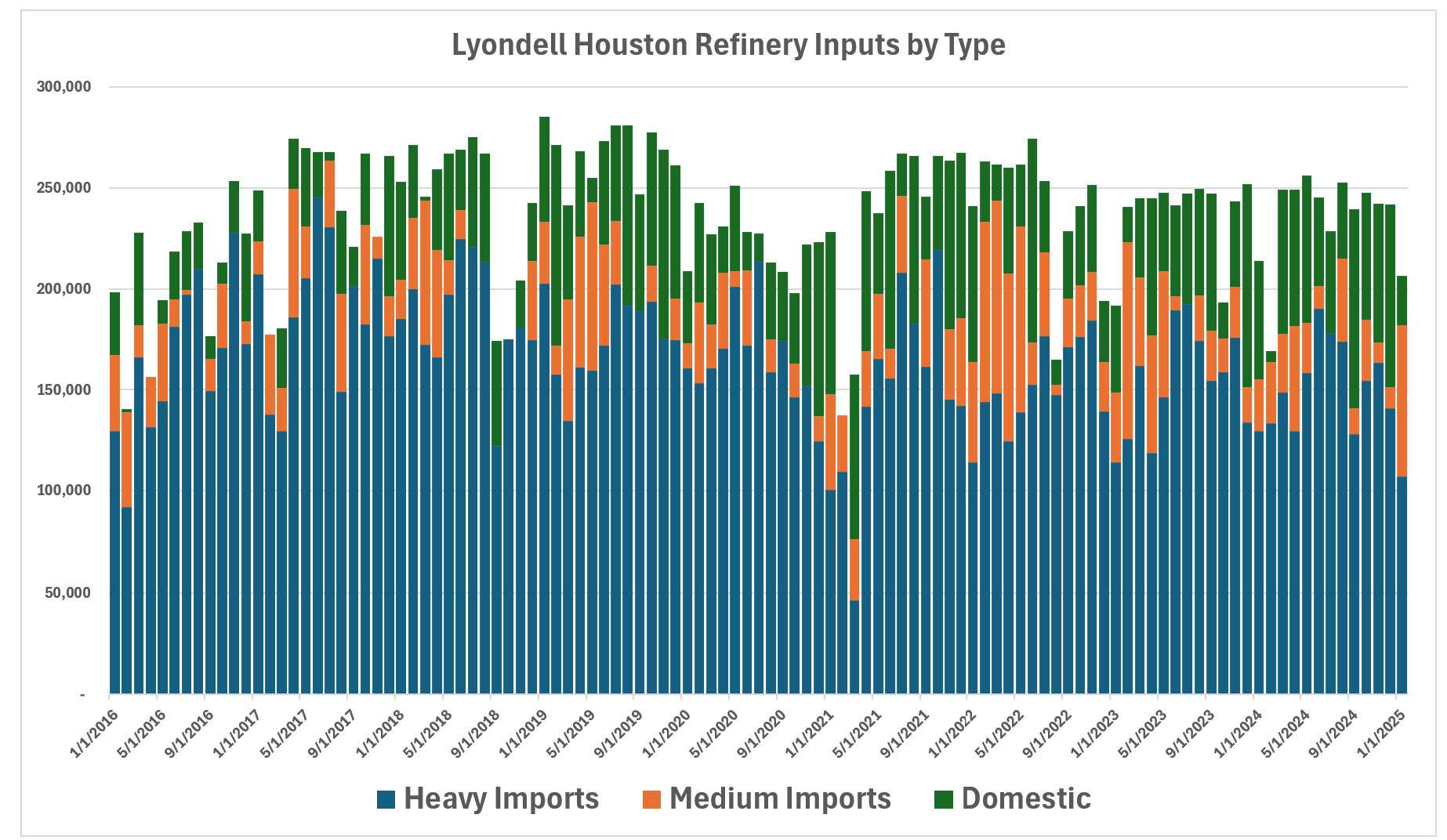
Crude Oil Imports by Type - EIA
Much of the facility’s medium and heavy supply was imported from Colombia by vessel and Canada via Seaway Pipeline (see country mix below). Valero has left the door open to a return to these heavier grades in the future, saying the deal creates an opportunity to invest later in high-complexity, heavy sour crude processing.
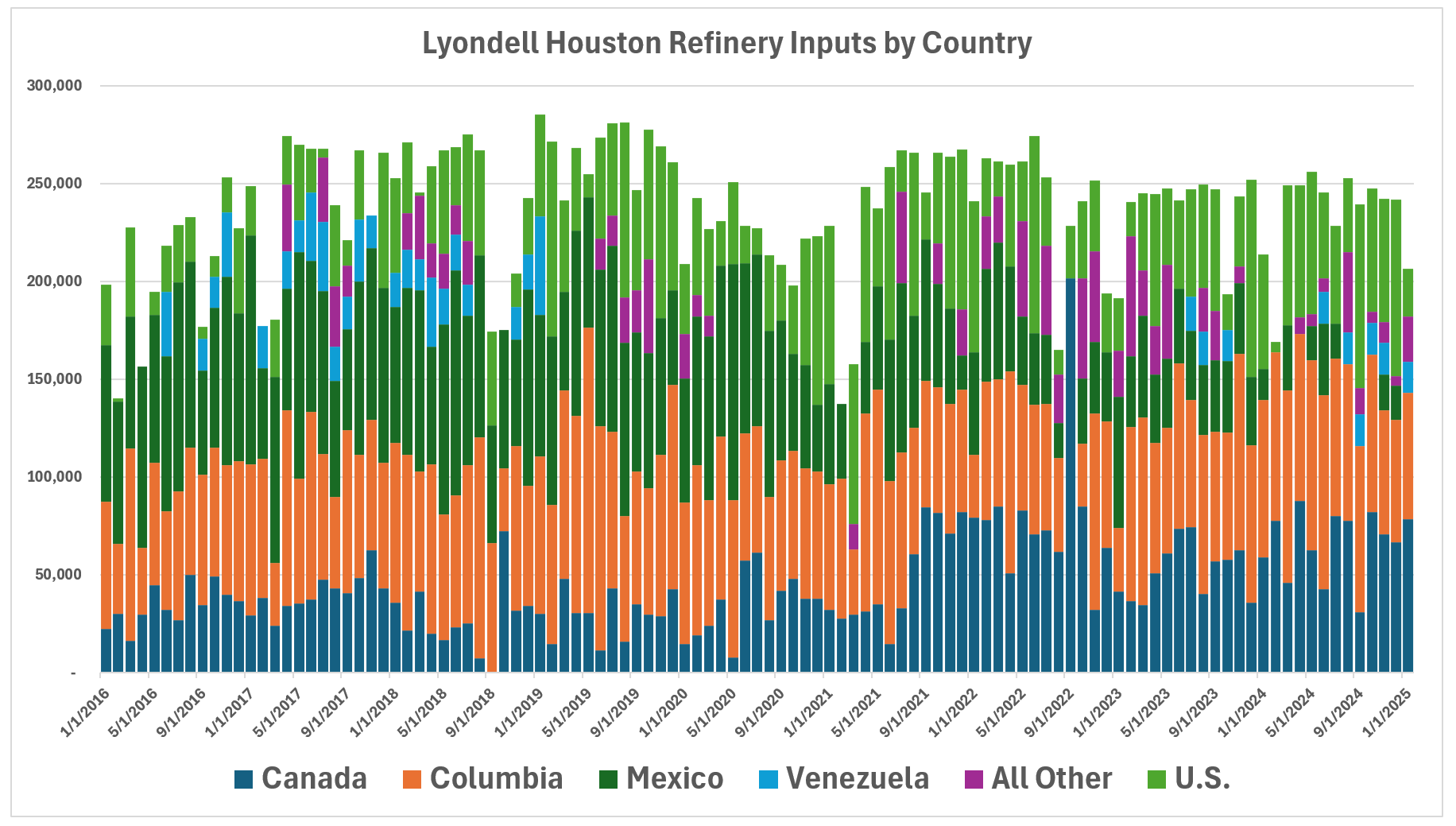
Crude Oil Imports by Country - EIA
The transaction reinforces a theme we highlighted in September, when the White House was considering using the Defense Production Act to help boost fuel output. At the time, we identified refineries that could be restarted, in whole or in part, to increase capacity, including this LyondellBasell facility. While the initial restart would return only part of the plant’s former capacity, the deal shows that idled refining assets with strong logistics can still attract buyers.
Flow/Transaction Updates and New Assets Under Coverage
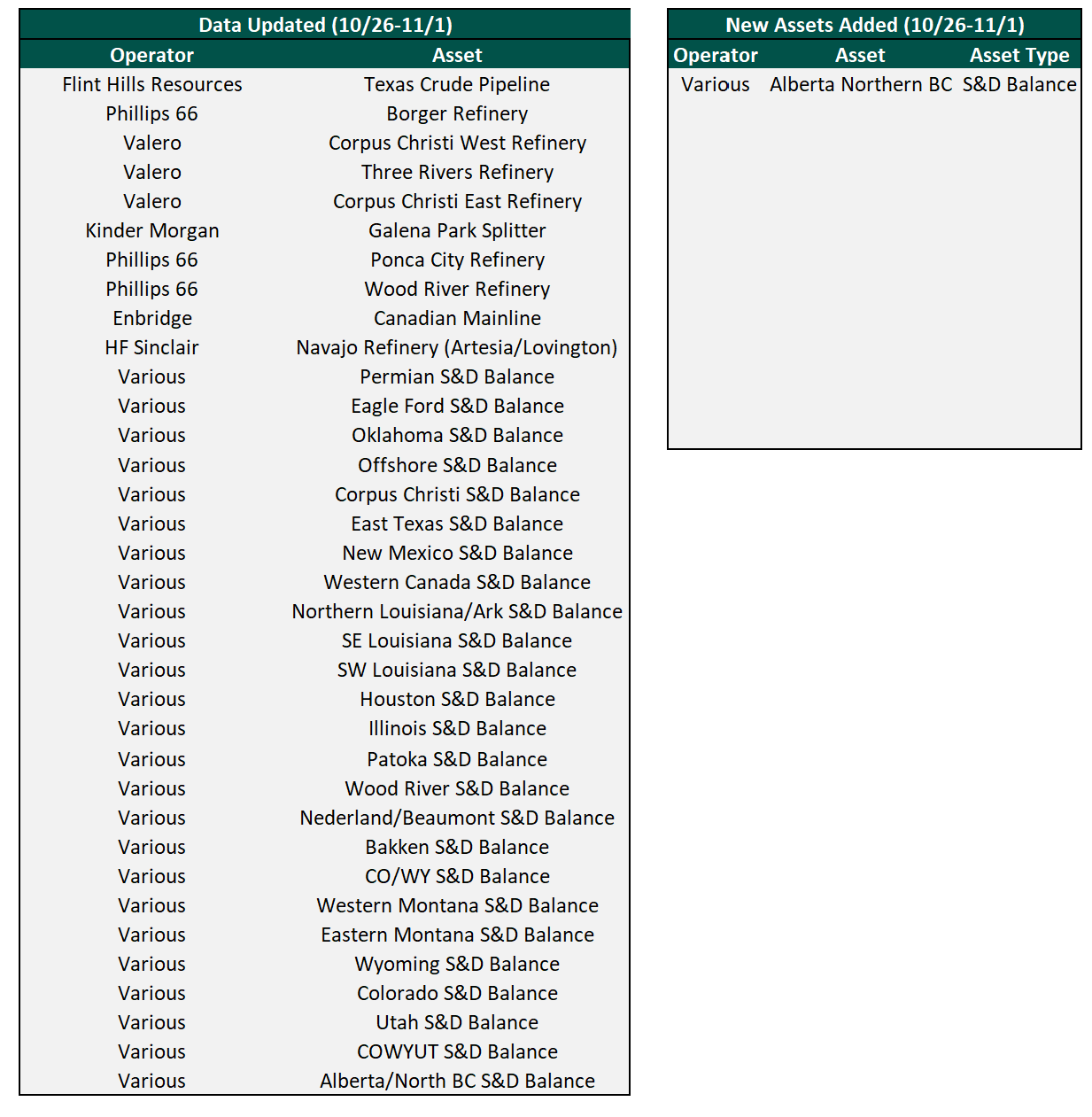
Plainview has over 500 assets with crude oil throughput or transactional data on our platform and continues to add more each week. Data for existing assets under coverage are posted as soon as they become available. Below are the assets that were updated this week or newly added to coverage.