Faced with months of rising gas and diesel prices driven by ongoing geopolitical conflicts involving Iran and Russia/Ukraine, the White House is exploring measures to expand domestic fuel production. President Trump recently convened a meeting with executives from roughly a dozen U.S. oil refining companies to discuss utilizing the Defense Production Act (DPA). The DPA allows the federal government to purchase goods in advance, back loans, or subsidize facility expansions. Following an official declaration in April designating oil refining as vital to national security, the administration now possesses the statutory framework to direct resources toward the refining sector.
Debottlenecking Active Refineries
During the consultation, industry leaders reportedly emphasized that building new, large-scale refineries is an impractical fix. Instead, refiners advocated for targeted government investment in “debottlenecking” projects, which are incremental expansions designed to enhance existing operational efficiency. Historically, debottlenecking has quietly expanded U.S. processing capacity at numerous facilities. A prime example is Marathon’s Garyville refinery in Louisiana, which expanded its crude throughput from 539,000 barrels per day in 2016 to 617,000 barrels per day through steady, low-cost modifications (see red capacity line below). Federal backing under the DPA could accelerate similar quick-turnaround projects across numerous facilities, yielding a meaningful aggregate increase in fuel supply within 12 to 18 months.
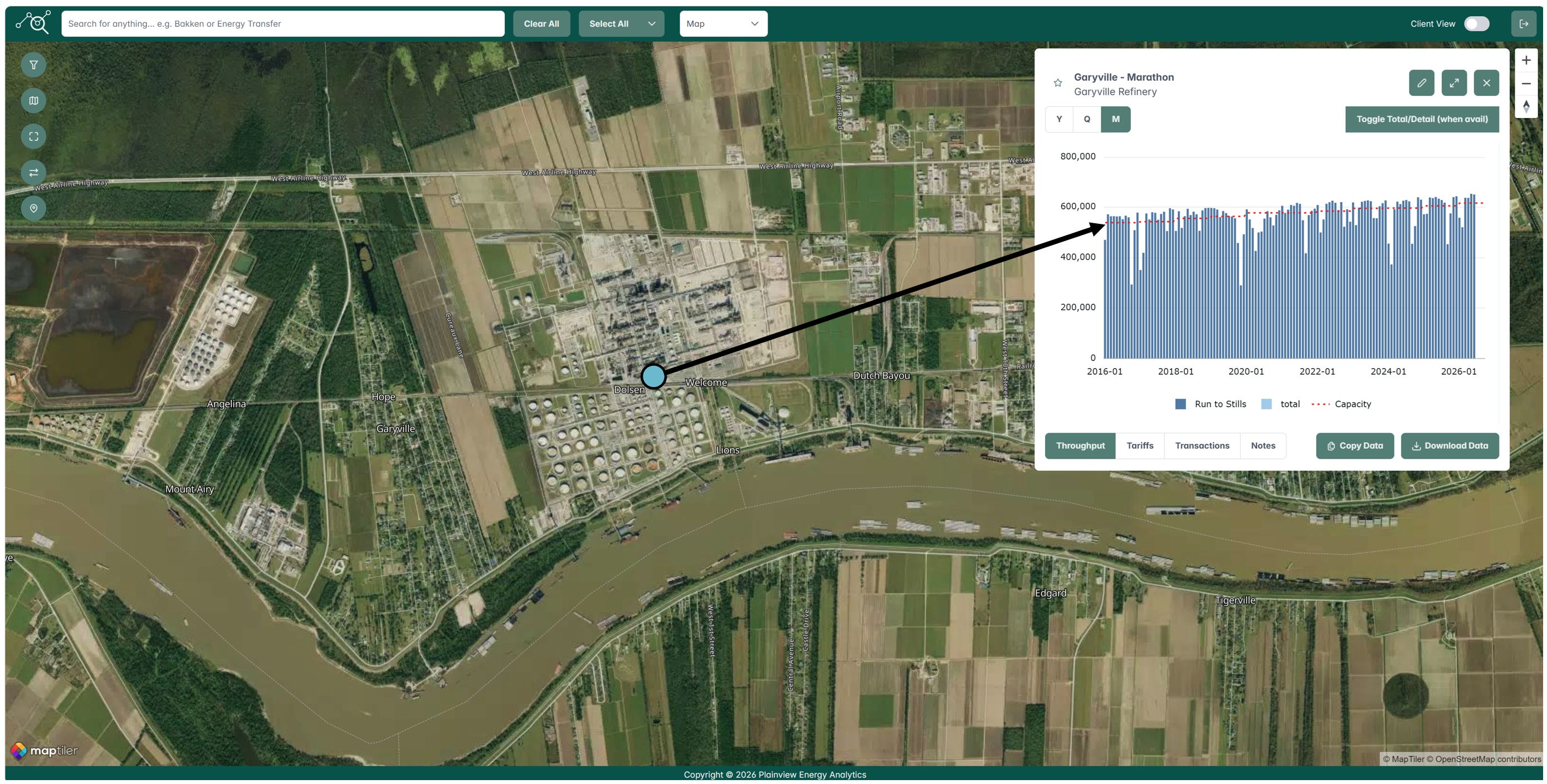
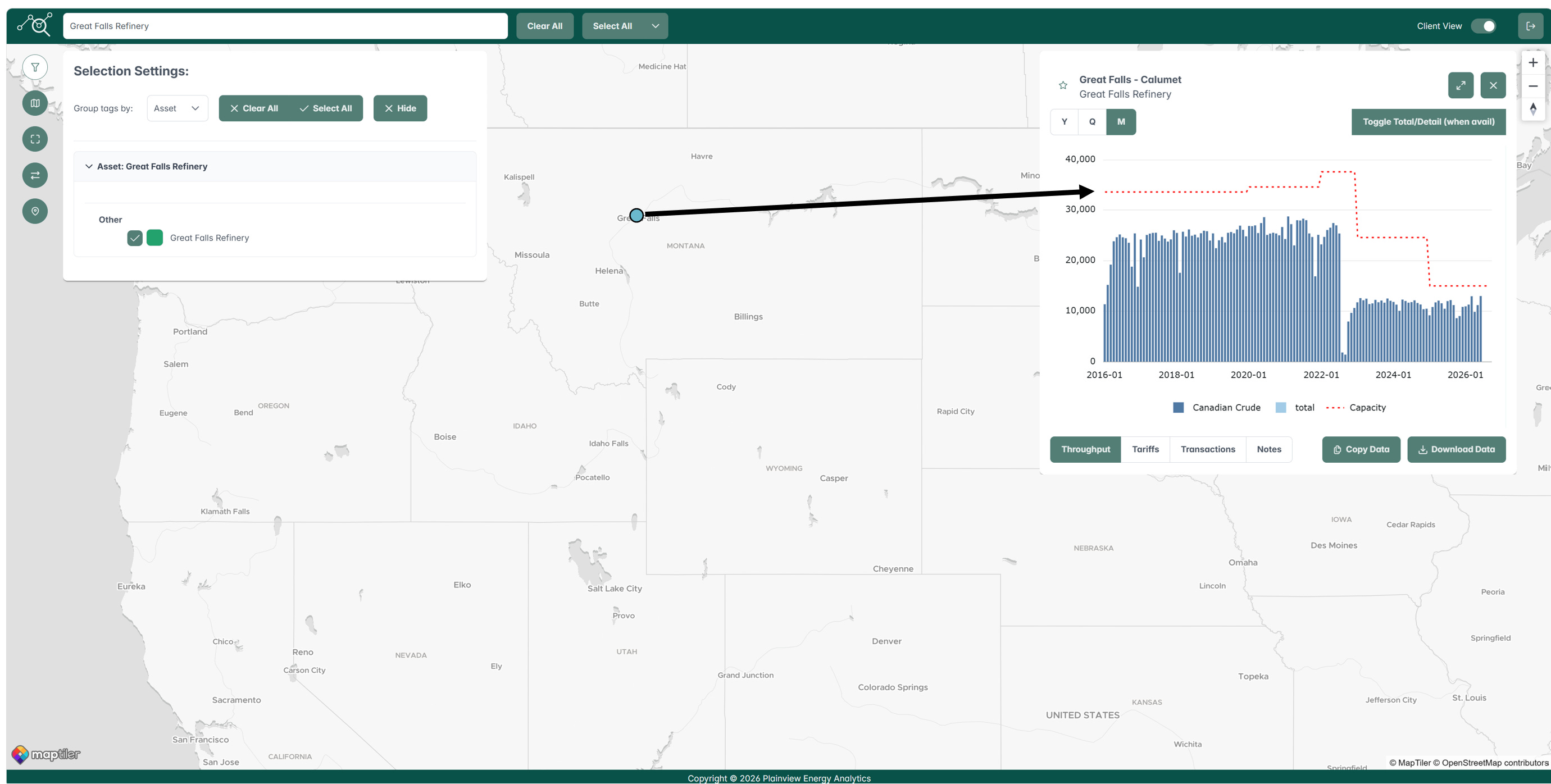
Plainview’s map-based interactive crude oil platform (shown above with Garyville and below with Great Falls) has throughput or transactional data for ~100 North American refineries and ~400 pipelines/marine terminals. For a free trial email matthew.lewis@plainview-energy.com
Restarting Idled Units or Converted Refineries
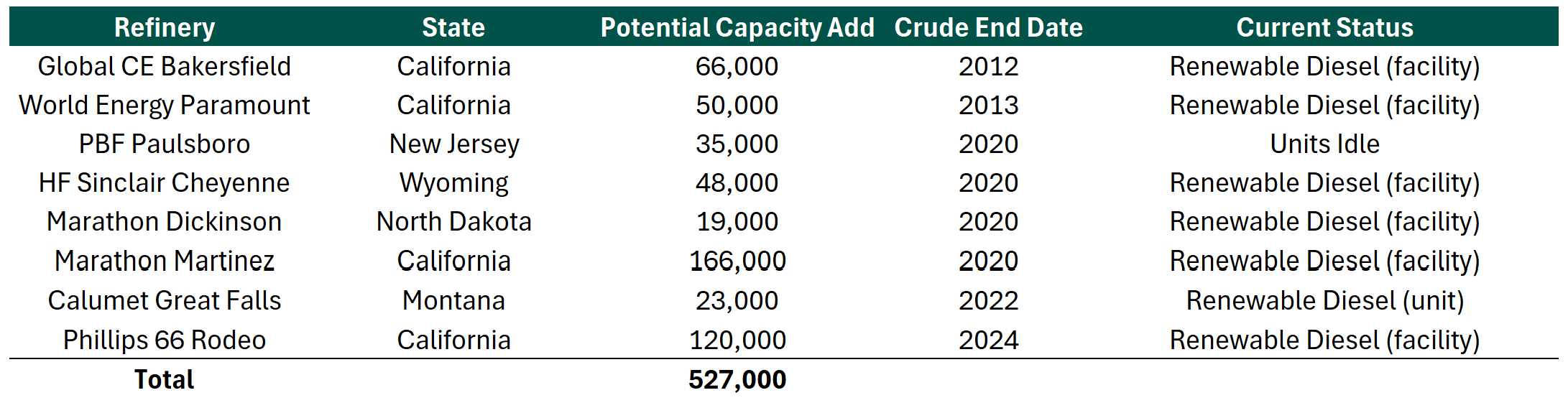
Beyond debottlenecking, refiners could evaluate the restart of idled or converted units of active facilities (shown in table below). Facilities like PBF Energy’s Paulsboro refinery in New Jersey brought several inactive units back online after the pandemic, yet approximately 35,000 barrels per day of capacity remain offline. Other operations, such as Calumet’s Great Falls facility (shown in figure below), previously converted hydrocracker units to produce renewable diesel. While reconverting these units back to crude oil processing is technically feasible, as demonstrated by CVR Refining and Vertex Refining, current strong margins for renewable diesel may make such shifts economically unappealing.
Similarly, fully converted renewable diesel facilities like HF Sinclair Cheyenne, Marathon Dickinson, and numerous California sites face high capital conversion costs, contractual delivery obligations, and favorable renewable margins, rendering near-term reconversions unlikely.
Restarting Cold-Stacked Refineries
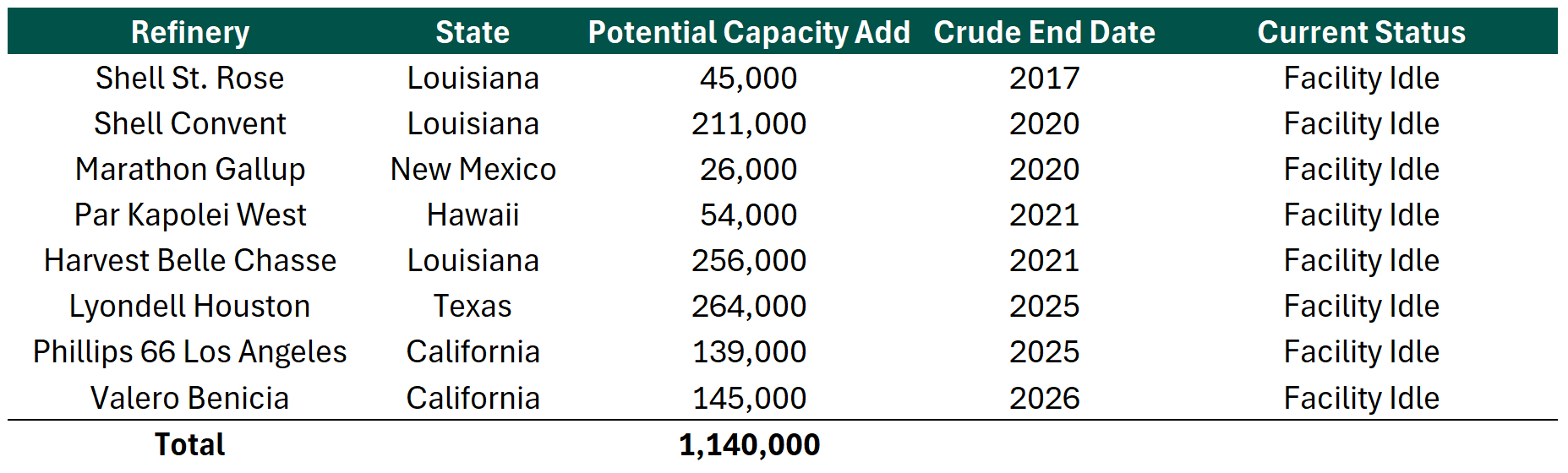
The most capital and time-intensive path involves cold-starting major refineries that have been shut down for years (shown in table below). Lyondell’s Houston refinery, idled in early 2025, represents a significant prospective capacity source in a refinery-friendly state, though its current maintenance status and restart timeline remain uncertain. Other potential candidates include Par Pacific’s Kapolei West refinery in Hawaii, idle since late 2021, and Harvest Midstream’s Alliance Belle Chasse facility, which currently operates as a midstream terminal. However, facilities like Shell’s hurricane-damaged Convent refinery and several closed sites in California face steep technical, maintenance, and environmental permitting hurdles, making rapid restarts across those locations difficult to execute without substantial intervention.
Flow/Transaction Updates and New Assets Under Coverage
Plainview has over 400 assets with crude oil throughput or transactional data on our platform and continues to add more each week. Data for existing assets under coverage are posted as soon as they become available. Below are the assets that were updated this week or newly added to coverage.