

Trans Mountain last week filed an application with the Canada Energy Regulator for its Mainline Optimization Project, a proposal to raise throughput on the existing system by about 210,000 barrels per day. The work would add 11 new pump stations plus roughly 30 kilometres of new 36-inch pipe. The company has targeted a Q4 2028 in-service date. The filing put the estimated cost at $3.97 billion CAD. If tariffs stay in line with current Trans Mountain rates, the project shows a build multiple of about 5–7x EBITDA, pointing to relatively strong project economics.
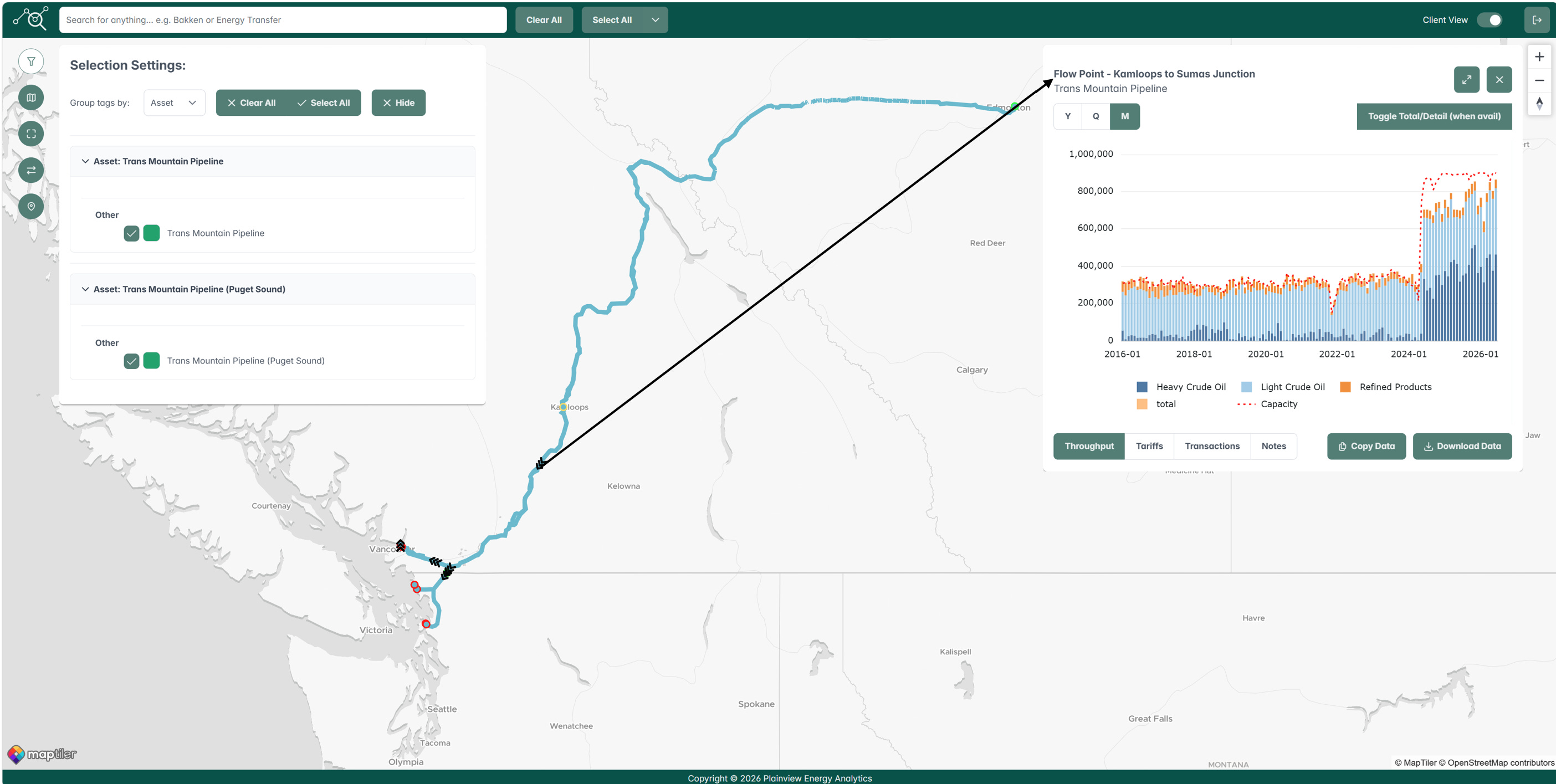
The optimization sits on top of Trans Mountain’s Drag Reducing Agent (DRA) project, which has already reached a final investment decision. DRA is expected to add about 90,000 bpd and come online in late 2026. Together the two projects would lift system capacity by 300,000 bpd by the end of 2028, taking nominal throughput from roughly 890,000 bpd to as much as 1.19 million bpd. The Trans Mountain mainline moved ~840,000 bpd of crude and refined products in 2Q 2026 (see below).
The crude-flow platform used above is available as a separate product. For pricing, a walkthrough, or a free trial, email matthew.lewis@plainview-energy.com
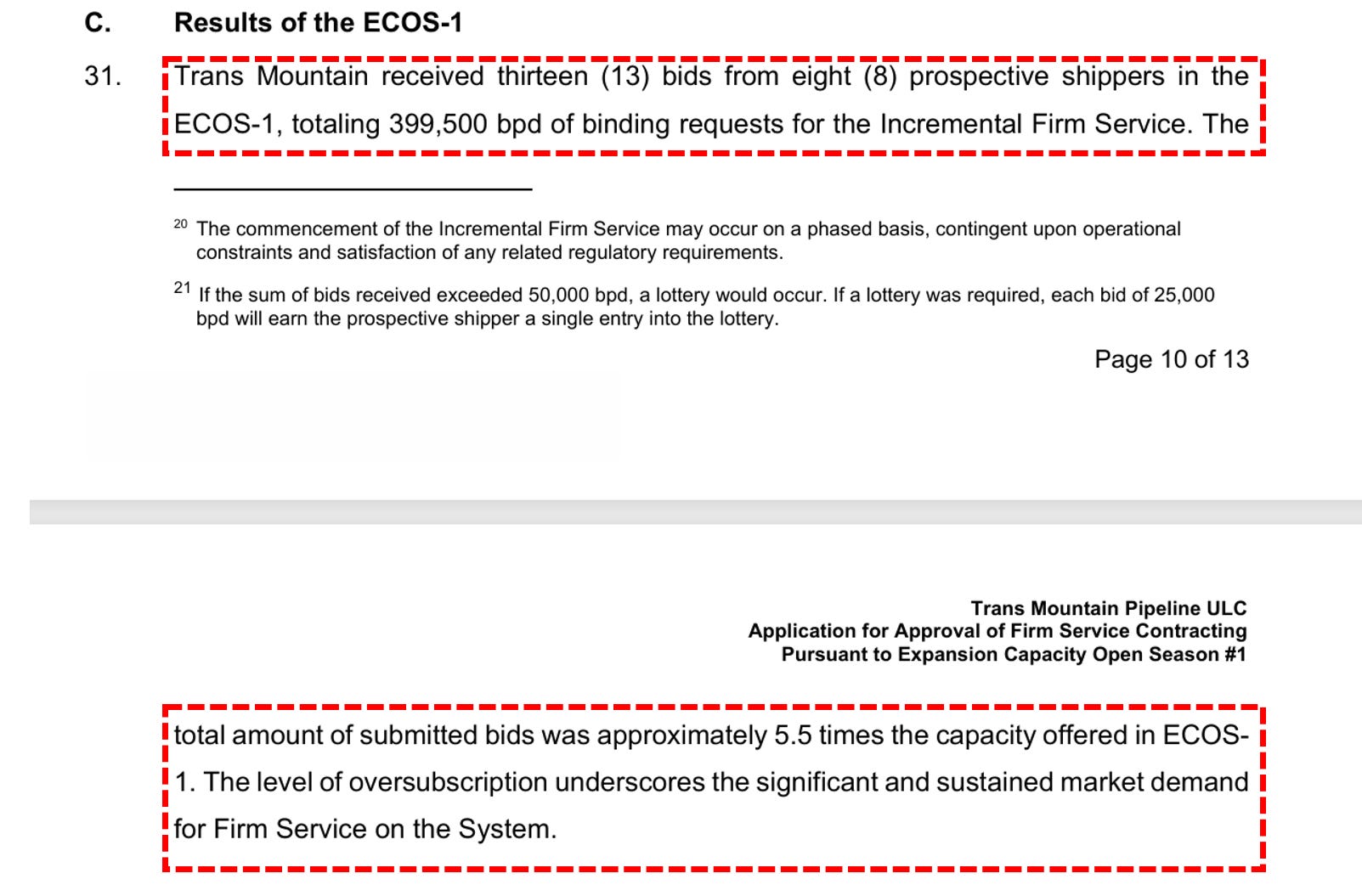
Market interest in the additional capacity also looks robust. Trans Mountain recently disclosed to the CER that binding commitments for the 90,000 bpd DRA project approached 400,000 bpd, well above the capacity being added (see text below). That oversubscription is a useful signal that the larger 210,000 bpd Mainline Optimization project should also attract enough firm shipper support to be fully subscribed once a binding open season is held.
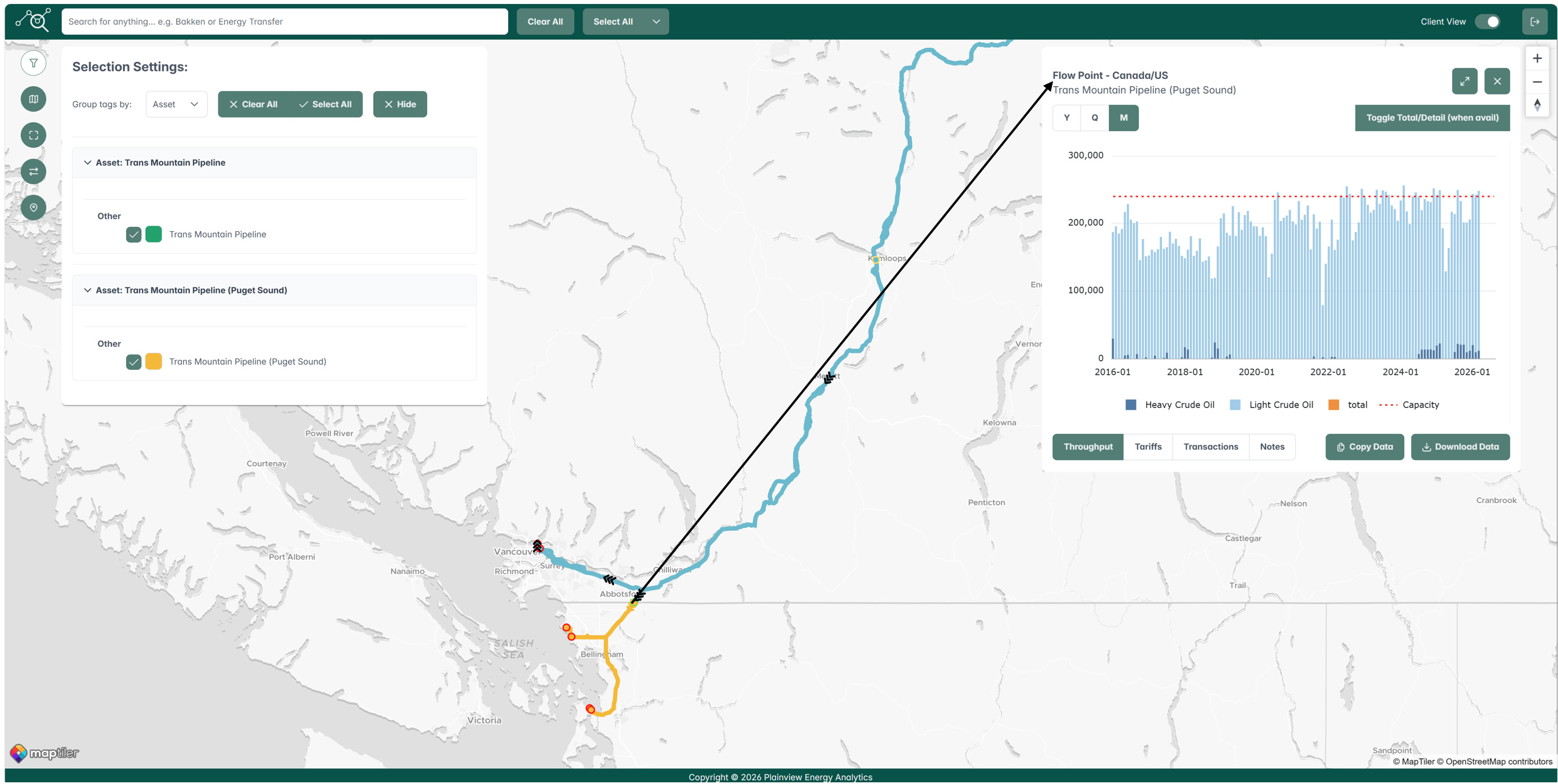
Separately, Trans Mountain disclosed to the CER a new expansion project on the Puget Sound Pipeline, the U.S. offshoot that supplies Washington state refineries (see orange lines in below figure). The Sumas Terminal Efficiency Project involves limited upgrades at terminals and pump stations. The CER filing did not state a specific capacity increase, but earlier company disclosures indicated Puget Sound could rise from about 240,000 bpd to as much as 300,000 bpd. Extra light-oil deliveries into the U.S. would give Trans Mountain more flexibility between Washington refiners and export loadings at the Westridge Marine Terminal. Combined with the Second Narrows dredging project at the Port of Vancouver, slated for completion in 2027, the terminal work is intended to ensure the system can actually deliver the additional mainline volumes once they come online.
The crude-flow platform used above is available as a separate product. For pricing, a walkthrough, or a free trial, email matthew.lewis@plainview-energy.com