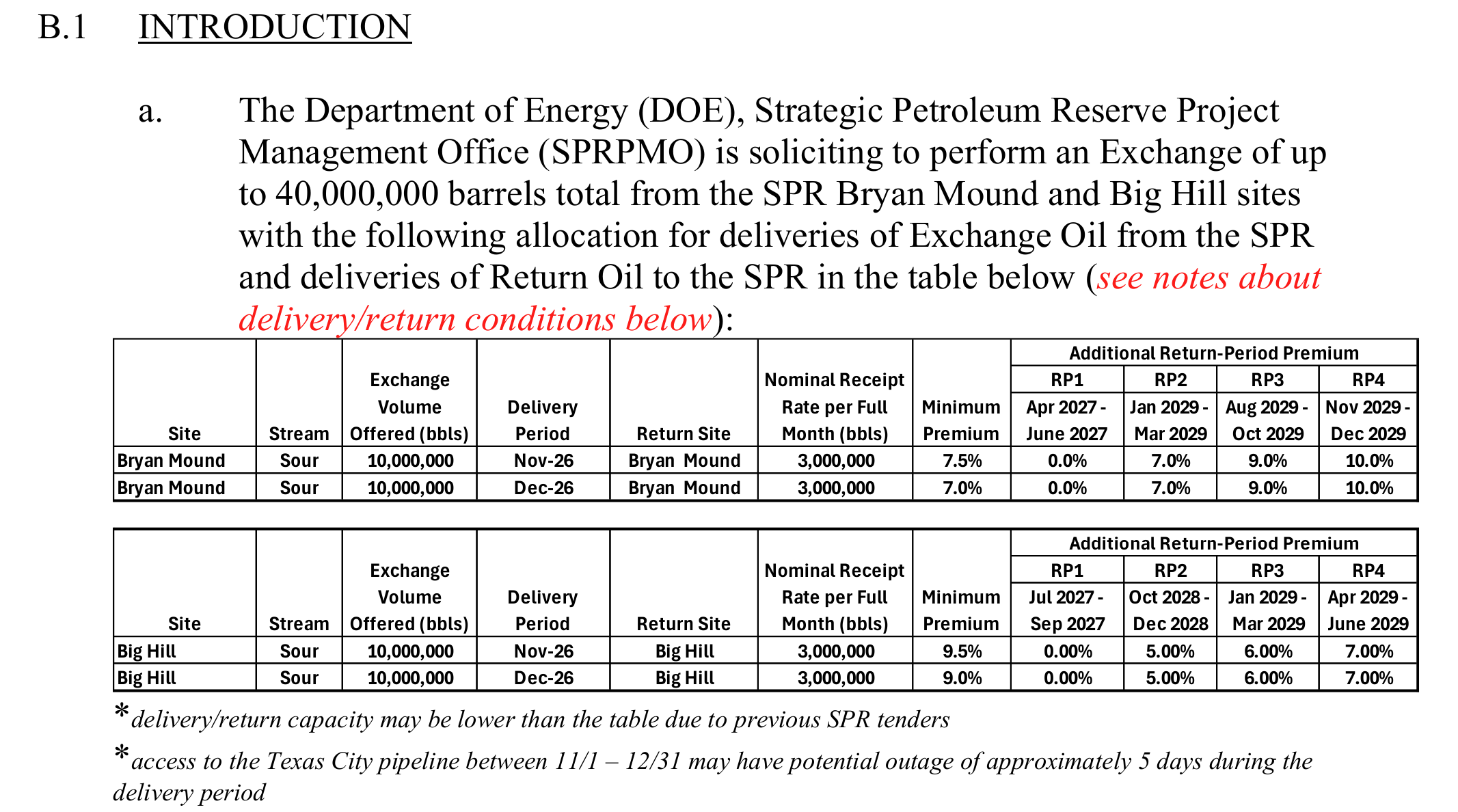
The U.S. Department of Energy (DOE) has issued a Request for Proposals soliciting a physical exchange of up to 40 million barrels of sour crude oil from the Strategic Petroleum Reserve (SPR). If awarded, deliveries would be scheduled for November and December 2026, evenly split between two Gulf Coast storage sites: 20 million barrels from Bryan Mound, Texas, and 20 million barrels from Big Hill, Texas (see below table). Under the terms of the exchange, bidders who take prompt SPR crude must return the full delivered volume plus an extra percentage of “premium” barrels during a designated return window. Bidders can select return dates ranging from mid-2027 to later windows in 2028 and 2029. The DOE has set a baseline minimum premium of 7.0% to 9.5% for 2027 returns, which increases by an additional 5.0% to 10.0% in extra barrels for returns deferred into 2028 or 2029.
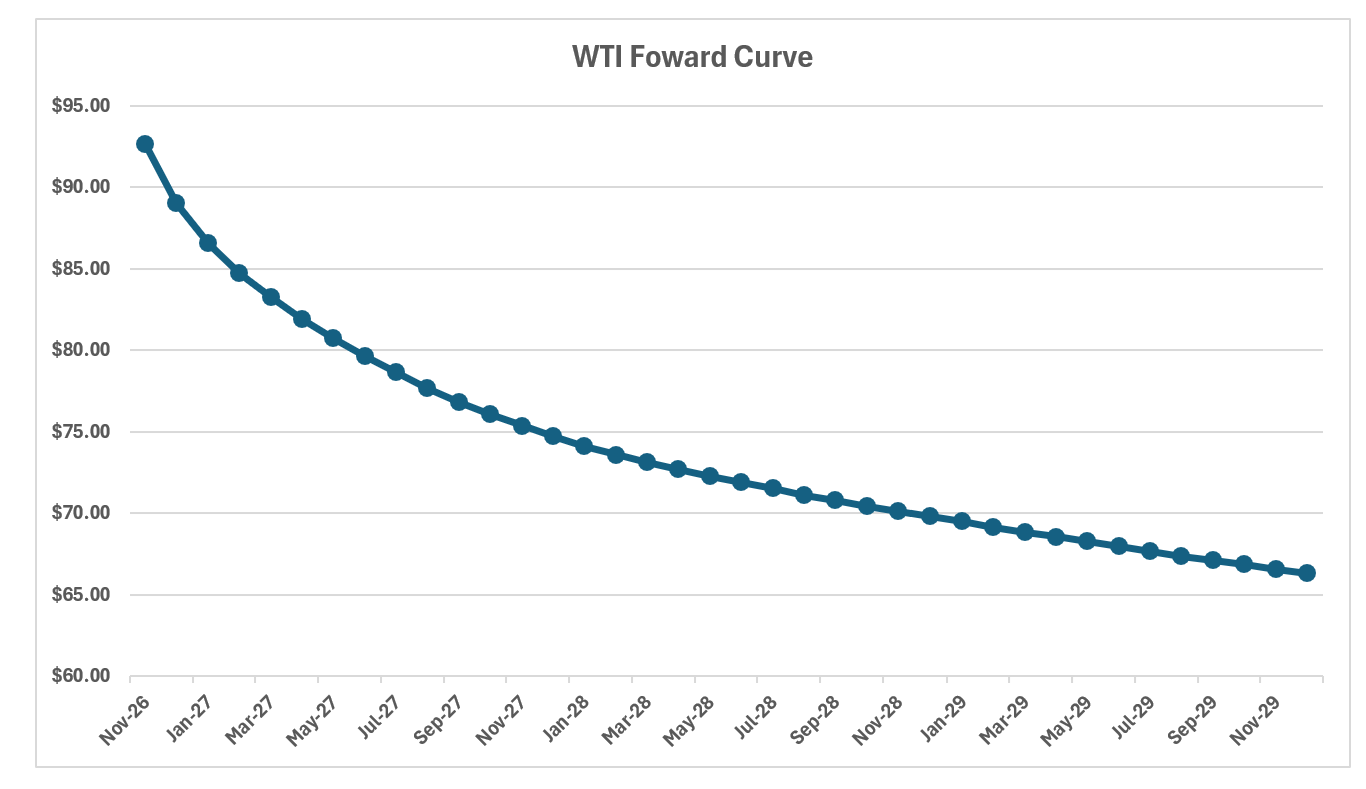
Despite these required premiums, current market conditions offer strong financial incentives for potential bidders. The crude oil forward curve is in steep backwardation, meaning near-term 2026 barrels trade at a substantial premium over later contracts post 2026 (see graph below). This price gap provides enough margin for bidders to sell expensive oil today and buy back cheaper replacement barrels later while keeping a solid profit, even after paying the required barrel premiums. The trade is especially attractive for 2029 returns. Although long-dated returns carry higher premium fees, 2029 oil prices are low enough to offset the cost. Furthermore, traders could invest the net cash proceeds from their late-2026 sales into risk-free government bonds, earning interest over the holding period before repurchasing the physical oil.
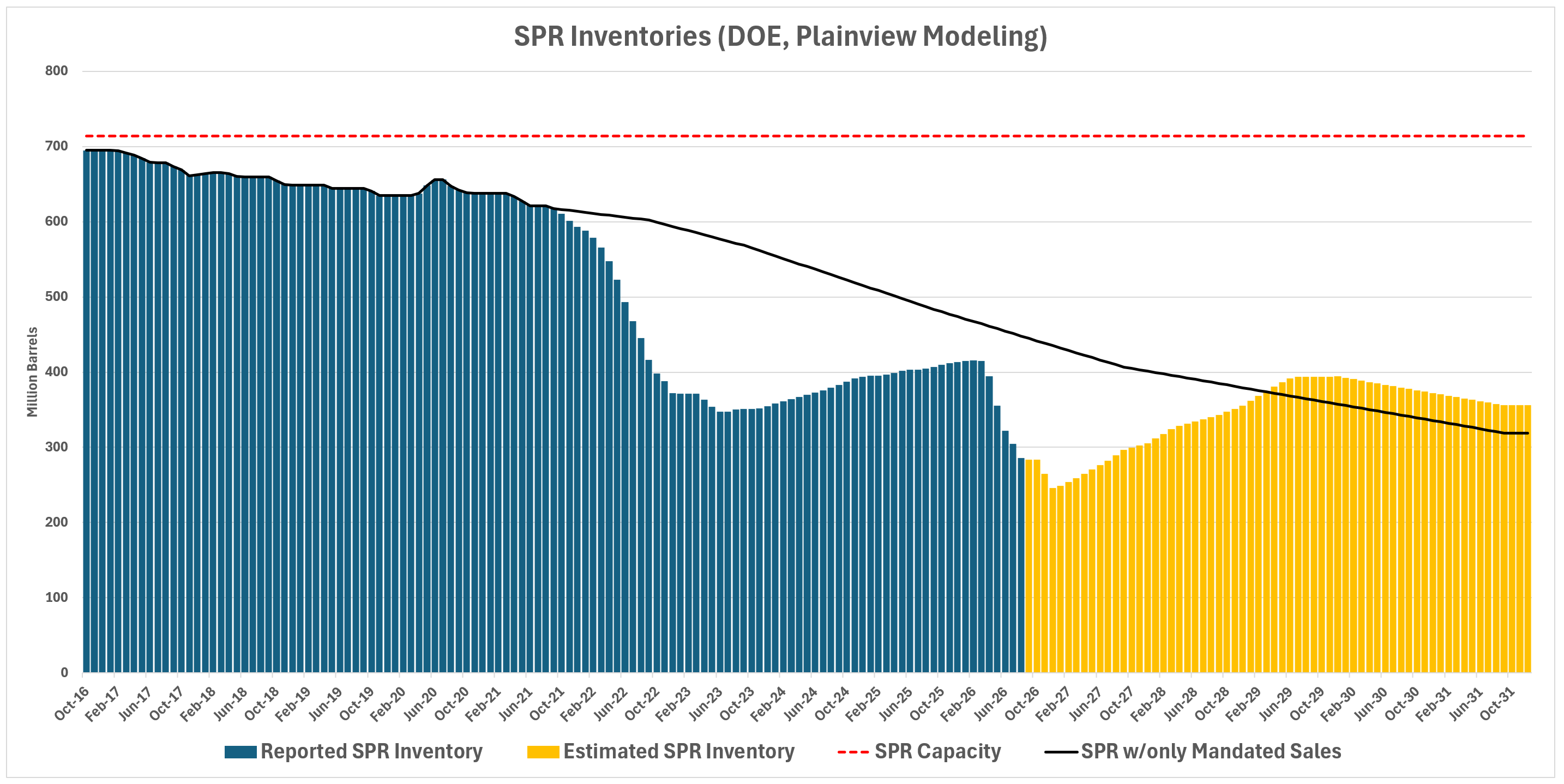
Barring a sudden flattening of forward oil prices before the bidding deadline or quality concerns of the remaining SPR crude, we expect this auction to be highly successful, with buyers taking all or nearly all of the 40 million barrels offered. This stands in clear contrast to a prior SPR tender earlier this year, where low participation occurred because narrowing price spreads wiped out trade margins during the submission window. Provided current market structure holds, strong buyer demand should clear most of the volume, bringing up to 40 million additional barrels onto the market in late 2026. Our SPR modeling (see graph below) currently assumes this latest SPR tranche is returned in the 2028-2029 window.