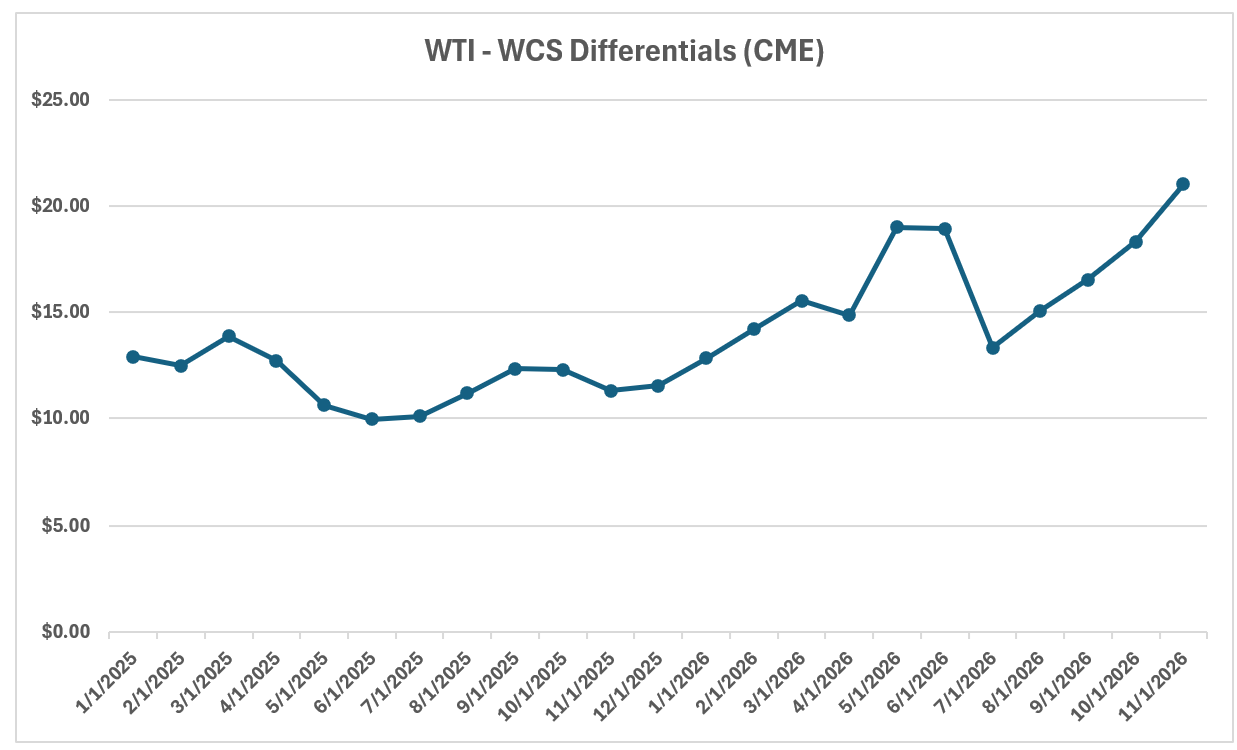
The discount for Western Canadian Select (WCS) crude relative to West Texas Intermediate (WTI) has surged to around $21.00 per barrel last week for late 2026 and early 2027 deliveries. This recent spike appears to be primarily driven by a sudden contraction in U.S. Midwest refining demand. Exxon’s 267,000 barrel-per-day Joliet refinery unexpectedly went offline following a facility-wide power outage last week. Compounding the situation, BP’s 435,000 barrel-per-day Whiting refinery, one of the largest facilities in the Midwest, is currently undergoing a planned outage. Because both refineries rely heavily on Canadian heavy crude, these dual disruptions have sharply reduced regional processing capacity.
With less crude being consumed in the Midwest, excess Canadian barrels must be pushed into storage or directed further south to U.S. Gulf Coast (PADD 3) refiners or export markets. Reaching Gulf Coast markets incurs significantly higher transport costs, naturally forcing the price differential wider. Furthermore, Canadian barrels arriving in the Gulf Coast face direct competition from other heavy crude imports, particularly heavy grades from Mexico and an increasing volume of Venezuelan crude entering the U.S. market. To successfully secure refinery space against these competing foreign heavy crudes, Canadian oil must offer deeper discounts.
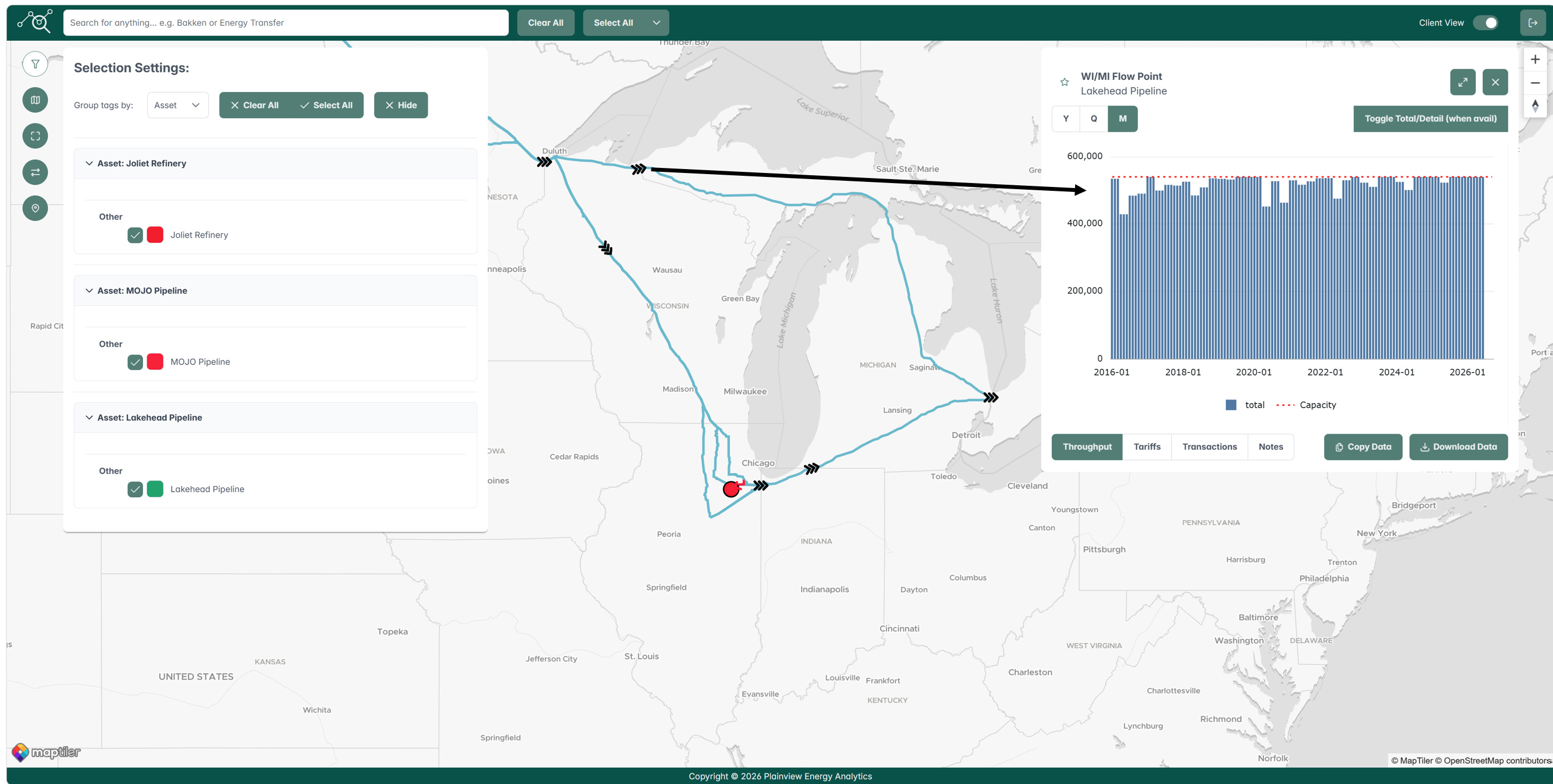
Beyond demand-side constraints, temporary infrastructure outages may have added further friction to Canadian crude egress. Enbridge’s Line 5, which carries a capacity of 540,000 barrels per day and typically operates near full utilization (see graph below), experienced a temporary shutdown following a recent pipeline rupture. Although brief, this outage may have created bottlenecks for current monthly flows, further exacerbating downward pressure on WCS pricing.
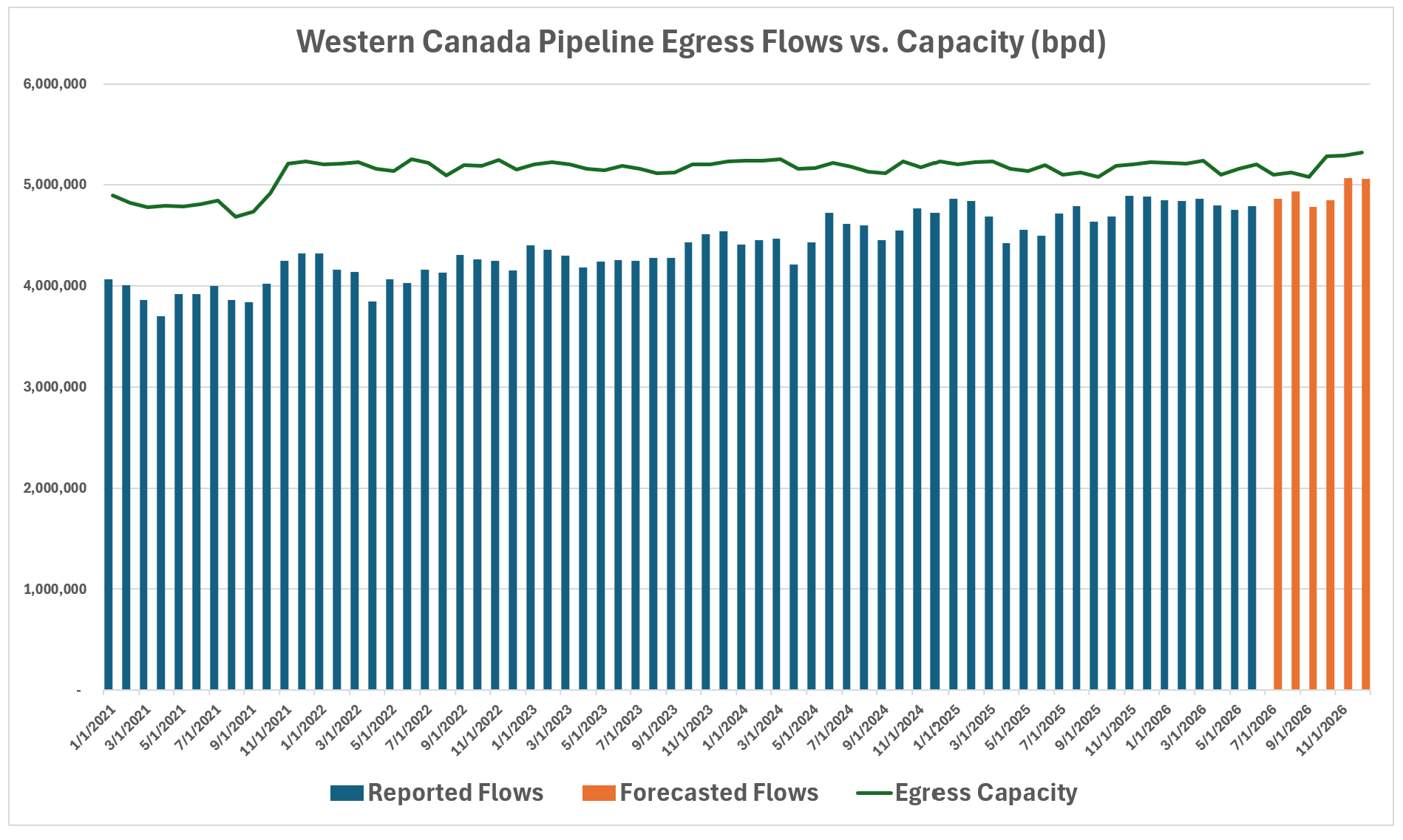
Despite the near-term weakness in forward markets, the differential could narrow heading into the winter. Refinery operations at Joliet and Whiting should recover in short order, restoring baseline Midwest demand. On the logistics front, while egress is tight, we forecast capacity remains sufficient to handle anticipated volumes (see graph below), especially as the Trans Mountain pipeline expansion brings its drag-reducing agent (DRA) project online to add an estimated 90,000 barrels per day. Provided these pipeline capacity additions and refinery restarts proceed as expected, broader transport bottlenecks should be avoided, paving the way for a narrowing price gap.
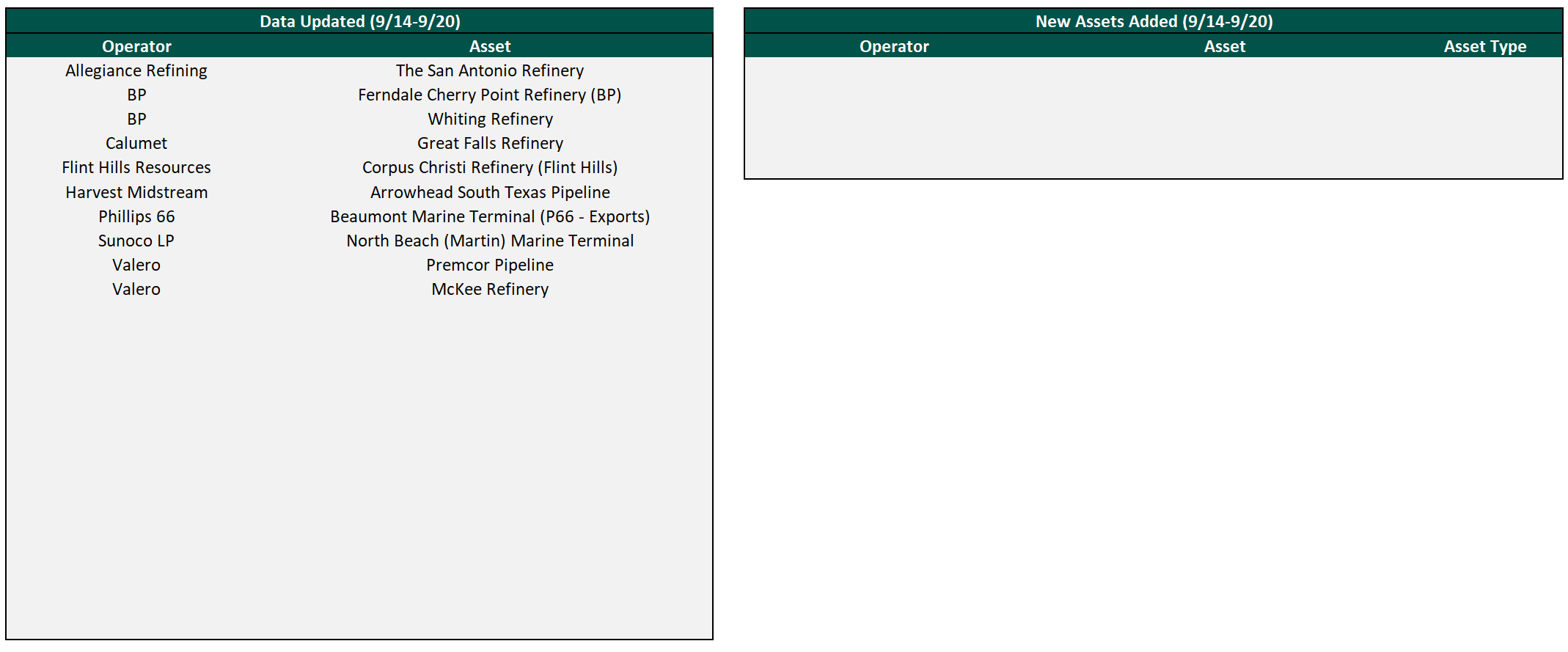
Flow/Transaction Updates and New Assets Under Coverage
Plainview has over 400 assets with crude oil throughput or transactional data on our platform and continues to add more each week. Data for existing assets under coverage are posted as soon as they become available. Below are the assets that were updated this week or newly added to coverage.