

US Pursues Quick Venezuelan Oil Revival - Canadian Downside Likely Mitigated by Export Optionality
According to a recent article by Bloomberg, the United States is actively discussing plans with Chevron Corp. and other major crude producers, along with oilfield service providers, to rapidly increase Venezuela’s oil production. This initiative focuses on targeted repairs and upgrades to existing infrastructure, such as fixing damaged equipment and revitalizing old drilling sites, rather than pursuing a full-scale reconstruction estimated at $100 billion. With a modest initial investment, these efforts could boost output by several hundred thousand barrels per day in the short term, providing a cost-effective way to revive the country’s significant heavy crude reserves and potentially stabilize global supply dynamics.
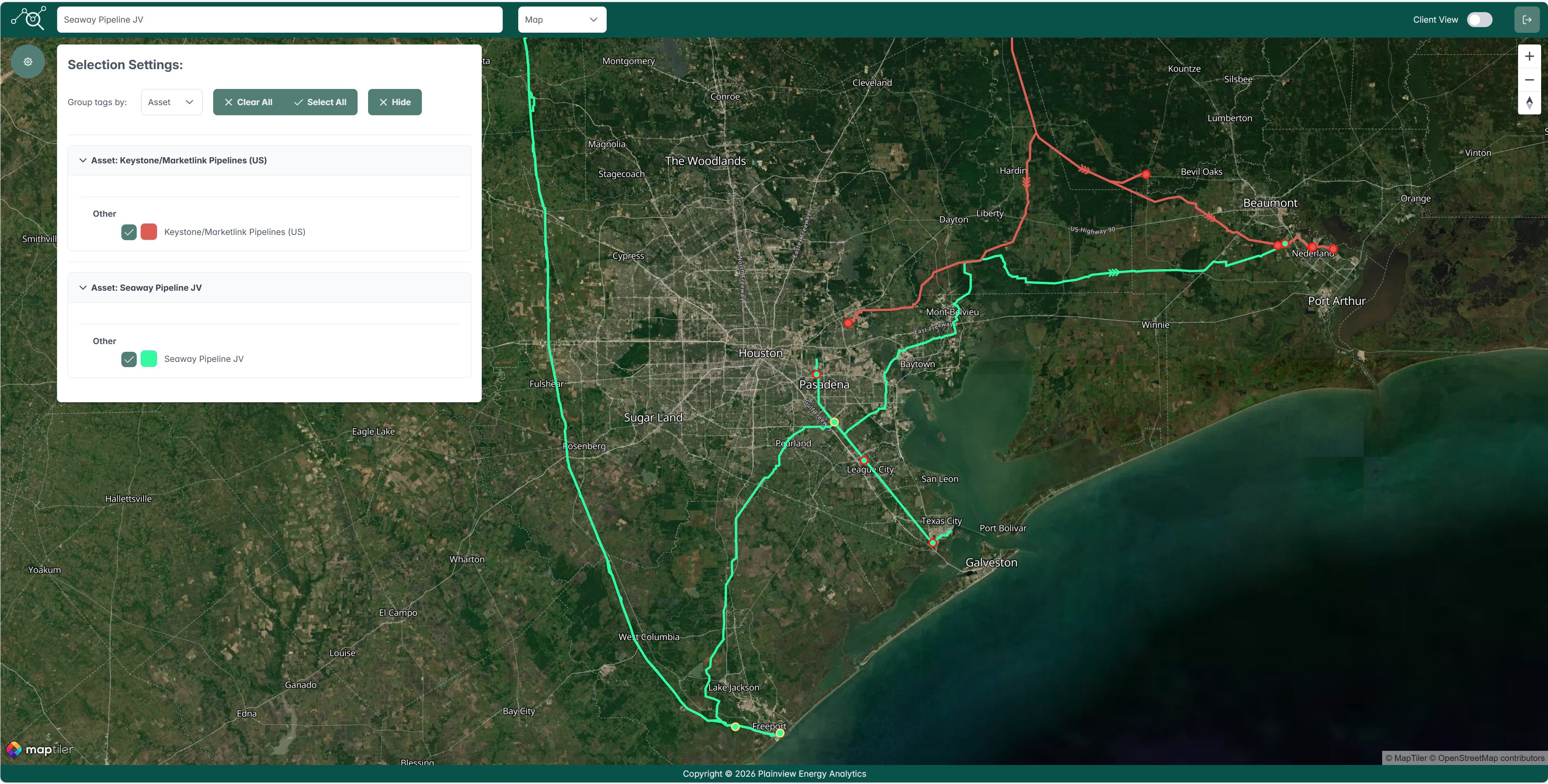
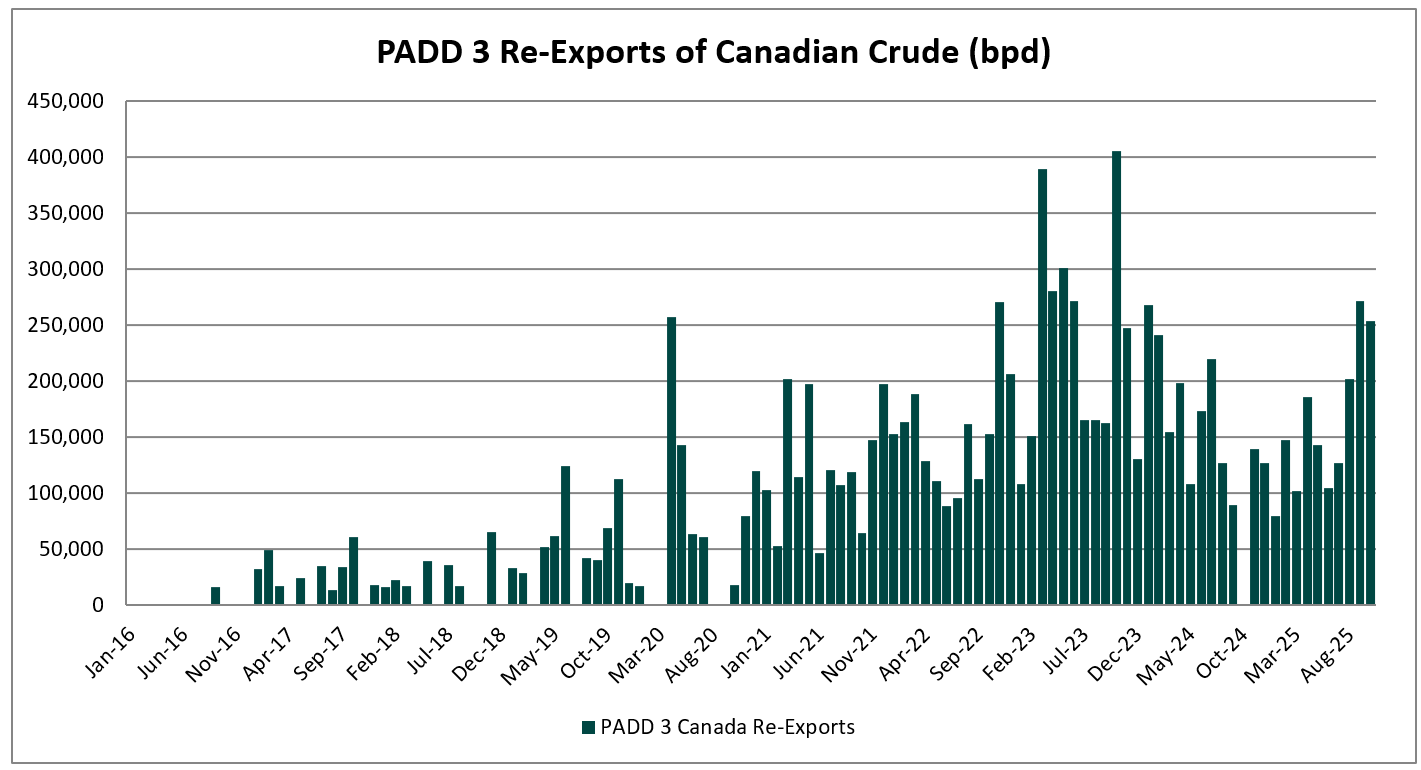
Market participants remain watchful about the potential arrival of additional Venezuelan heavy crude on global markets, particularly its implications for Canadian heavy oil producers whose volumes flow to US Gulf Coast refineries in PADD 3. The majority of Canadian heavy crude reaches the region via Seaway and Keystone/Marketlink pipelines, which offer direct access to both domestic refineries and major export terminals in locations like Freeport, Texas City, Houston Ship Channel, and Nederland (see photo above). US trade data shows average re-exports of Canadian crude from the Gulf Coast at around 175,000 barrels per day over the past four years (see figure below), highlighting built-in optionality for these volumes to reach international markets. While increased Venezuelan supply may exert some downward pressure on heavy crude pricing worldwide, the robust export capabilities for Canadian barrels should help mitigate any severe negative impacts.
Bakken Rig Count Poised for Further Decline, but Production Impact May be Delayed
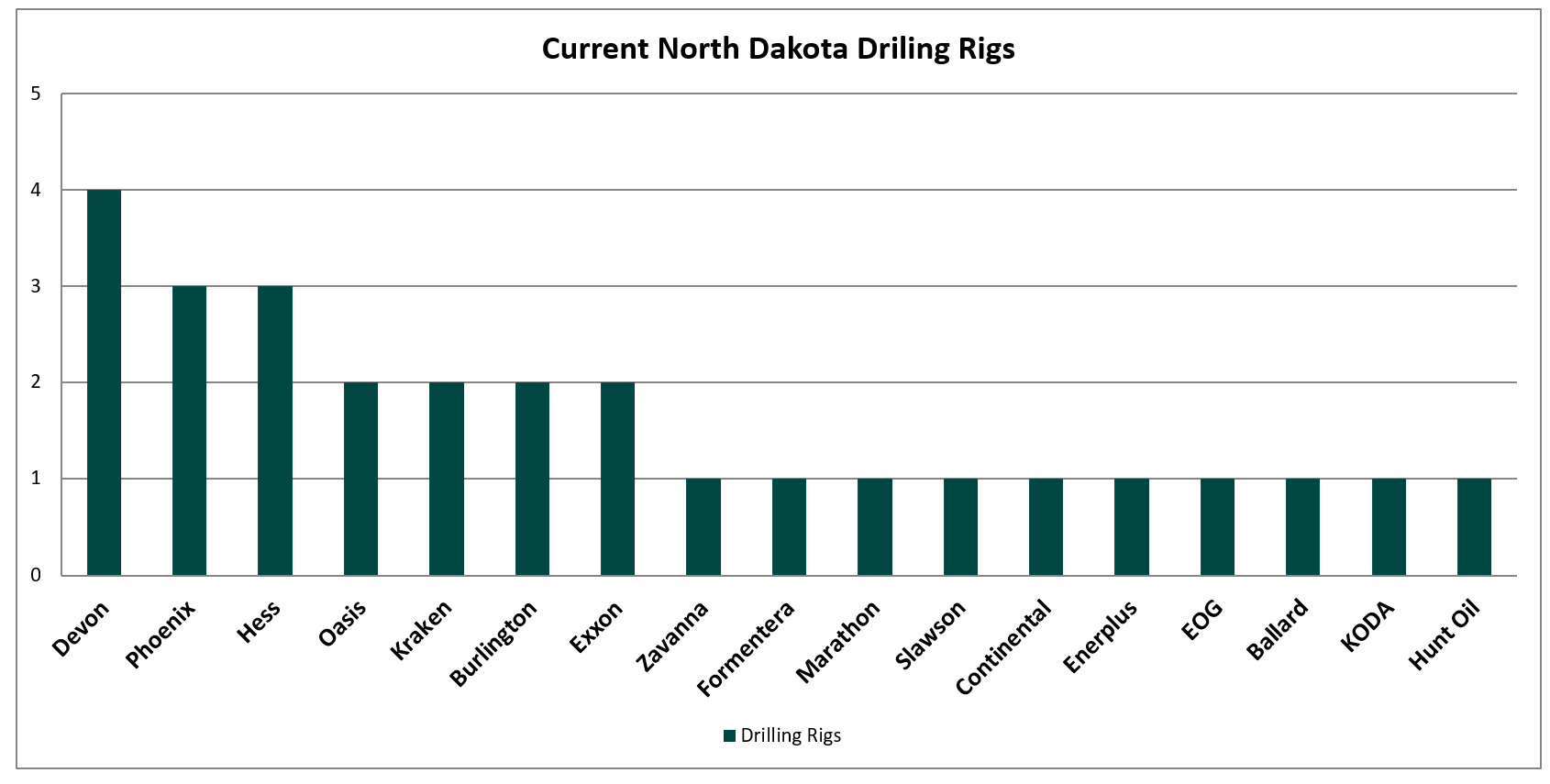
The North Dakota Department of Mineral Resources has confirmed that Continental Resources plans to drop its remaining drilling rigs in the Bakken shale during March, following comments from company founder Harold Hamm last week. While this move signals a significant reduction in drilling activity, Continental’s production may not significantly decline immediately. The company maintains a substantial inventory of drilled but uncompleted wells, which it will continue to bring online. Kinder Morgan’s recent earnings call further indicated that Continental is likely to keep completing wells through August, suggesting any meaningful production drop would likely not occur until early fall at the earliest.
Beyond Continental, the director of the North Dakota Department of Mineral Resources has received indications that at least two other operators intend to drop at least one rig each. Current state data shows the North Dakota rig count at 28. With Continental’s reductions and the additional rig drops, the total is projected to fall to at least 25 by the end of March, assuming no new rigs are added.
Flow/Transaction Updates and New Assets Under Coverage
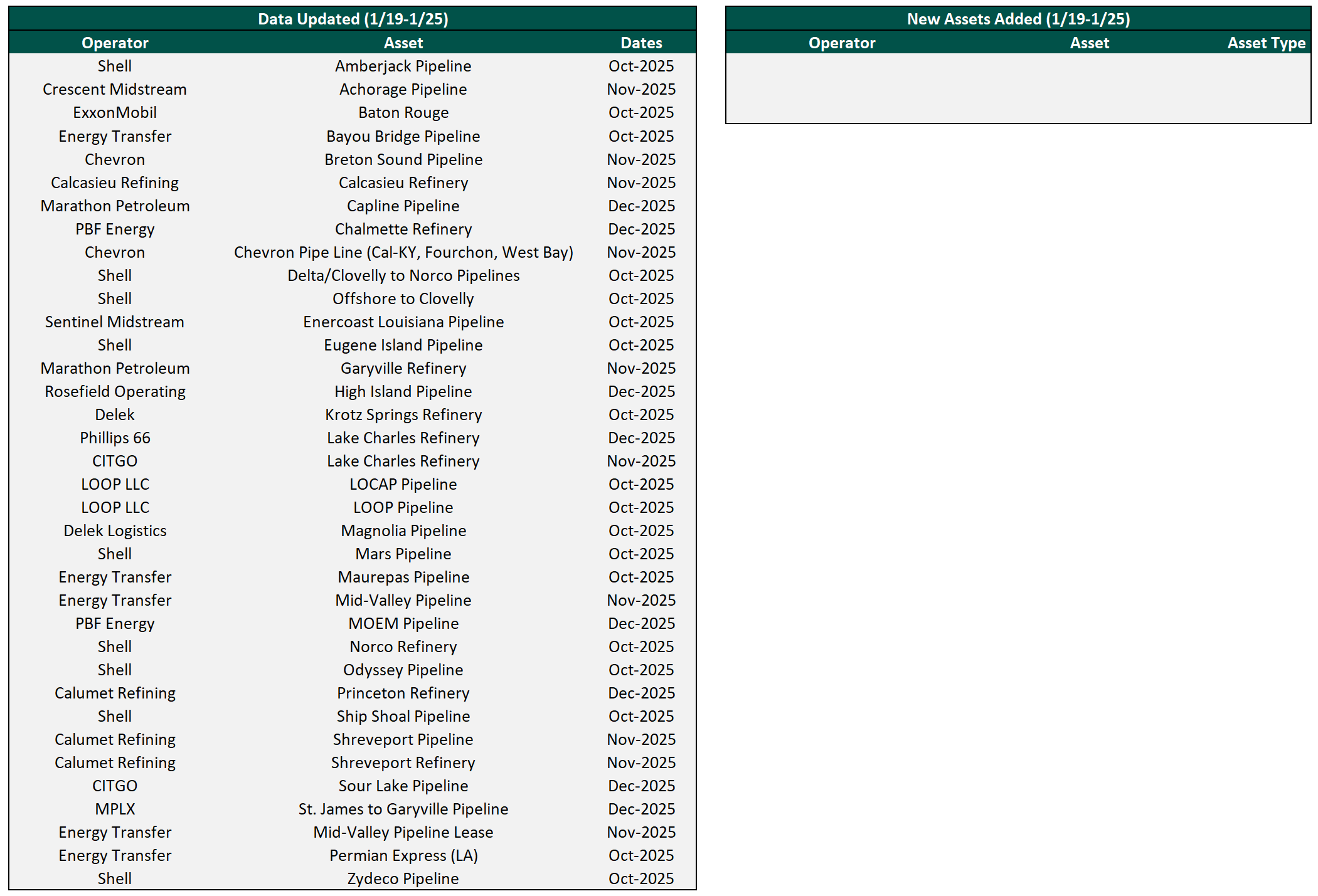
Plainview has over 300 assets with crude oil flow or transactional data on our platform and continues to add more each week. Data for existing assets under coverage are posted as soon as they become available. Below are the assets that were updated this week or newly added to coverage.
The export optionality angle on Canadian crude is an underappreciated point. Most folks jump straight to displacement fears when Venezuelan supply comes up, but the Gulf Coastinfrastructure buildout has really changed the calculus. The DUC inventory buffering the Bakken production drop is interesting too, means we wont see the rig count decline in output numbers for months.