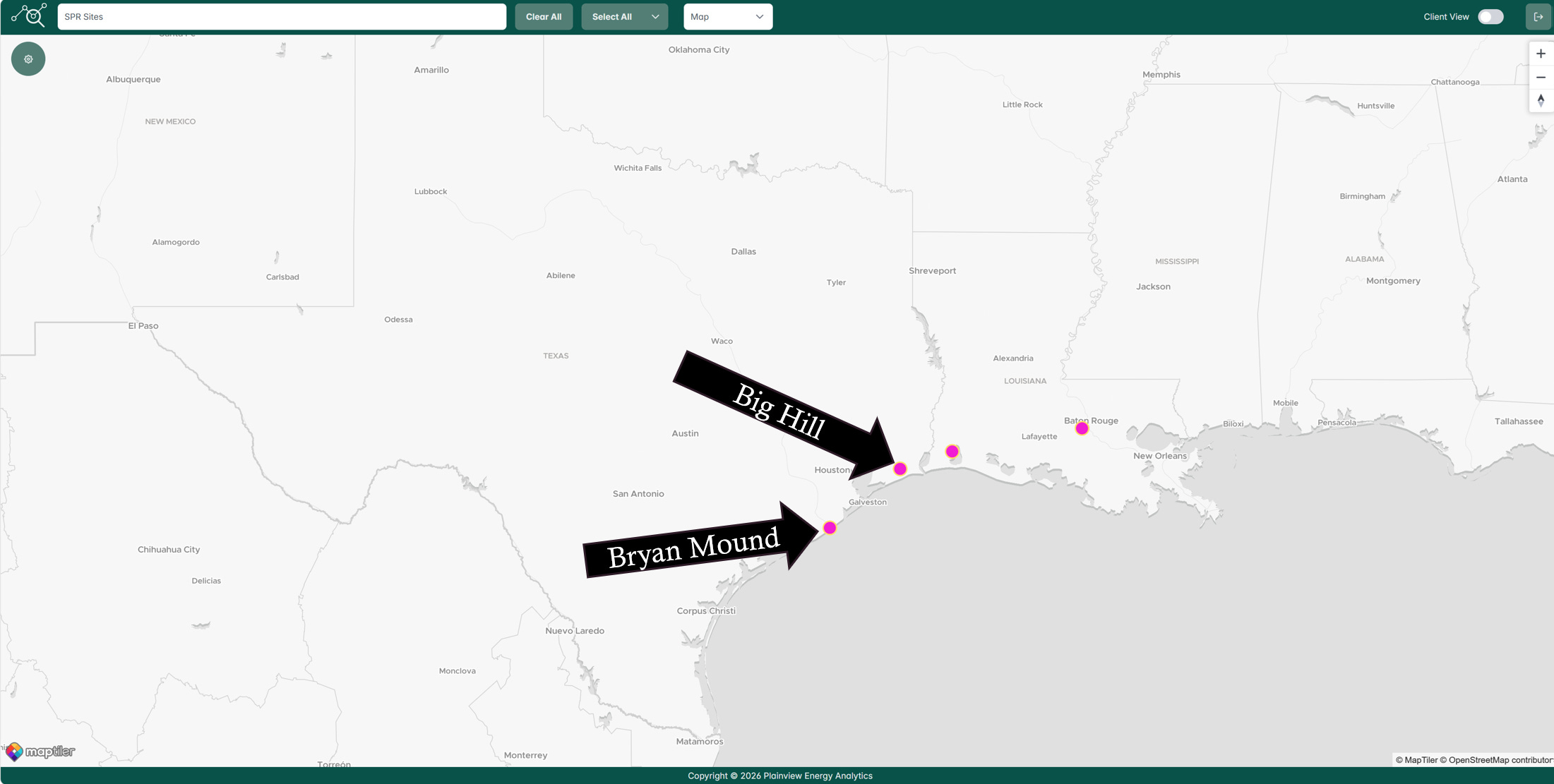
Last week we dove into the specifics of the U.S. Department of Energy’s (DOE) request for proposals to exchange 40 million barrels of crude oil from the Strategic Petroleum Reserve (SPR). Assuming the barrels are awarded, the distribution is scheduled across November and December 2026 and will split evenly between the Bryan Mound and Big Hill facilities at 20 million barrels per month. Beyond adding physical supply, this massive distribution relies on third-party midstream infrastructure, delivering a notable earnings tailwind for key midstream operators in Texas.
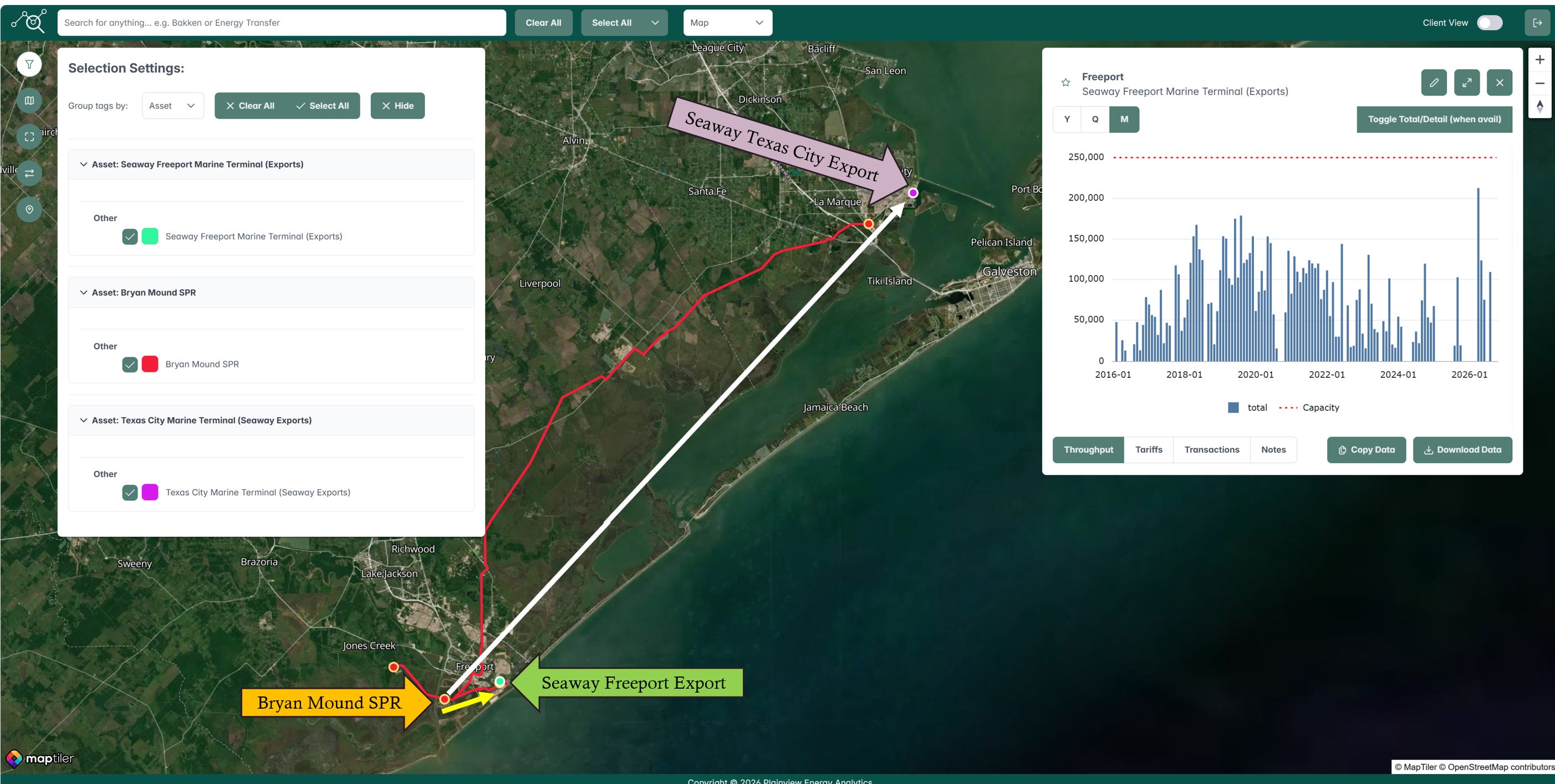
For barrels originating at the Bryan Mound SPR facility, DOE-owned pipelines will route crude to either the Seaway export docks at Freeport (green arrow in below figure) or to refining and terminal assets in Texas City (purple arrow), including a second export-capable Seaway dock. Historical data (graph in figure below) from earlier SPR distributions in April and May 2026 showed immediate, dramatic spikes in export volumes across both Seaway marine terminals as operators moved crude into global markets. Jointly owned by Enbridge and Enterprise Products Partners, the Seaway system is positioned once again to capture incremental throughput fees as these fresh volumes hit the coast.
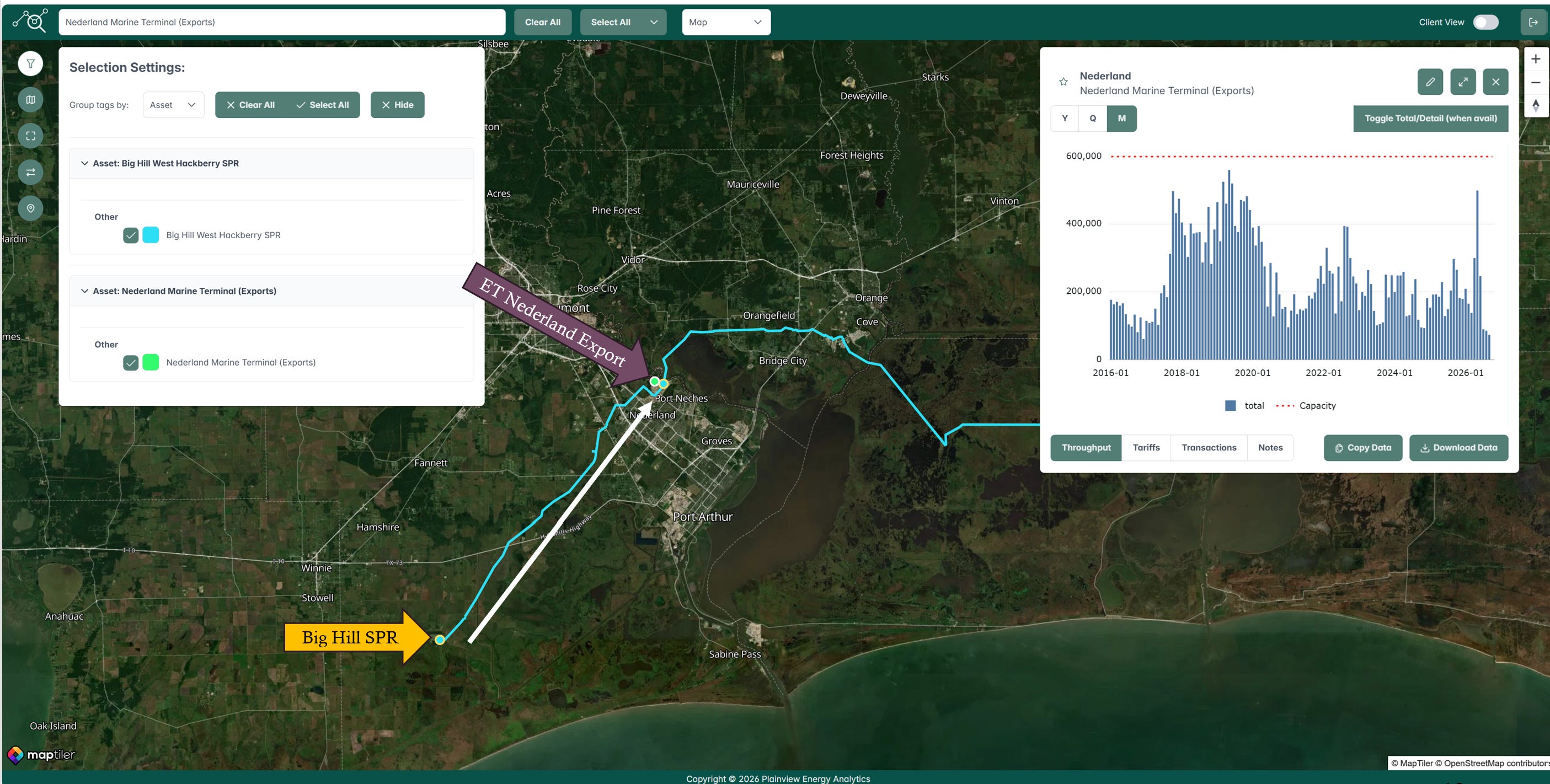
Simultaneously, the Big Hill SPR facility provides direct pipeline connectivity to refining and terminal complexes in the Nederland area. A DOE-owned pipeline (blue line in figure below) directly connects Big Hill to Energy Transfer’s Nederland terminal, which historically logged distinct export surges during the 2021–2023 SPR releases. While Big Hill remained inactive during earlier releases this year, the nearby West Hackberry SPR facility in Louisiana appears to have routed its releases to Nederland for export (see mid-2026 spike in graph below). With Big Hill set to supply throughput for the upcoming distribution, Energy Transfer stands to gain significant volume-based revenue across its Nederland marine terminal.
Critically, because the current program operates as an oil exchange rather than a permanent sale, the financial upside for both Energy Transfer and Seaway extends far beyond the initial distribution phase. As market participants return replacement barrels to government reserves in upcoming months and years, flow directions will flip. Both Energy Transfer’s Nederland terminal and Seaway’s marine locations will handle the incoming import ships, creating a rare two-way revenue cycle that maximizes terminal utilization on both egress and backfill.
Flow/Transaction Updates and New Assets Under Coverage
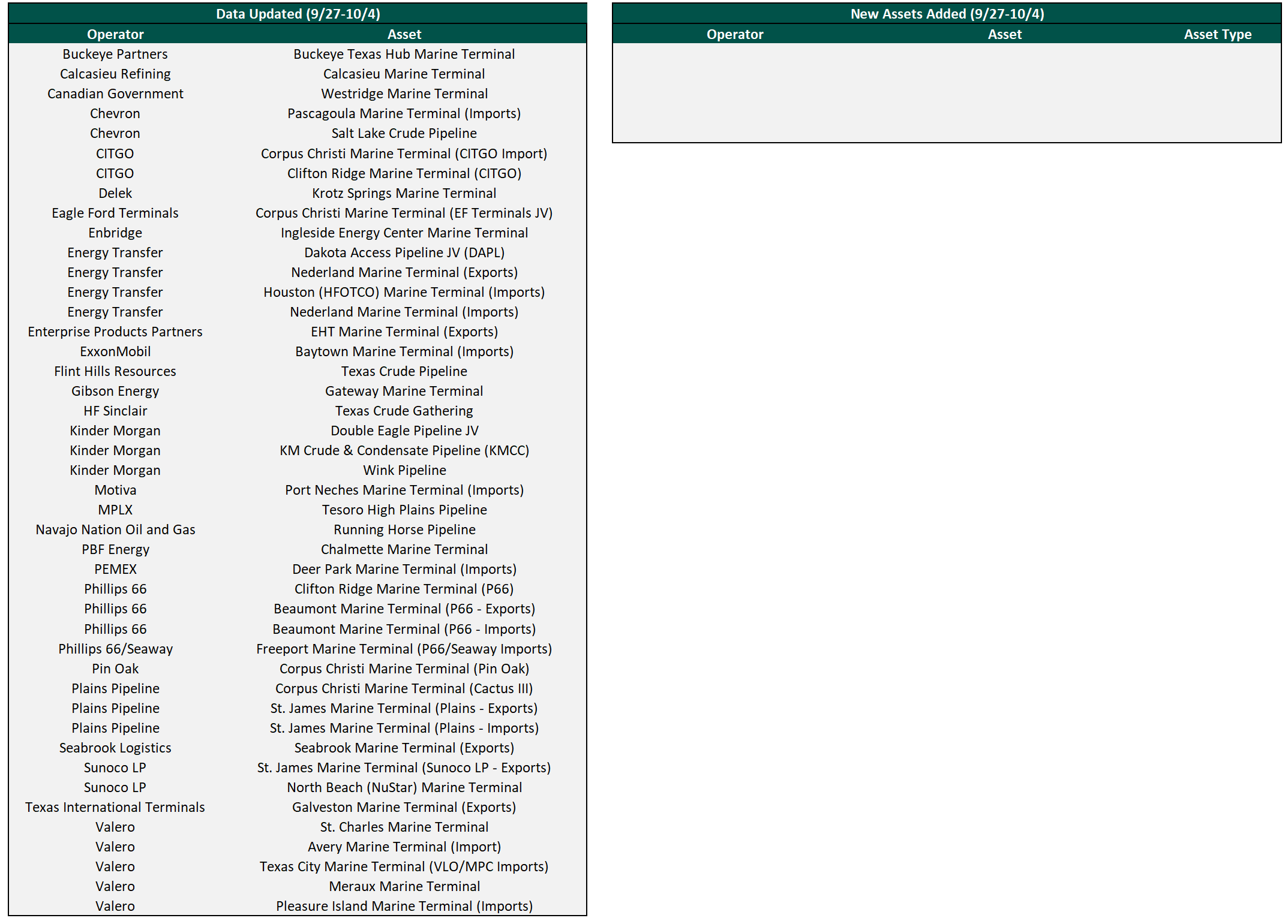
Plainview has over 400 assets with crude oil throughput or transactional data on our platform and continues to add more each week. Data for existing assets under coverage are posted as soon as they become available. Below are the assets that were updated this week or newly added to coverage.