South Bow's Prairie Connector: The Quest for a Durable Pipeline Permit
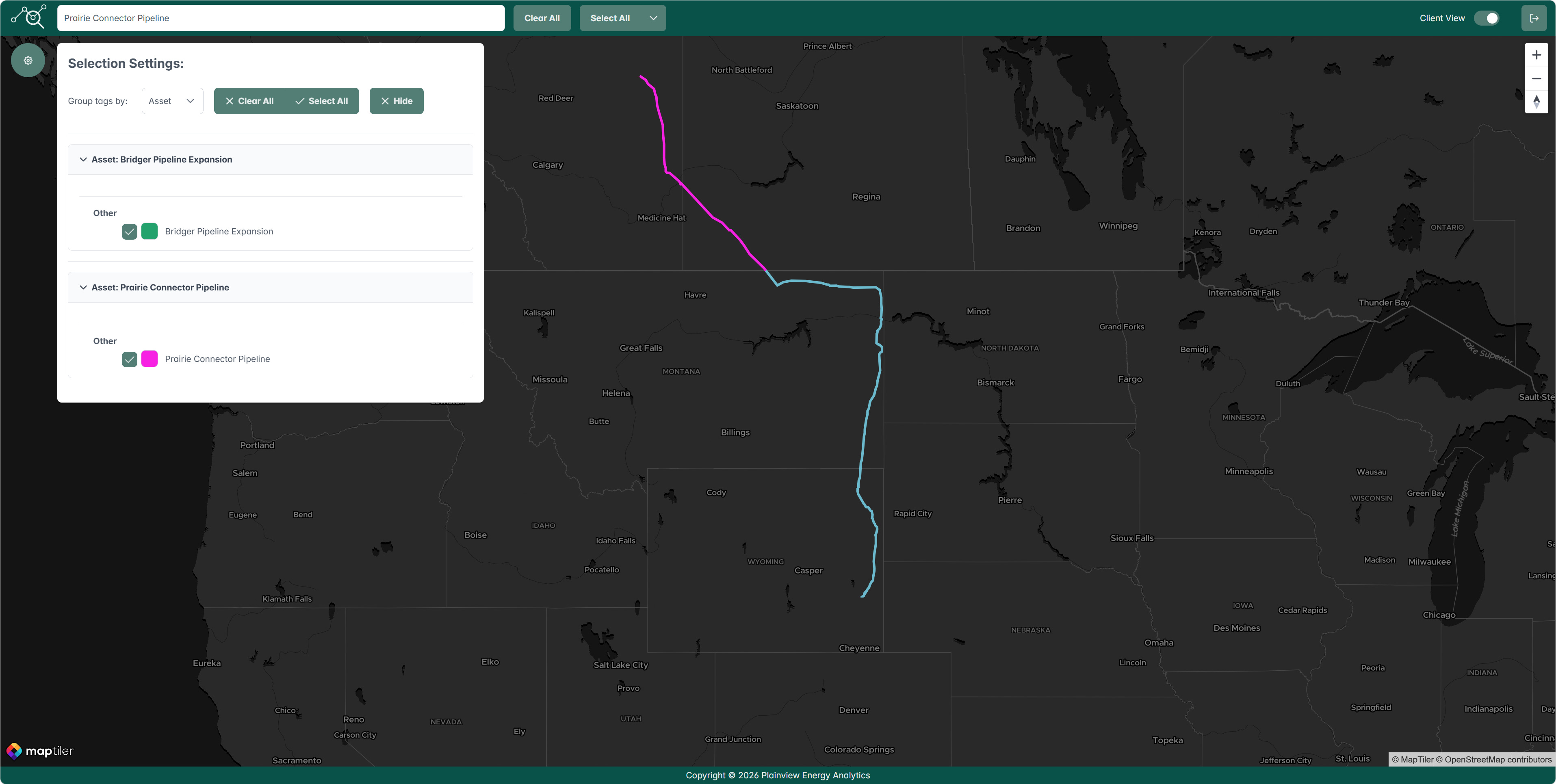
South Bow Corporation announced a major milestone for its proposed Prairie Connector project on Friday as the company successfully closed its open season after securing binding, 20-year transportation commitments from shippers. Despite the commercial momentum, South Bow outlined a surprisingly long timeline targeting a Final Investment Decision (FID) by mid-2027. South Bow CEO Bevin Wirzba emphasized at a conference earlier last week that the company will not deploy capital until it secures “complete durability” of its U.S. cross-border permit.
The original Keystone XL project collapsed when President Joe Biden unilaterally revoked the presidential permit previously granted by President Donald Trump. Because international oil pipelines currently operate under the implied Article II constitutional powers of the executive branch rather than explicit statutory laws, their permits exist entirely at the political whim of whoever occupies the White House.
To establish a truly durable route forward, the pipeline’s regulatory framework may need to shift out of this constitutional “gray zone” and into explicit statutory law. Under Article I of the Constitution, Congress holds the absolute right to regulate foreign commerce, which federal courts historically rule overrides vague executive foreign affairs claims. If Congress exercises this authority by passing a legislative statute for oil pipelines, the power to grant and revoke cross-border permits could permanently transfer to a legislative framework, protecting multi-billion-dollar energy corridors from being canceled by the stroke of a future president’s pen.
Bakken and U.S. Oil Rig Count Climbs as Producers Respond to Higher Prices
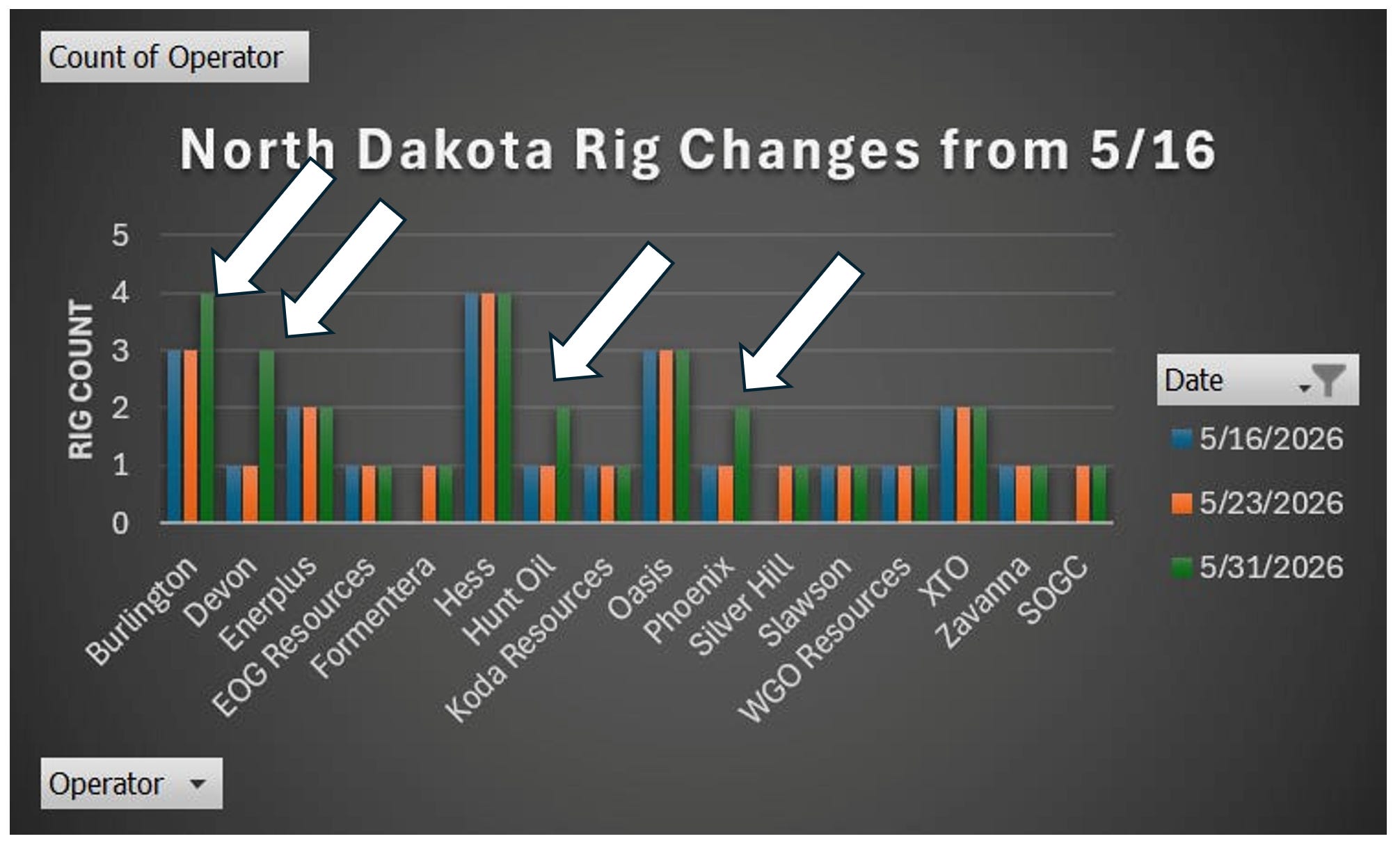
North Dakota’s active drilling rig count increased by five over the past week, reaching 30 rigs statewide. This marks a notable rebound, up eight rigs from the three-year low of 22 recorded just two weeks ago. According to the North Dakota Department of Mineral Resources, the latest gains were led by Devon Energy, which added two rigs, while Burlington Resources, Phoenix Operating, and Hunt Oil each added one. The prior week also saw additions from Formentera, Silver Hill, and SOGC, signaling renewed momentum in the state’s oil patch following a period of subdued activity.
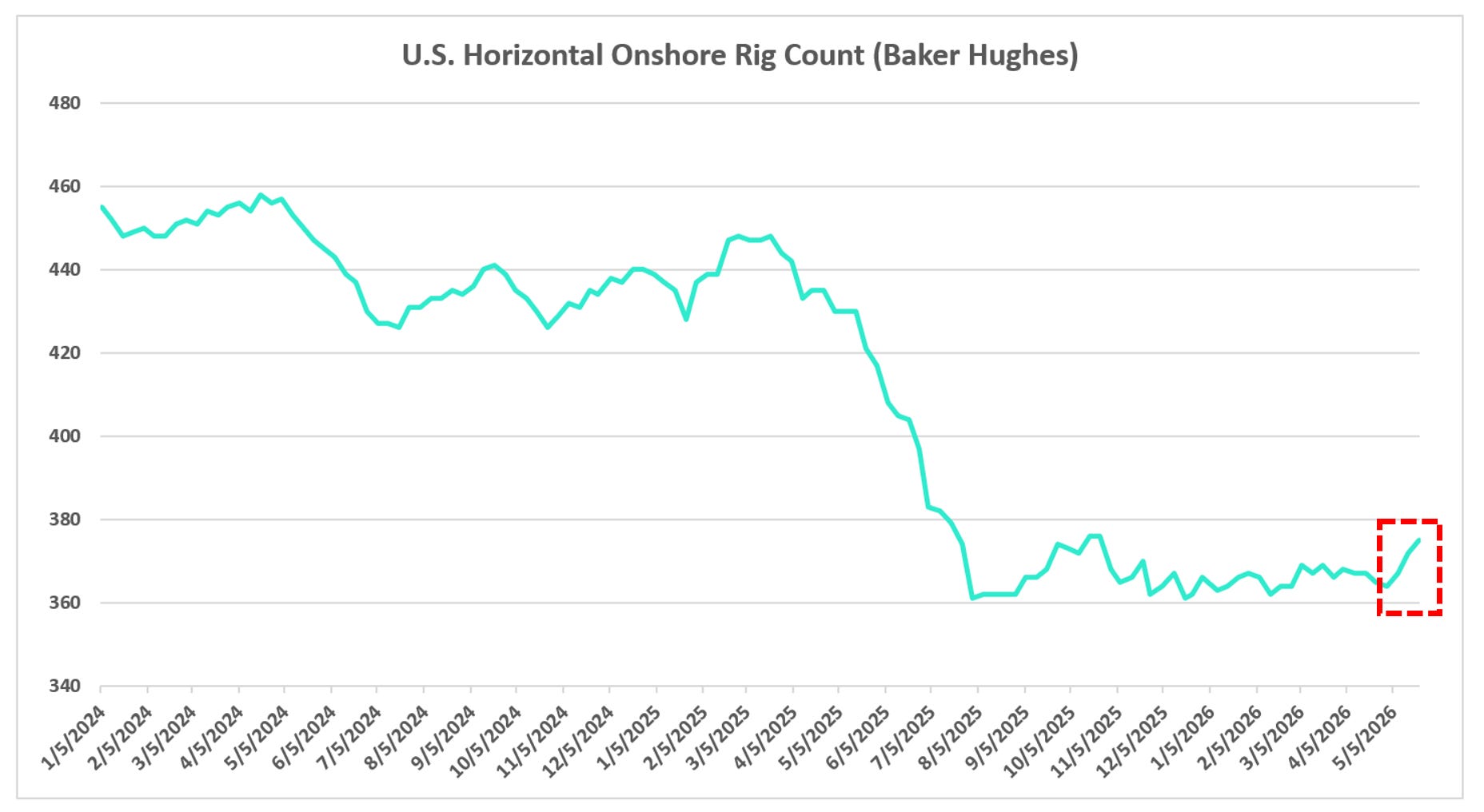
The Bakken uptick comes shortly after Q1 earnings reports from exploration and production (E&P) and midstream companies, which highlighted limited new drilling across the U.S. despite a sharp rise in oil prices triggered by the Iran conflict. While producers continue to emphasize capital discipline, supported by extreme backwardation in the futures curve, U.S. onshore oil rigs have notably increased in recent weeks (see graph below). Although E&Ps are more financially disciplined than in previous cycles, the incentive to maximize production from existing acreage during periods of elevated prices remains strong, potentially driving continued activity if the forward curve stays above $70/bbl.
Flow/Transaction Updates and New Assets Under Coverage
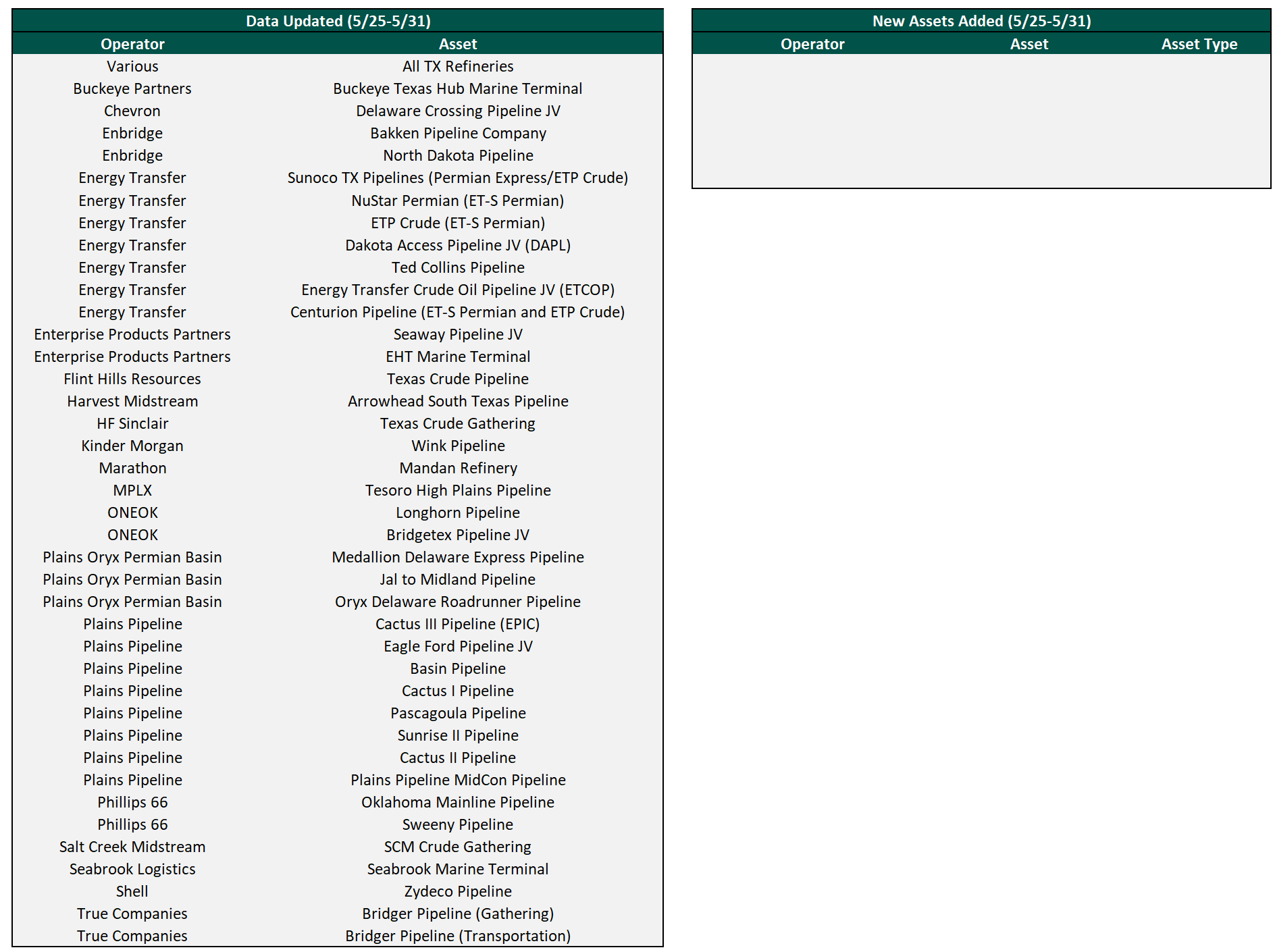
Plainview has over 400 assets with crude oil throughput or transactional data on our platform and continues to add more each week. Data for existing assets under coverage are posted as soon as they become available. Below are the assets that were updated this week or newly added to coverage.