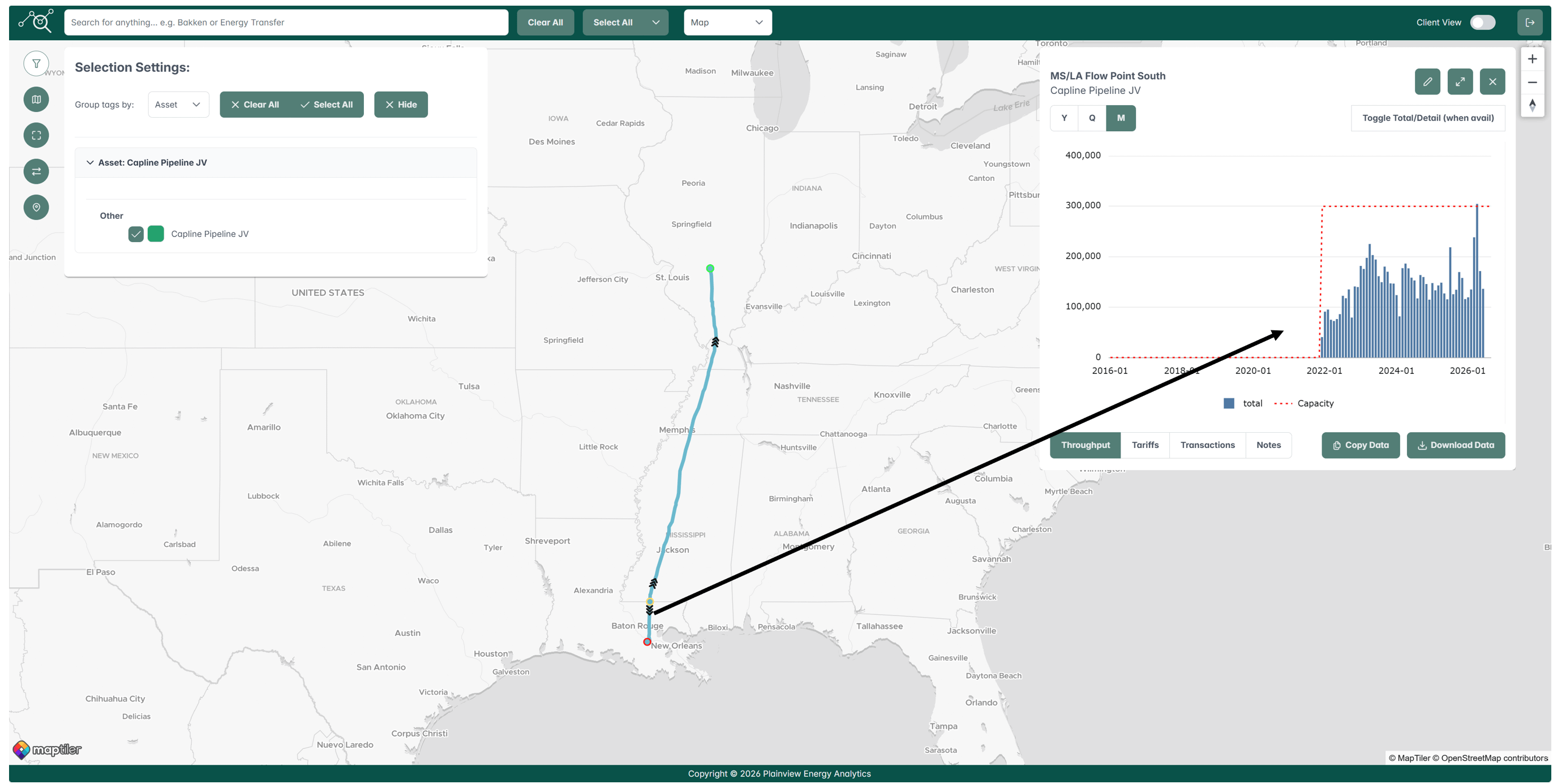
The Capline Pipeline, jointly owned by Plains All American (54%), Marathon Petroleum (33%), and BP (13%), stretches from Patoka, Illinois, to St. James, Louisiana. Originally built to move imported waterborne crude northward, Capline reversed its flow in 2021–2022 to transport crude southward as surging U.S. and Canadian production reshaped Midwest supply. Despite its massive 40-inch diameter, the system’s current configuration is only set up to move 417,000 barrels per day (bpd) of light crude equivalent, or roughly 300,000 bpd of heavy and light blends, though it retains the potential to expand capacity significantly. This latent capacity provides crude shippers a potential high-volume gateway to major refining hubs and export terminals in Southeast Louisiana.
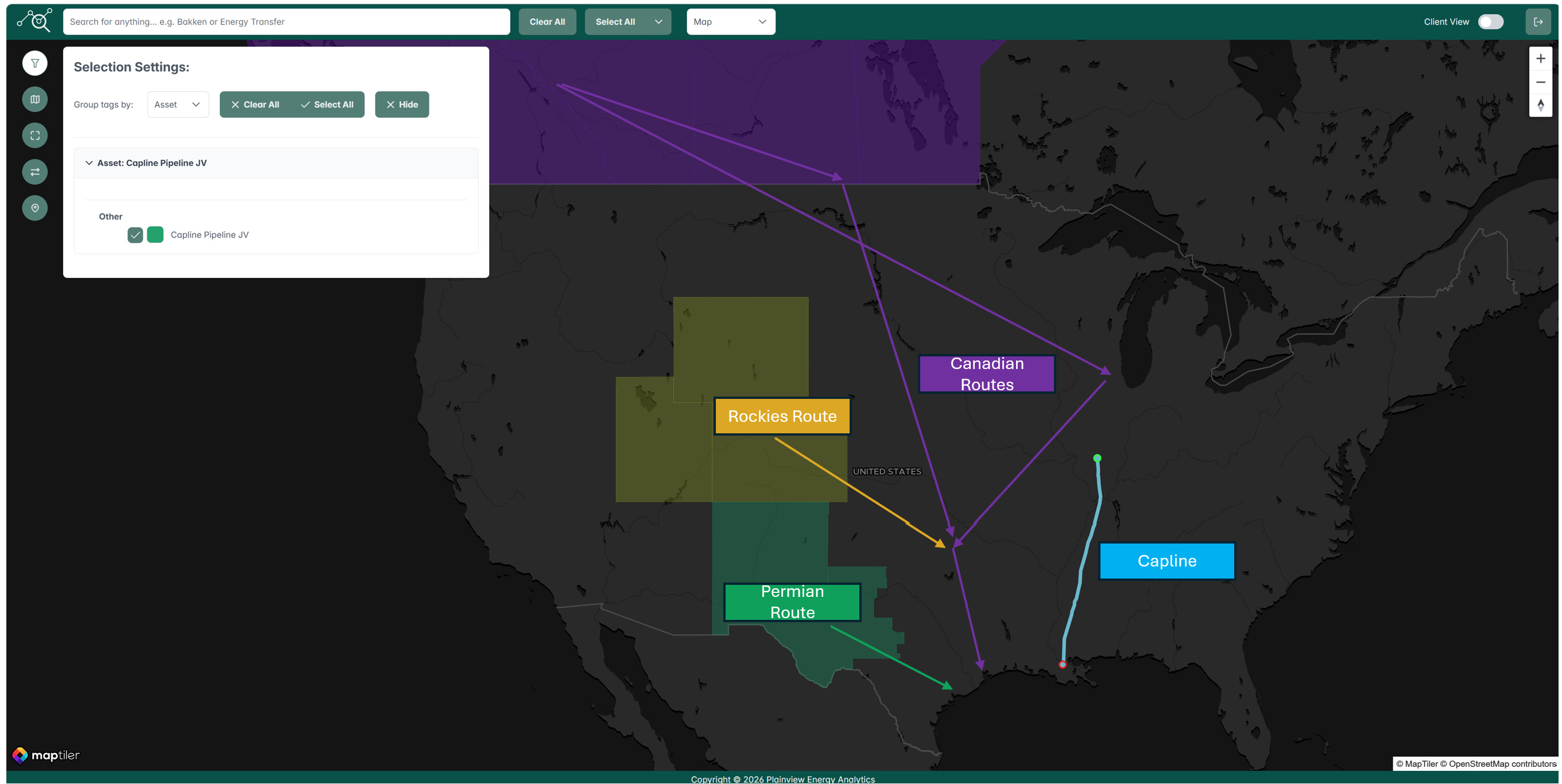
Despite its immense physical footprint, Capline faces formidable strategic challenges, primarily stemming from its lack of direct connections to growing production basins. The massive growth in Canadian and U.S. production over the last 15 years has largely bypassed Capline, with expanding Canadian, Rockies, and Permian volumes being routed through corridors outside Capline’s reach (see figure below). Furthermore, near-term Canadian growth may also slip away from the pipeline. Enbridge appears positioned to utilize its ETCOP joint venture pipeline for its incremental volumes, while the proposed South Bow and Bridger project aims to transport Western Canadian crude through the Rockies directly to Cushing, Oklahoma, entirely bypassing the Midwest and Capline’s intake point.
Nevertheless, these commercial barriers may not be insurmountable. Executives at majority-owner Plains All American have repeatedly emphasized on earnings calls that Capline remains a primary long-term focus, noting that its vast unutilized capacity is well-positioned to solve regional egress issues for heavy Canadian crude seeking Gulf Coast refiners and global export markets.
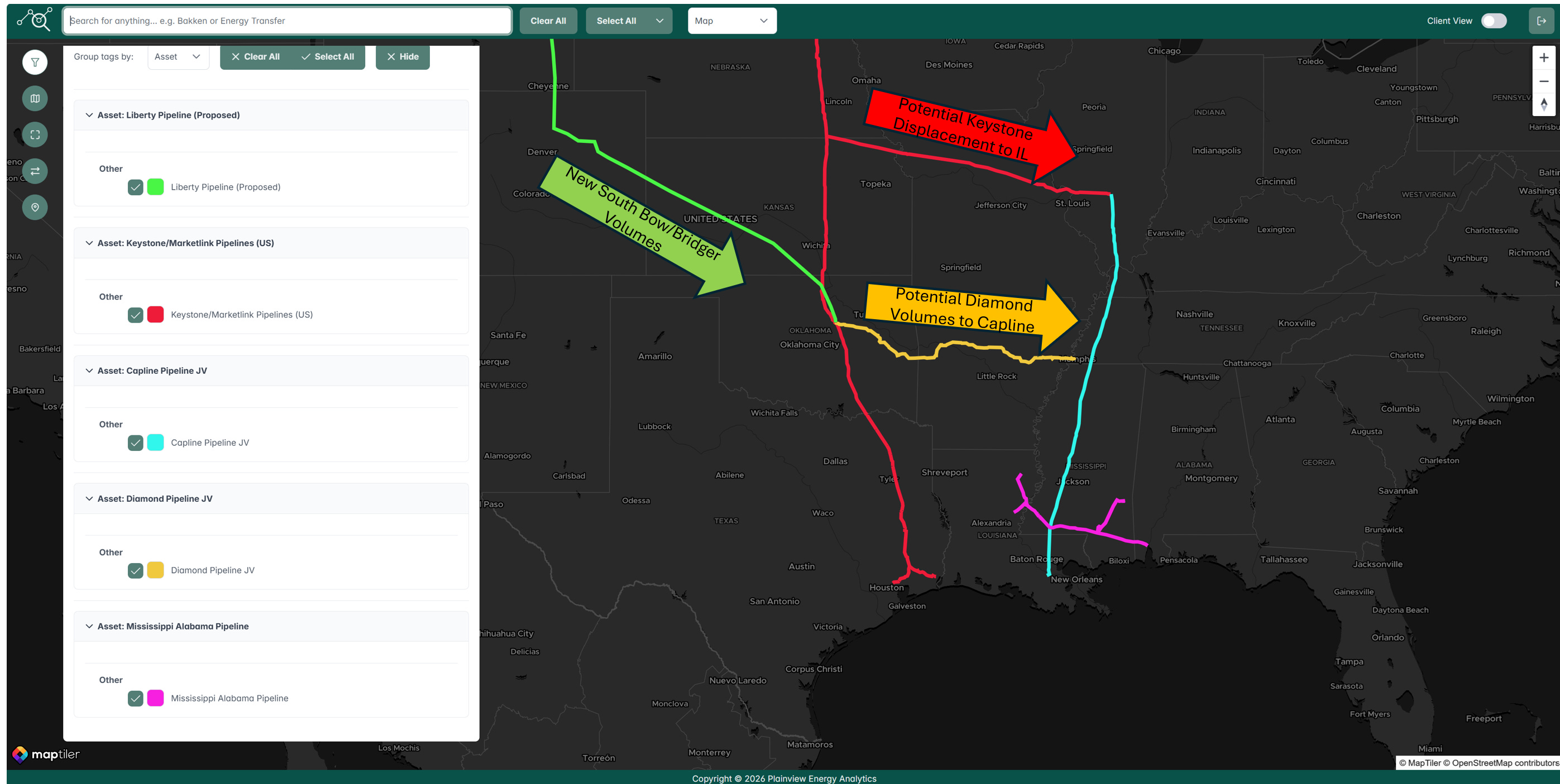
To capture this demand, several indirect catalysts could unlock Capline’s potential. Increased crude volumes flowing into Cushing from projects like South Bow and Bridger could displace legacy barrels on TC Energy’s Keystone system, nudging those flows eastward along Keystone’s Illinois leg into Patoka and onto Capline. Furthermore, Plains holds a stake in the Diamond Pipeline connecting Cushing to Memphis, Tennessee. While a connection from Diamond into Capline was shelved during the COVID-19 pandemic, reviving this link, alongside securing long-term contracts across complementary assets like Plains’ Mississippi/Alabama system, remains a viable strategic option if Cushing requires additional egress (see below).
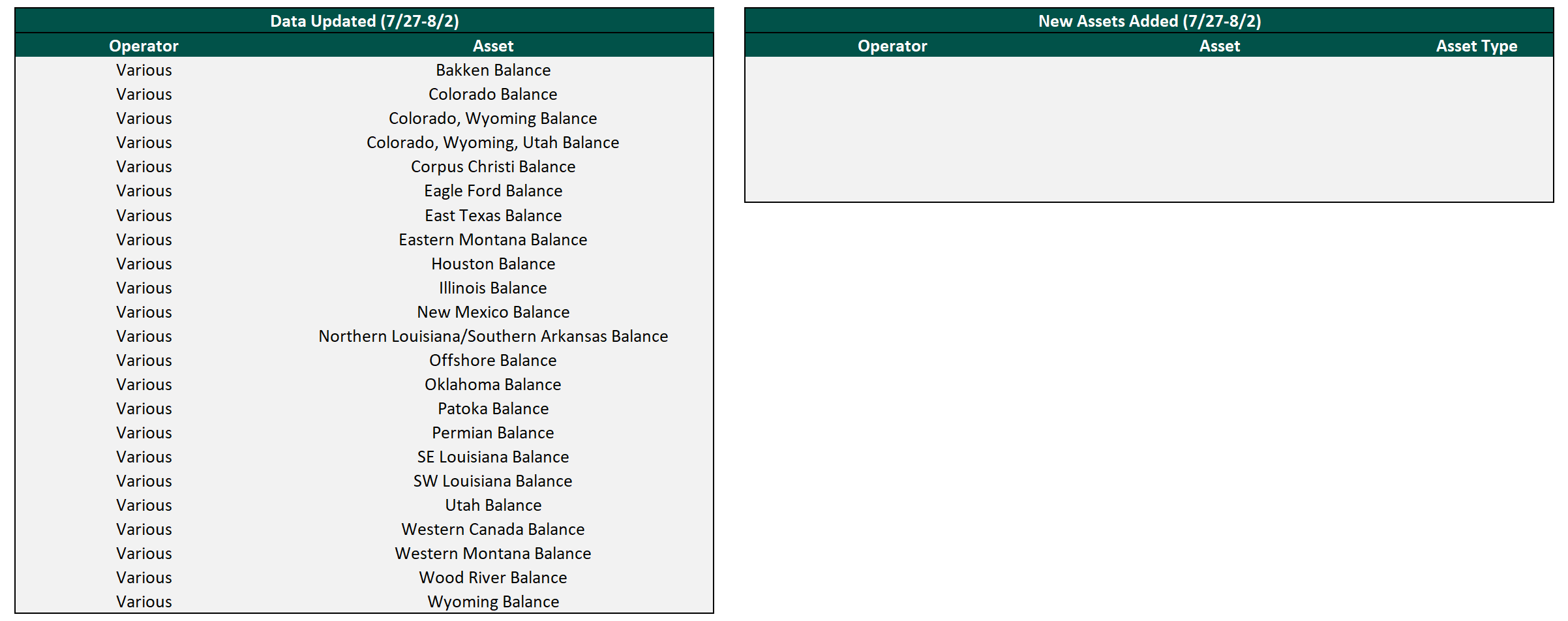
Flow/Transaction Updates and New Assets Under Coverage
Plainview has over 400 assets with crude oil throughput or transactional data on our platform and continues to add more each week. Data for existing assets under coverage are posted as soon as they become available. Below are the assets that were updated this week or newly added to coverage.