Crude Oil Exports Smash Records at 6.4 Million Barrels per Day - Can U.S. Export Terminals Keep Up?
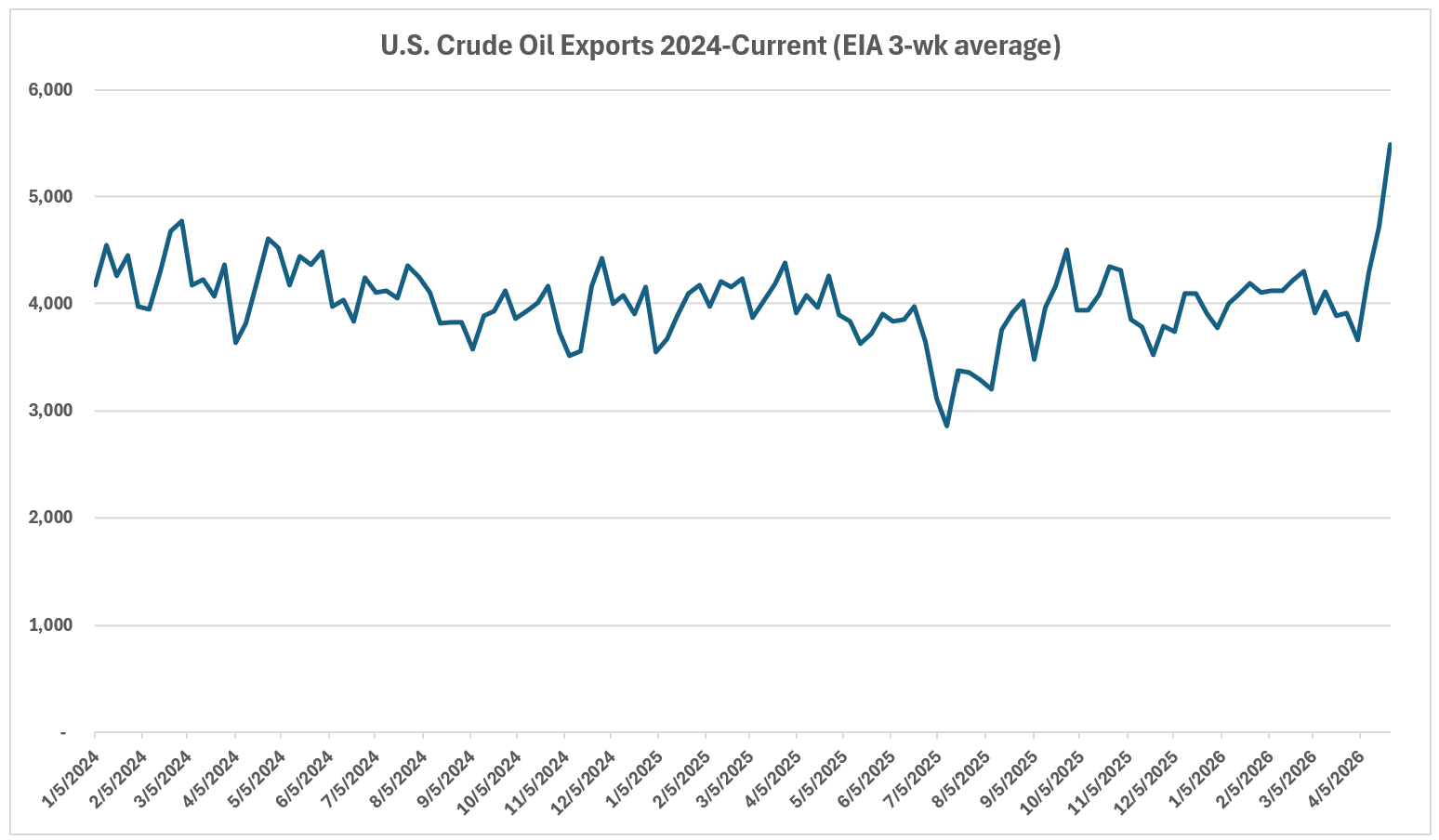
The U.S. Energy Information Administration (EIA) reported a staggering 6.4 million barrels of crude oil exports for the week ending April 24, marking the highest weekly figure ever recorded. Even when smoothing the data with a three-week average to account for typical weekly volatility, the export surge remains the strongest on record (see graph below). This unprecedented outflow comes as global oil markets face a major supply shock from the effective closure of the Strait of Hormuz. The resulting supply gap has triggered a strong “call” on American barrels, driving significantly higher volumes from U.S. storage hubs (including the Strategic Petroleum Reserve) to Gulf Coast export terminals.
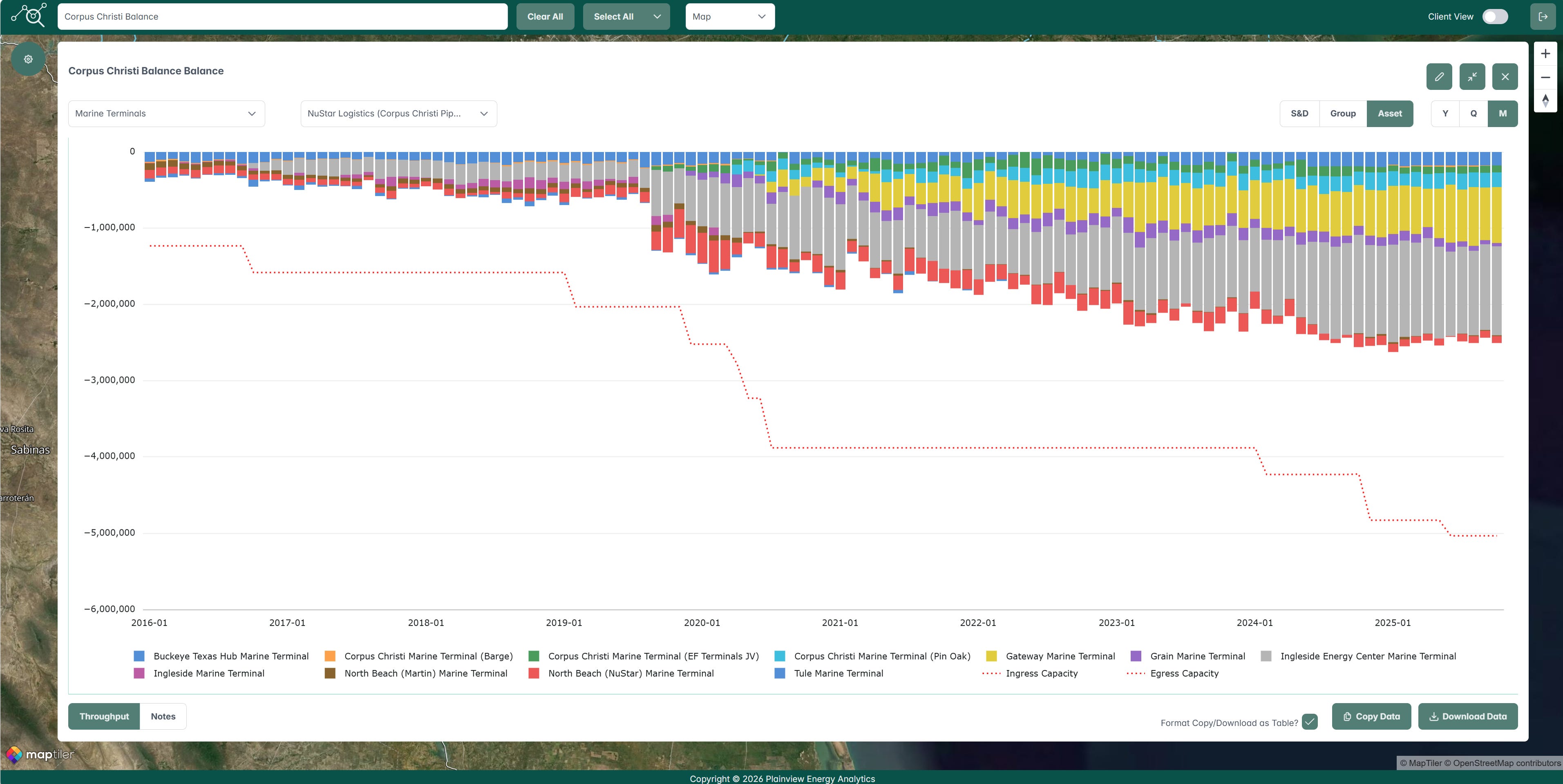
Despite the substantial rise in export volumes, U.S. marine terminals appear well-positioned to handle additional flow. Corpus Christi’s nameplate export capacity, for instance, is approximately 5 million barrels per day, nearly double its recent throughput (see graph below). Nevertheless, upstream pipeline bottlenecks remain a risk, potentially capping the upside for certain facilities. Pipeline capacity into Ingleside was already near its limit prior to the recent throughput growth and is likely facing significant constraints at present.
Current U.S. Petroleum Export Boom Powered by Storage, Not Supply Growth
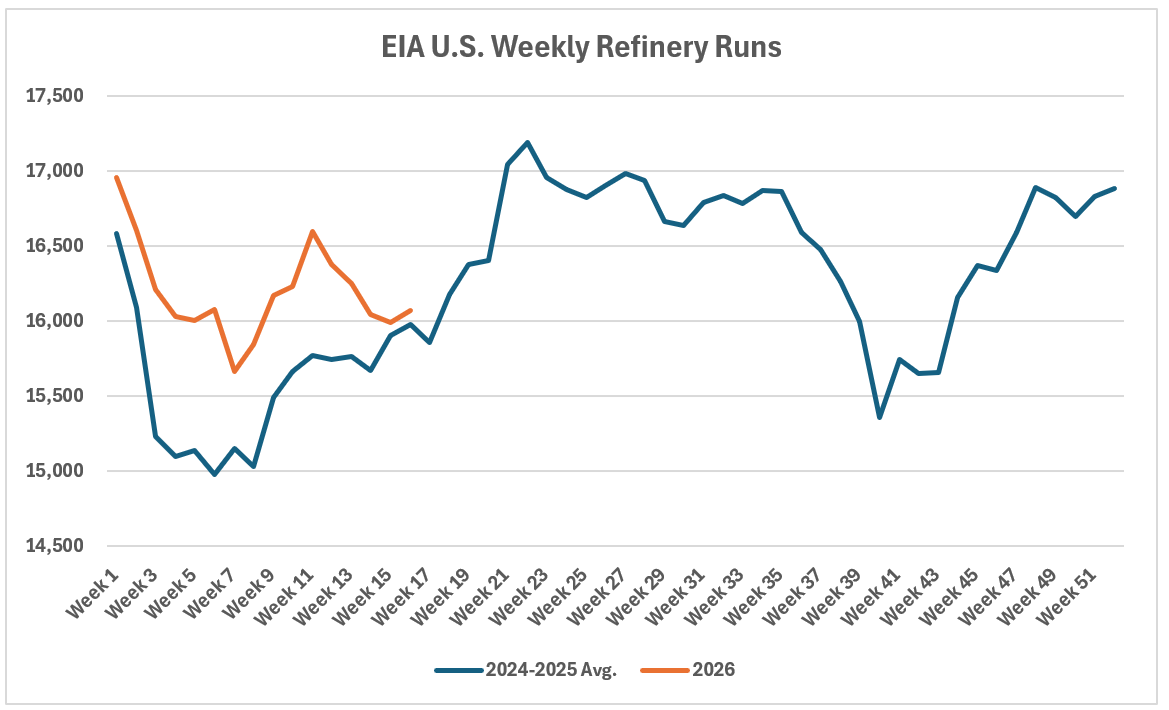
The headline U.S. crude export numbers are impressive, yet a closer look reveals the true story behind the surge. In the two months since the Iran conflict escalated, U.S. crude oil production has likely not materially changed. At the same time, domestic refinery throughput is running marginally higher than the two-year average, reducing available crude oil supply (see graph below). This means the rapid climb in exports has been almost entirely enabled by large-scale storage drawdowns, both from the Strategic Petroleum Reserve and commercial inventories across the country.
Short-term, these inventory releases are providing a welcome boost to throughput across U.S. pipelines and export terminals. However, storage drawdowns cannot continue indefinitely. For the U.S. to sustain elevated throughput volumes over the longer term, either domestic production growth or meaningful cuts in refinery runs will be required. Ultimately, global and domestic markets must balance. With a steeply backwardated forward curve currently discouraging new drilling, either higher prices or a swift resolution to the Iran conflict will be needed to rebalance the market.
Flow/Transaction Updates and New Assets Under Coverage
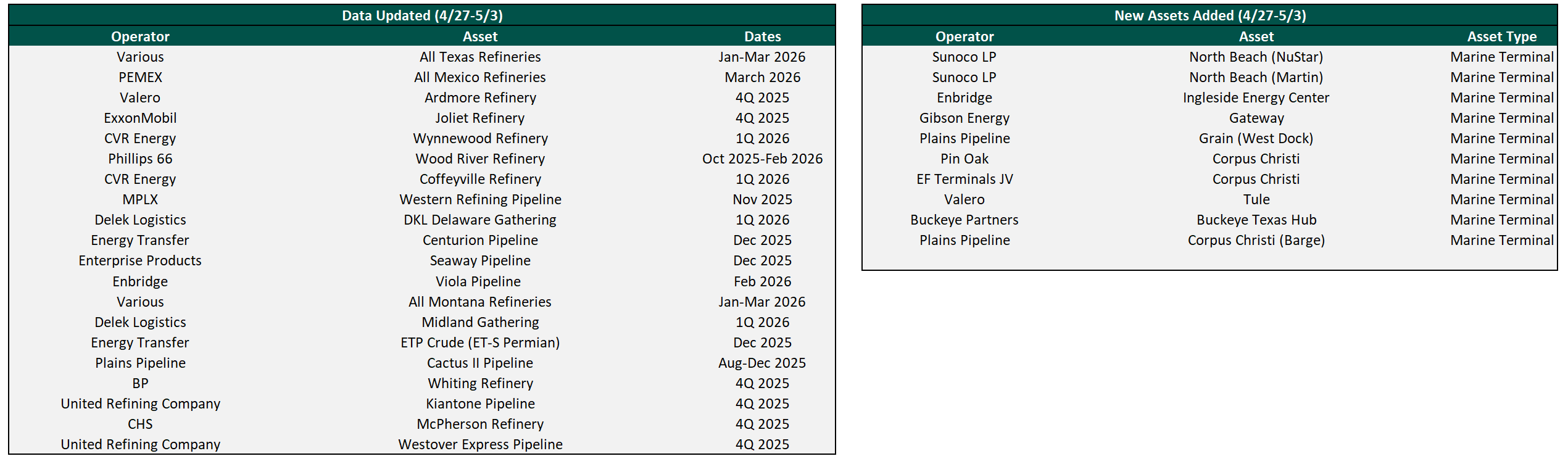
Plainview has over 350 assets with crude oil throughput or transactional data on our platform and continues to add more each week. Data for existing assets under coverage are posted as soon as they become available. Below are the assets that were updated this week or newly added to coverage.