

Plains Signals Potential Rangeland Pipeline Expansion: Unlocking More Canadian Crude into PADD 4
Plains All American Pipeline (PAA) stated they were exploring potential expansion opportunities for their Rangeland pipeline system during its Q4 2025 earnings call on February 6, 2026. The Rangeland system (shown as red lines in the map below) transports primarily light sweet and light sour crude from various locations in Alberta, Canada. Recent southbound flows into the United States have averaged only about 25,000 barrels per day and feed into the Western Corridor system (shown as blue and green lines below), a group of three pipelines co-owned by Plains and Phillips 66 that deliver crude into Montana and Wyoming. The recent commentary builds on remarks from the company’s Q3 2025 earnings call, where executives emphasized plans to take advantage of underutilized assets to capture additional Canadian crude volumes destined for U.S. markets.
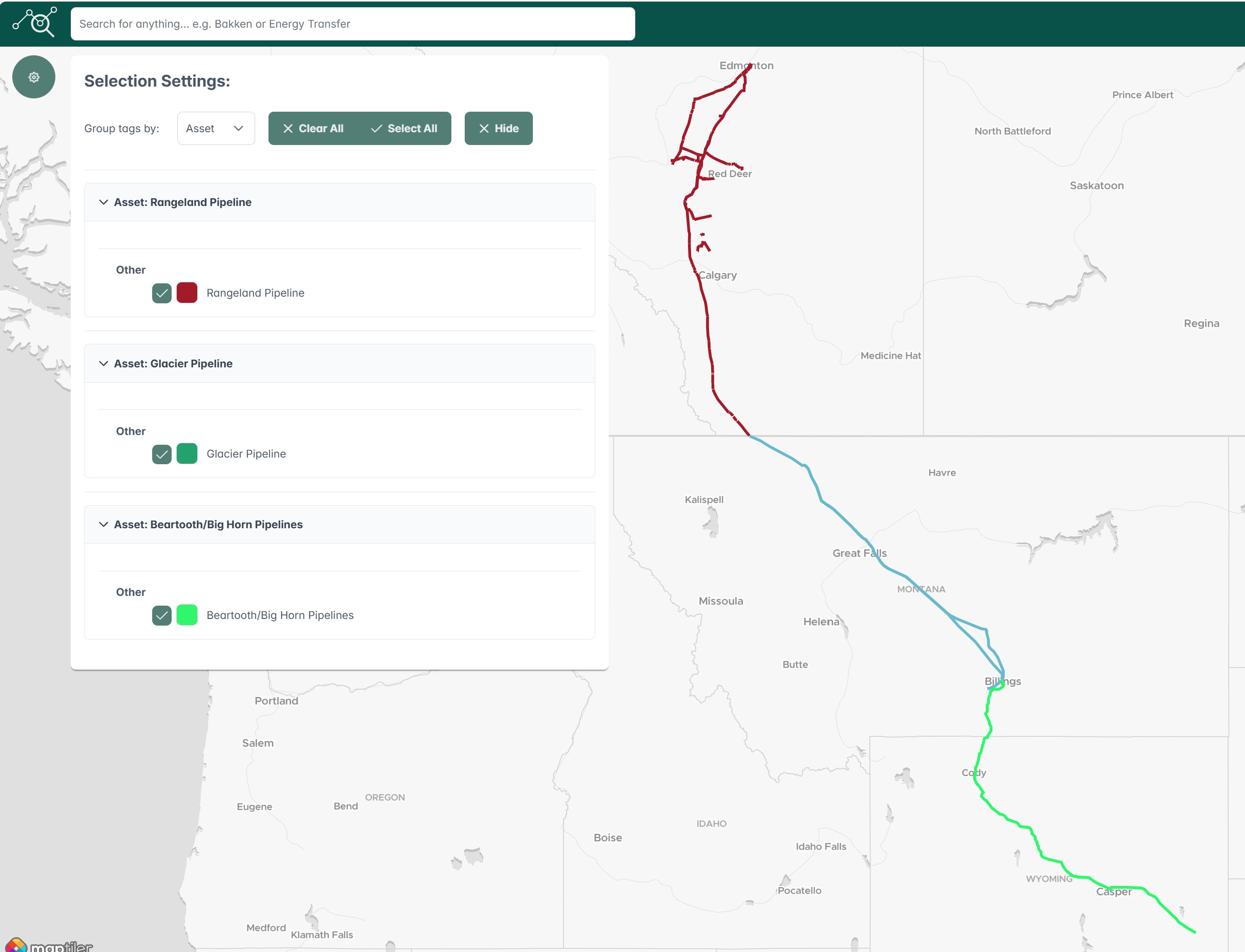
Although a prior expansion effort in 2019, which targeted an increase of 70,000 to 80,000 barrels per day in southbound capacity, was ultimately canceled amid the COVID-19 demand downturn, the latest indications suggest renewed interest in this often-overlooked corridor. Beyond Rangeland and Western Corridor, other PADD 4 pipeline infrastructure exists that could also support expanded capacity into the United States. For these reasons, we believe this corridor and flows into Guernsey, Wyoming, remain underappreciated by many market participants as a viable option for increasing Canadian crude exports to the U.S.
To provide deeper context, Plainview Energy Analytics and RBN Energy are partnering on a comprehensive analysis of PADD 4 crude market dynamics which will include regional balances, pipelines flows and capacities, potential expansion pathways, and their broader implications. The report is expected to be released in the coming weeks and will be available through RBN.
EIA November 2025 Crude Data: Declines in PADD 4 Basins Being Offset by Permian and Gulf
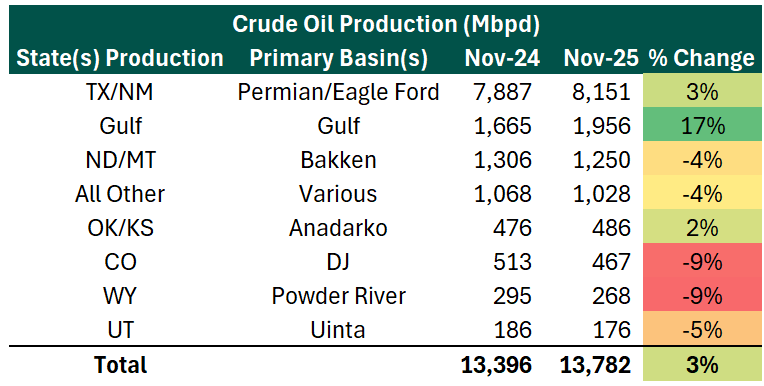
The U.S. Energy Information Administration (EIA) released November 2025 crude oil production data on Friday, highlighting continued crude oil production declines in several tier 2 basins, particularly across PADD 4 states. Colorado, Wyoming, and Utah recorded notable year-over-year drops compared with November 2024. Wyoming posted the steepest percentage decline at approximately 9%, with more recent data showing even greater weakness, down roughly 11% from its June 2025 peak. Colorado volumes fell around 9% year over year, while Utah, which had been a reliable source of post-COVID production growth, saw output decrease by about 5%.
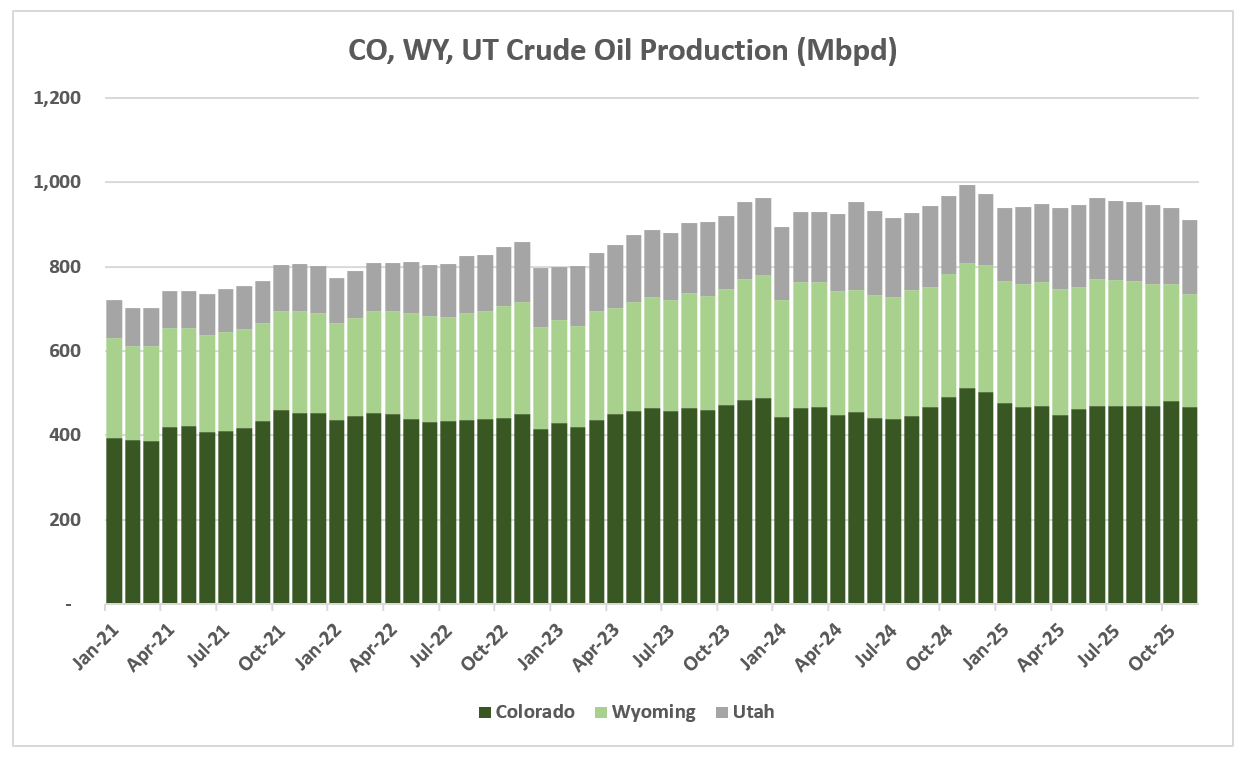
Despite these meaningful reductions in smaller producing states, total U.S. crude oil production increased approximately 3% over the past year. Robust gains in the Permian Basin and the Gulf (offshore) more than offset losses in other regions, underscoring the outsized influence of these two dominant areas. Together, production in Texas, New Mexico, and the Gulf accounts for nearly 75% of total U.S. output, meaning material national declines are unlikely unless those core regions experience reductions. This heavy concentration highlights the resilience of U.S. supply, driven by the scale and continued momentum in the Permian and offshore Gulf.
Flow/Transaction Updates and New Assets Under Coverage
Plainview has over 300 assets with crude oil flow or transactional data on our platform and continues to add more each week. Data for existing assets under coverage are posted as soon as they become available. Below are the assets that were updated this week or newly added to coverage.
