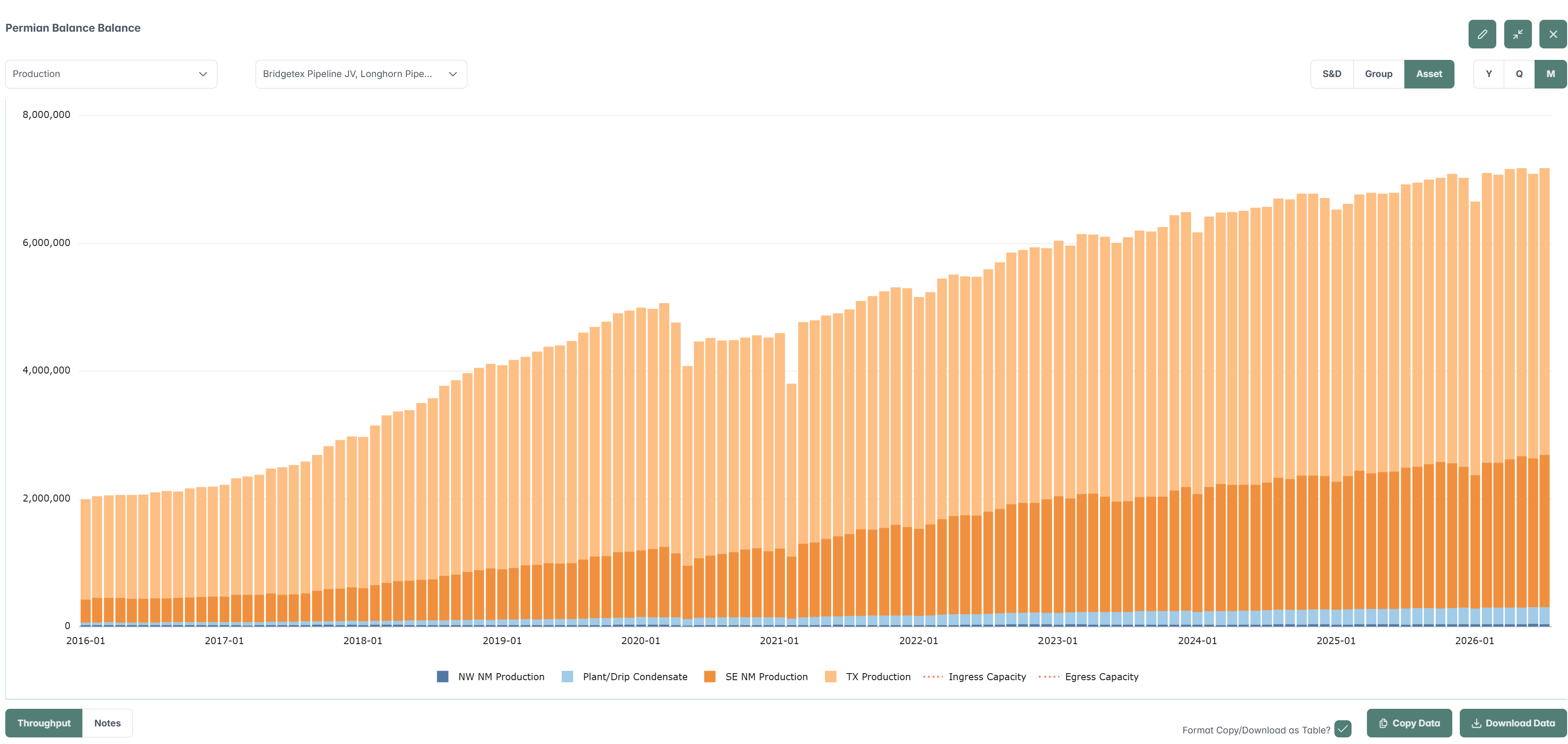
Permian Basin crude oil production continues to rise, defying a very unfavorable start to the year where producers faced sub-$60 oil prices heading into 2026. Despite the bleak initial pricing outlook, our data indicates Permian production still managed to expand by roughly 300,000 barrels per day (bpd) year over year and ~100,000 bpd vs exit 2025 (see graph below). While a price spike driven by the Iran conflict allowed some producers to add a handful of rigs and accelerate completions, that geopolitical bump likely accounts for only a minor portion of current production.
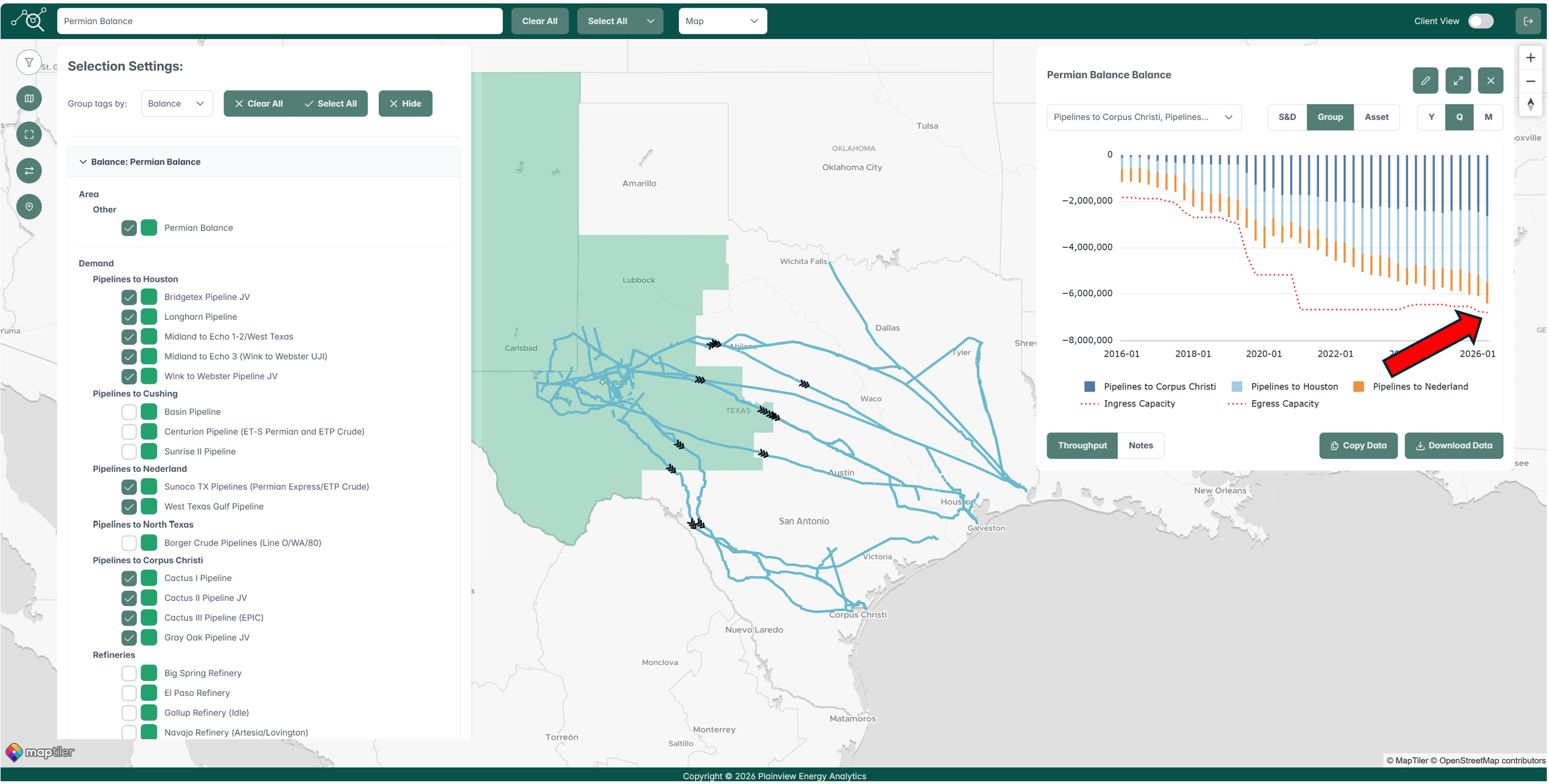
Looking ahead to 2027, calendar strip prices indicating West Texas Intermediate averaging around $85 per barrel will likely justify a material expansion in drilling activity. This projected increase in production threatens to push existing crude oil egress capacity from the Permian to the Gulf Coast to its limits by the end of 2027. Our current analysis indicates the basin has only 500,000 to 600,000 barrels per day of remaining capacity to the Gulf Coast through brownfield expansions and latent capacity before pipelines hit their limits (see graph and red arrow below).
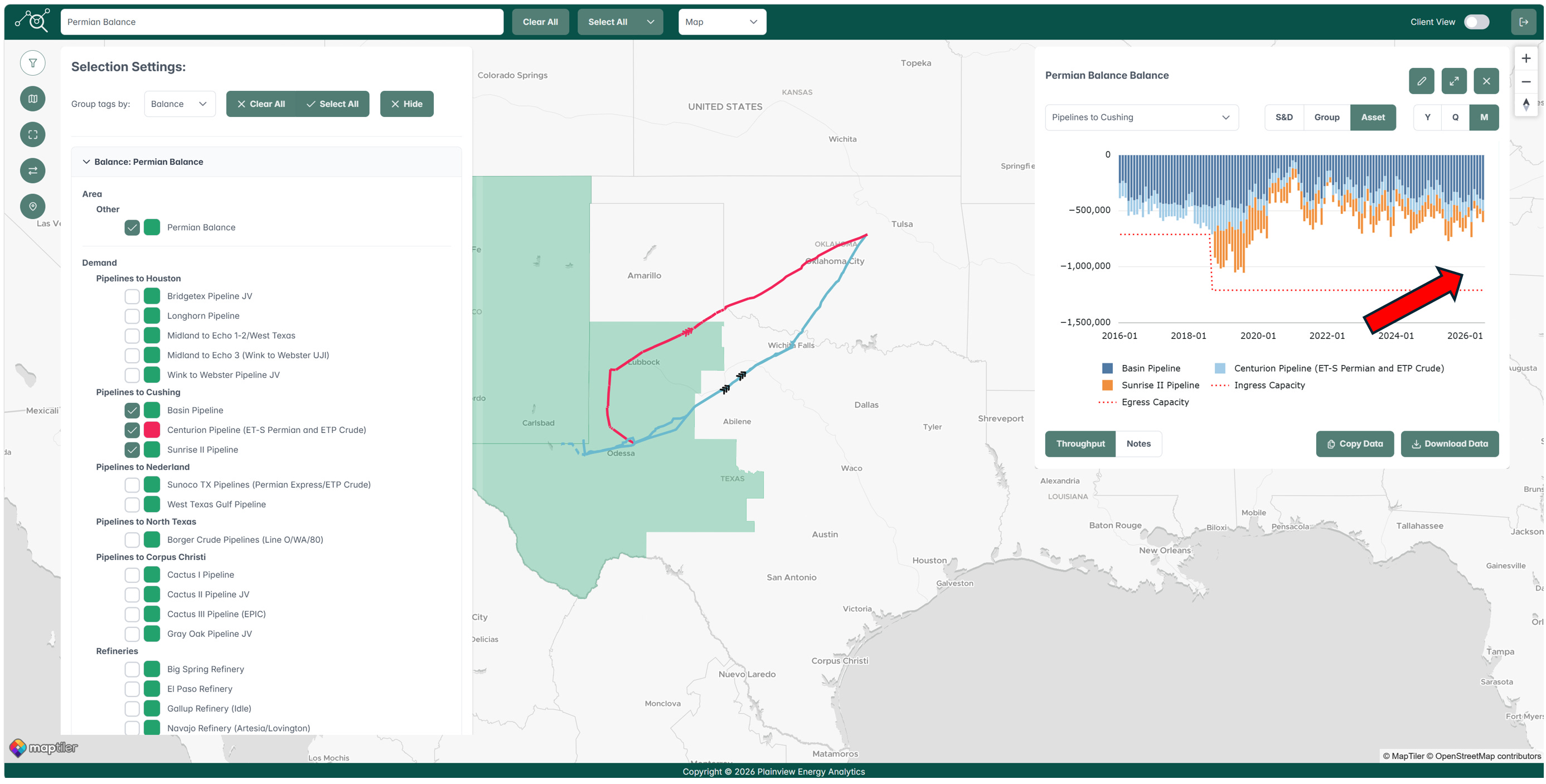
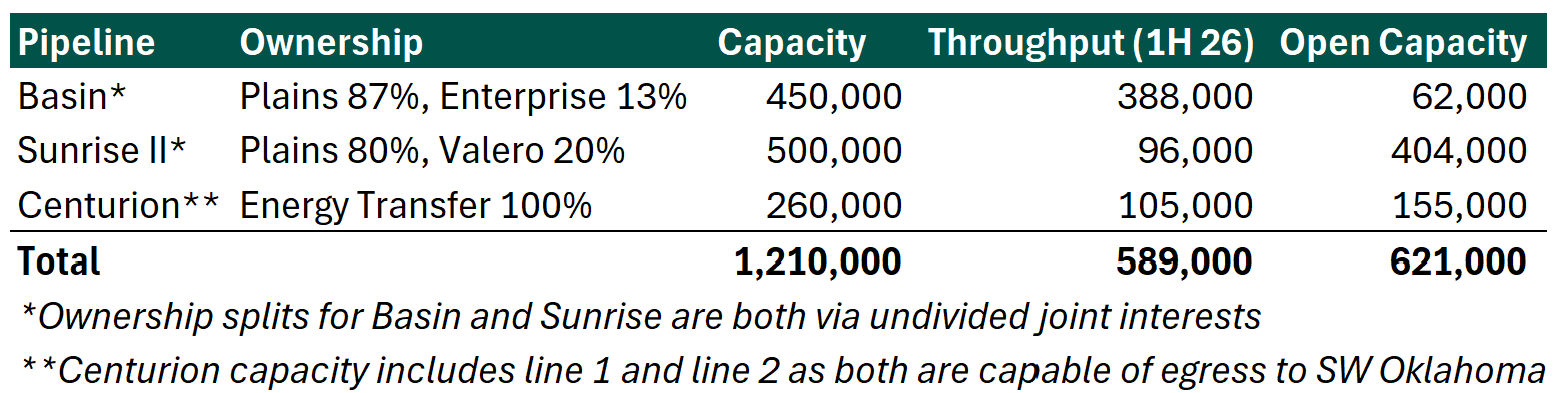
When Gulf Coast routes approach full capacity, barrels will need to find alternative paths out of the basin, most likely utilizing pipelines heading north toward Cushing, Oklahoma. Three key pipeline systems would absorb this overflow: the Basin Pipeline, the Sunrise II Pipeline, and the Centurion Pipeline. Collectively, these routes feature approximately 600,000 barrels per day of open capacity (see graph below), positioning them to capture substantial volume if Permian bottlenecks intensify.
Beyond increased throughput volumes, certain systems possess distinct commercial advantages that amplify their revenue potential. Both the Basin and Sunrise II pipelines hold market-based rate authority with the Federal Energy Regulatory Commission, allowing them to increase rates uncapped as alternative Gulf Coast pathways fill. While full Gulf-bound pipelines would widen differentials and eventually incentivize the construction of a new greenfield pipeline, these Oklahoma bound pipeline assets could see a compelling short to medium term upside as early as late 2027.
Flow/Transaction Updates and New Assets Under Coverage
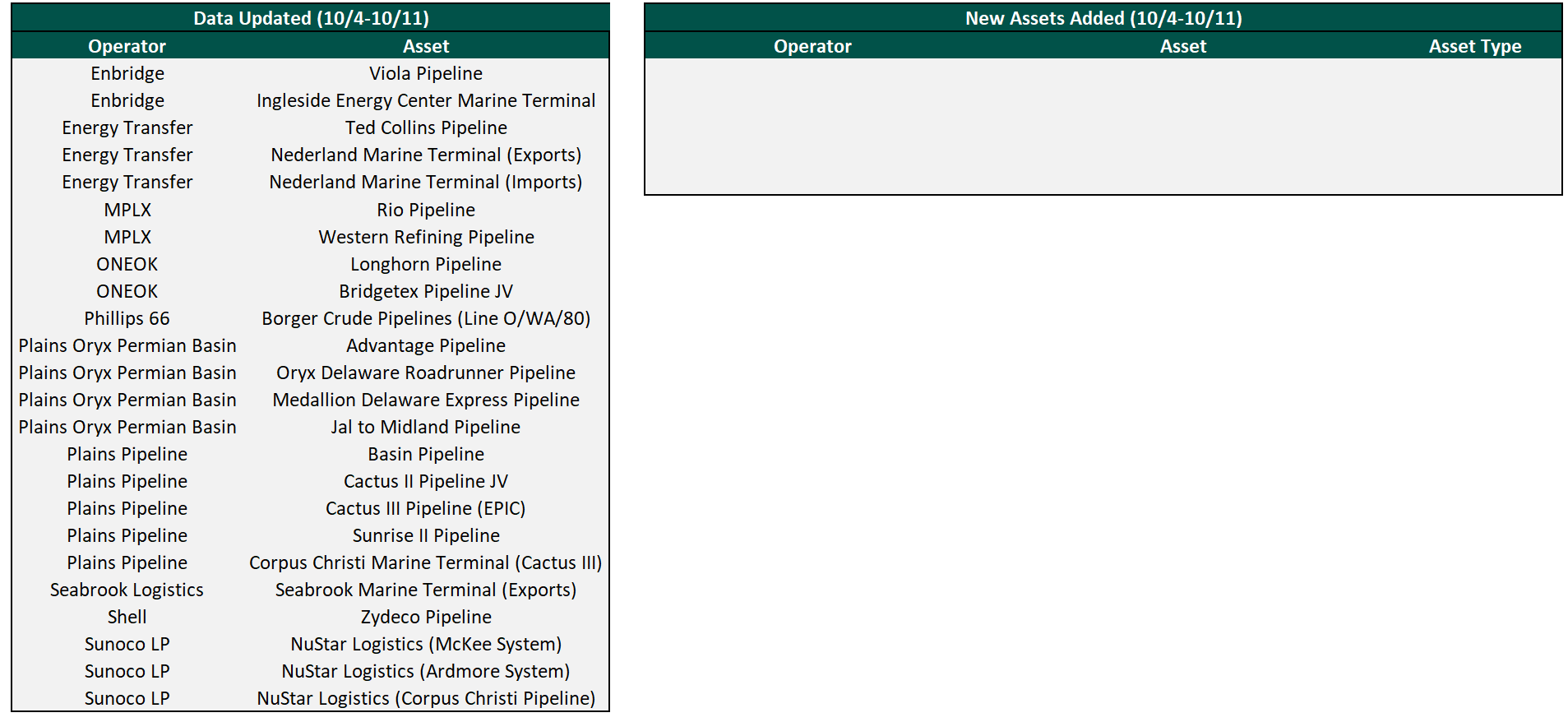
Plainview has over 500 assets with crude oil throughput or transactional data on our platform and continues to add more each week. Data for existing assets under coverage are posted as soon as they become available. Below are the assets that were updated this week or newly added to coverage.