

The Cherokee is a liquids-rich unconventional oil play in Western Oklahoma, broadly known as part of the Granite Wash. After reaching its initial peak during the onset of the shale boom around 2013, production across the area gradually slowed as operators shifted capital toward more economically favorable plays across the U.S. However, recent drilling results have catalyzed a major resurgence in the Cherokee region, turning a quiet legacy play back into one of the country’s most dynamic production hubs.
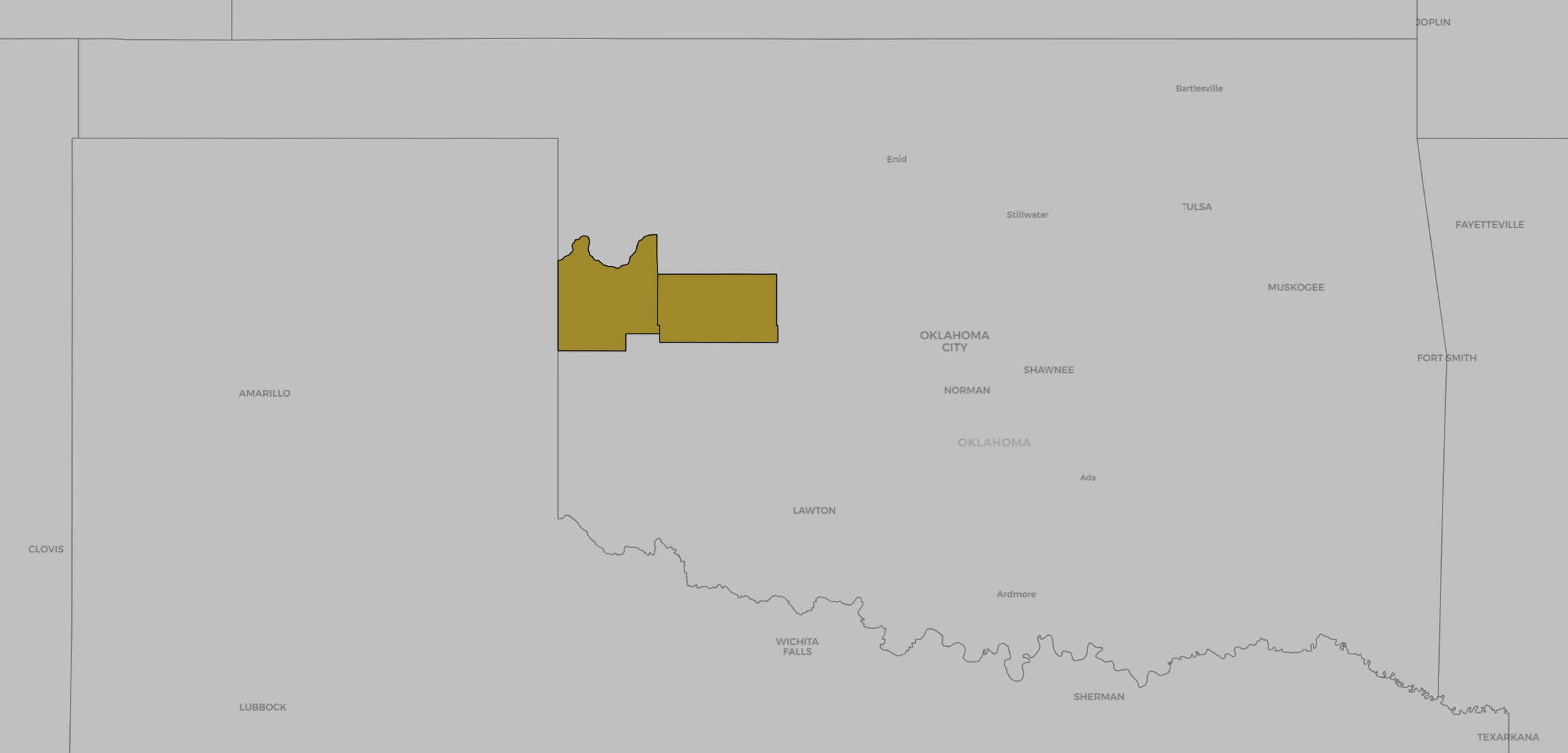
This unexpected boom is heavily concentrated in Western Oklahoma, specifically within Roger Mills and Custer counties (see figure below).
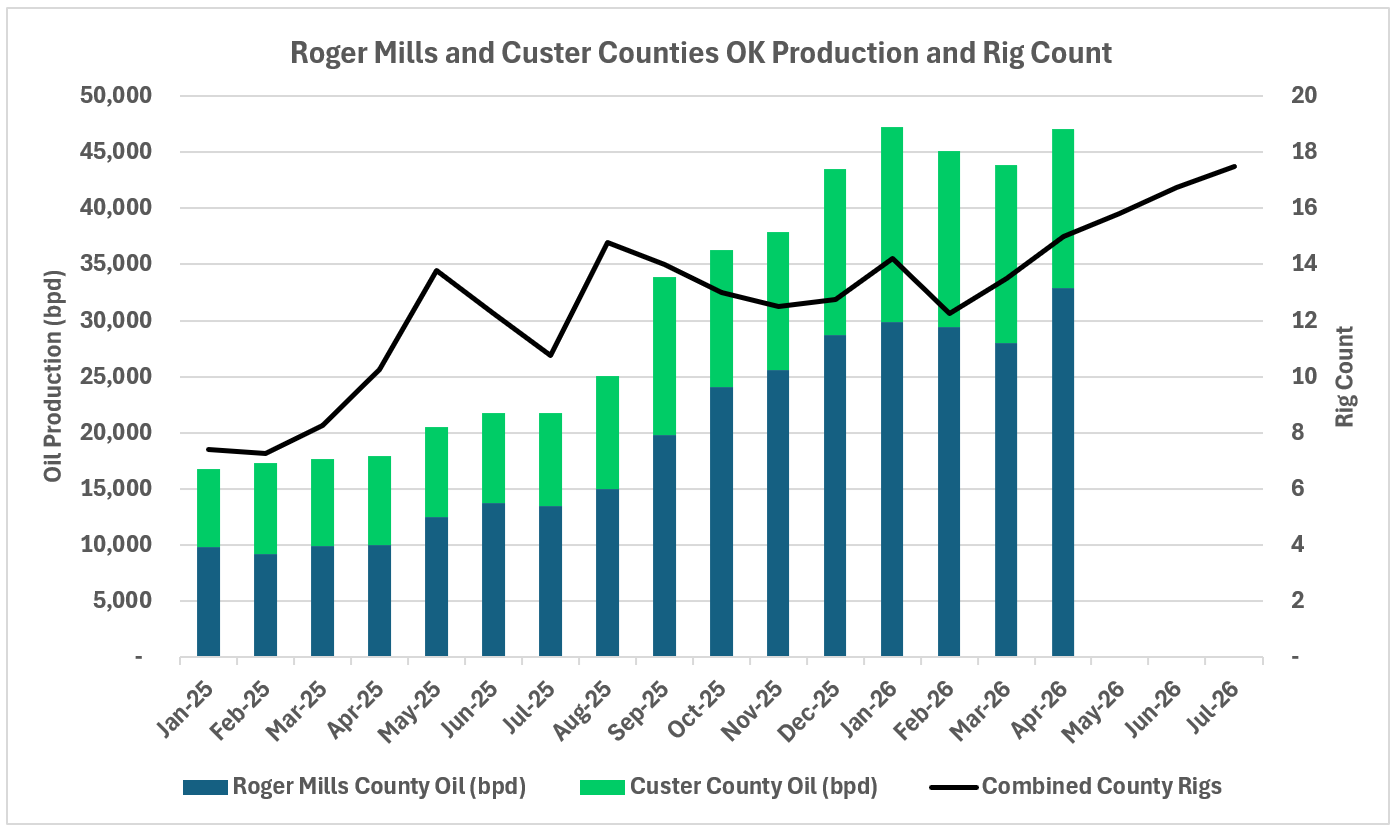
Between January 2024 and April 2026, the horizontal oil rig count in these two counties surged from 2 rigs to 17. Driven by this focused operator activity, crude oil output has tripled since early 2025, climbing from 15,000 barrels per day (bpd) to over 45,000 bpd (see figure below). Experiencing this degree of sustained growth in such a short window is exceedingly rare in today’s mature onshore environment.
With this rapid volume growth, the region may present compelling infrastructure opportunities. Because the 2013 development phase was centered in different counties across the Granite Wash, Roger Mills and Custer counties remain relatively devoid of large-scale crude oil gathering systems. Operators in the area still likely rely on small-diameter pipeline networks or heavy truck hauling to transport crude to nearby terminals, creating a significant operational challenge.
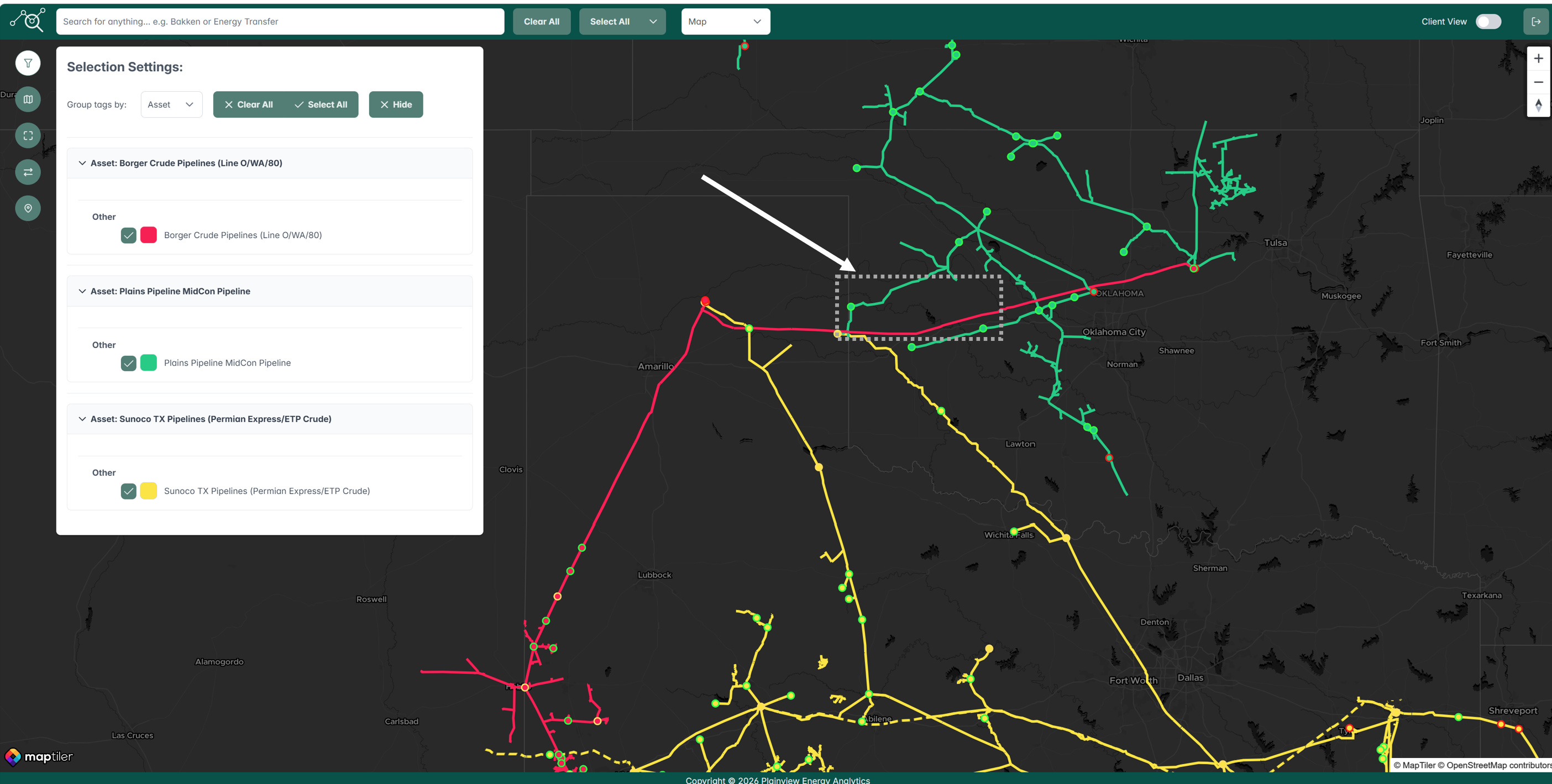
Despite the localized gap in gathering infrastructure, several key midstream systems exist near the activity center (boxed in gray in figure below) and stand to benefit from the continued surge in crude output:
Plains All American Midcon System (green lines in figure below): One of its lines runs through the heart of Roger Mills County, this pipeline offers an ideal midstream route to collect local production and potentially deliver volumes to Cushing or connect with third-party lines at the Cashion terminal near Oklahoma City.
Energy Transfer Granite Wash Extension (yellow line in Western Oklahoma): Completed in 2013, this line moves volumes south toward Ringgold, Texas, where crude can connect to the Permian Express system for transport to Gulf Coast refining hubs in Nederland.
Phillips 66 Line O (red line): A 10-inch pipeline that previously moved crude from Cushing to the Borger Refinery in the Texas Panhandle. With deliveries to Borger transitioned to the third-party Canyon Crossing pipeline, the now unused Line O may present as a prime candidate for asset re-evaluation or pipeline reversal.
For energy market participants, tracking rapid, under-the-radar growth in regions like Western Oklahoma is vital. As production outpaces localized gathering capacity, significant financial and strategic upside exists for upstream producers, midstream operators, and downstream marketers capable of capitalizing on early-stage infrastructure bottlenecks before the market fully catches up.
Flow/Transaction Updates and New Assets Under Coverage
Plainview has over 400 assets with crude oil throughput or transactional data on our platform and continues to add more each week. Data for existing assets under coverage are posted as soon as they become available. Below are the assets that were updated this week or newly added to coverage.
