Red River Pipeline: Latent Capacity Could Create Upside from Widening Cushing-to-Gulf Coast Spreads
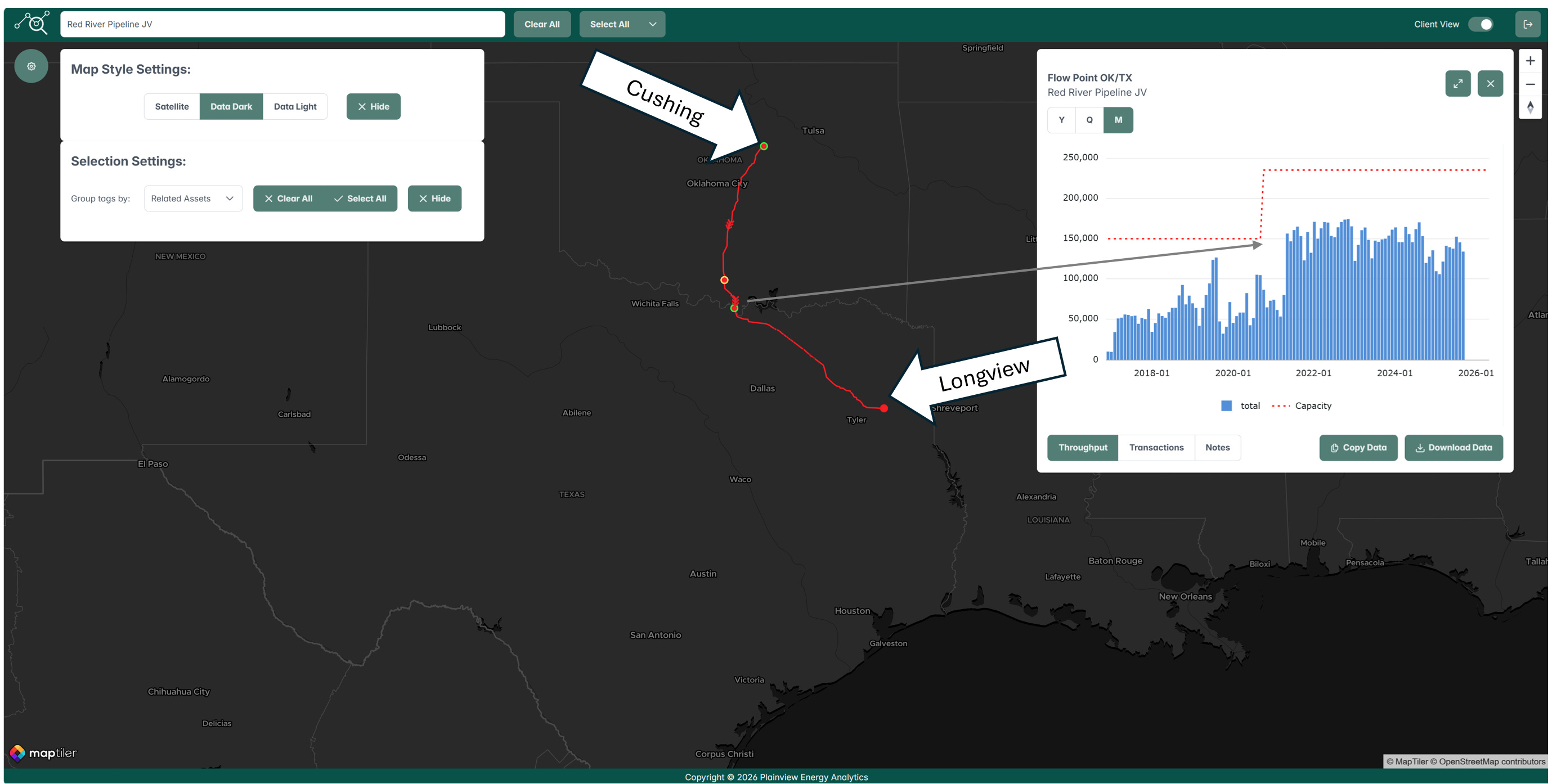
The widening price spread between Cushing, Oklahoma, and the Gulf Coast continues to create attractive opportunities for midstream operators and marketing arms with access to previously underutilized pipeline routes. While much of our attention has focused on larger systems like Seaway and Marketlink, smaller and more flexible corridors are also well-positioned to benefit. One key asset is the Cushing-to-Longview segment of the Red River pipeline (red line below), a joint venture between Plains All American (67% ownership) and Delek Logistics (33%). The line has a nameplate capacity of approximately 235,000 barrels per day at the Oklahoma-Texas border but has averaged less than 150,000 bpd in 2025, leaving latent capacity available to capture incremental barrels while the spread remains elevated.
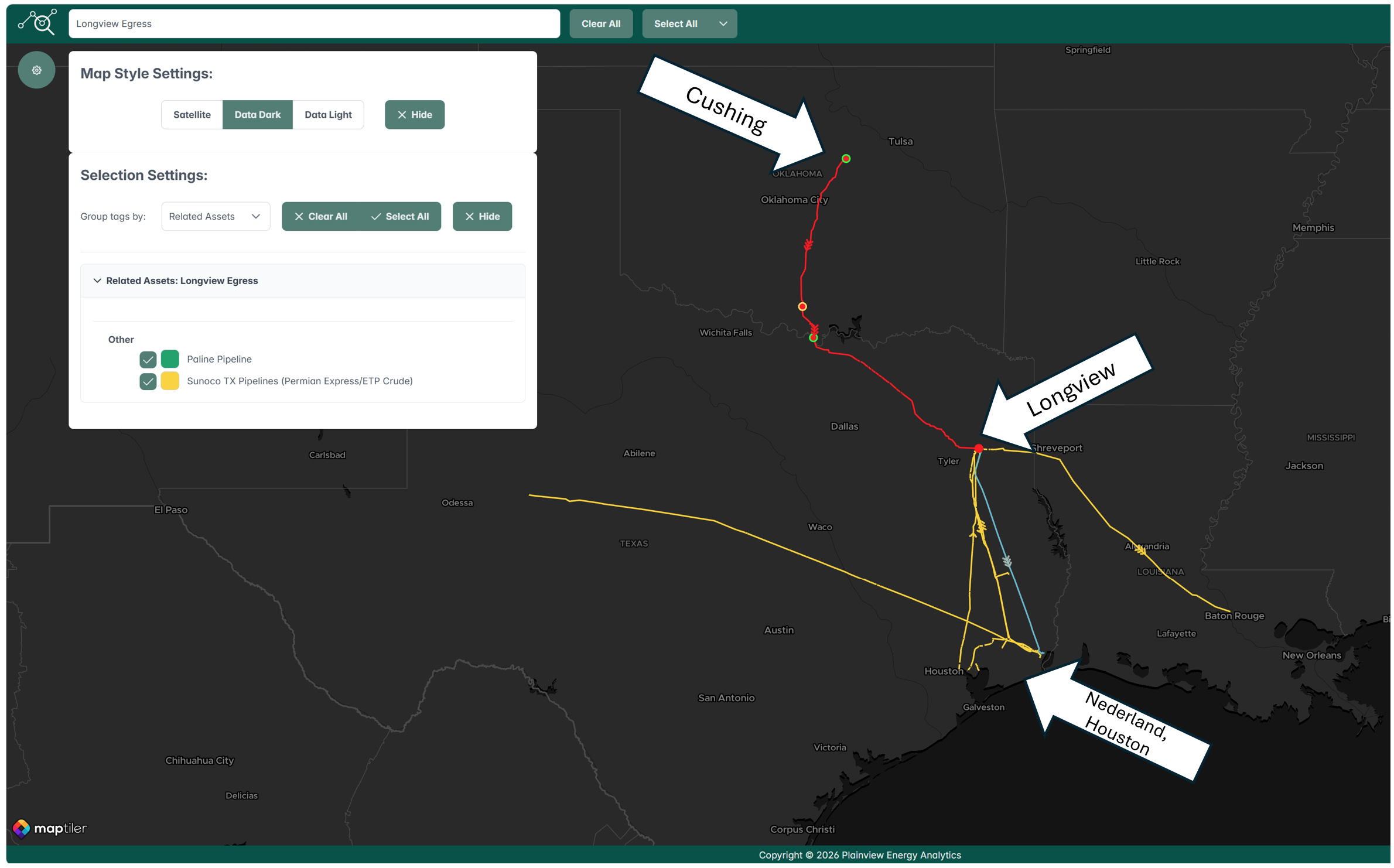
Barrels delivered to Longview in East Texas have multiple options to move crude further south or east to Gulf Coast markets. Volumes can flow south via Delek’s wholly owned Paline Pipeline (blue line below) to the Beaumont/Port Arthur/Nederland area. Additional routes include Louisiana access on the Permian Express system (eastbound orange line) and three legacy Energy Transfer pipelines connecting Longview to Nederland, Beaumont, and Houston (southbound orange lines). Several of these lines have historically moved barrels northward but may retain the physical ability to reverse or optimize flows southward during periods of sustained wide spreads. This connectivity offers meaningful upside for both third-party marketers and the pipeline owners’ own marketing arms by enabling more barrels to reach higher-priced Gulf Coast destinations.
Valero Port Arthur Refinery Partial Restart: Limited Impact on Midstream Amid Strong Export Demand
Valero’s 380,000 bpd Port Arthur refinery in Texas is beginning a partial restart after a multi-week outage triggered by a fire and explosion on March 23rd. The refinery draws crude through multiple flexible supply routes, including its own Premcor Pipeline (red line below), which gathers volumes from regional terminals fed by a variety of major pipeline systems including Marketlink and Seaway. The Premcor system also receives imported crude, primarily Mexican Maya, via its waterborne terminal and can access additional supply from Energy Transfer’s Nederland Terminal.
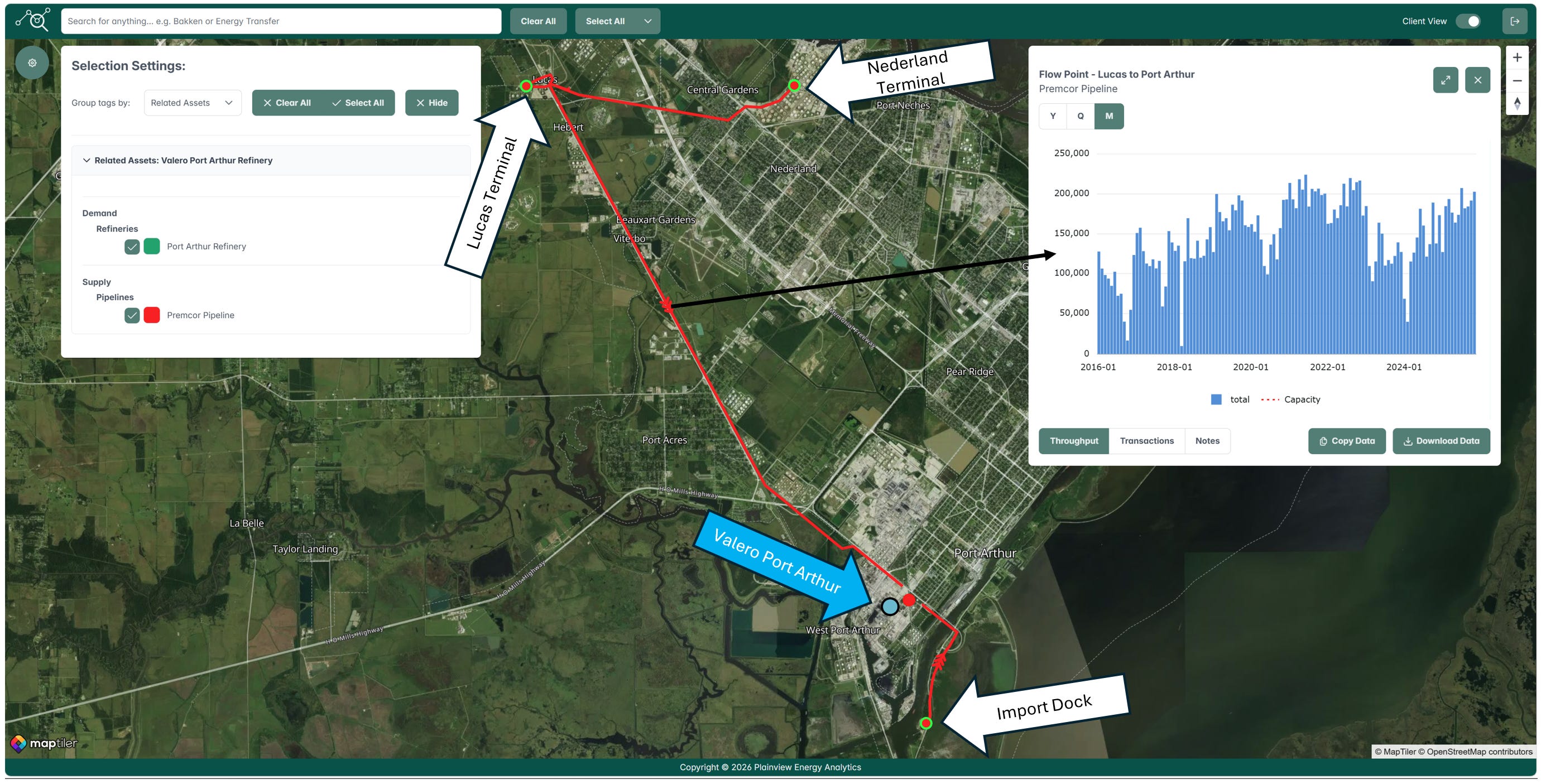
In a typical market environment, a prolonged shutdown of a large refinery like Port Arthur could create noticeable disruptions for midstream assets serving the facility, including lower utilization on feeder pipelines and terminals. However, robust U.S. crude export demand, driven in part by the ongoing Iran conflict, has likely absorbed the lost refinery demand without issue. As a result, terminals and connecting pipelines have likely experienced minimal impact, with barrels readily redirected to export markets instead of local refining.
Flow/Transaction Updates and New Assets Under Coverage
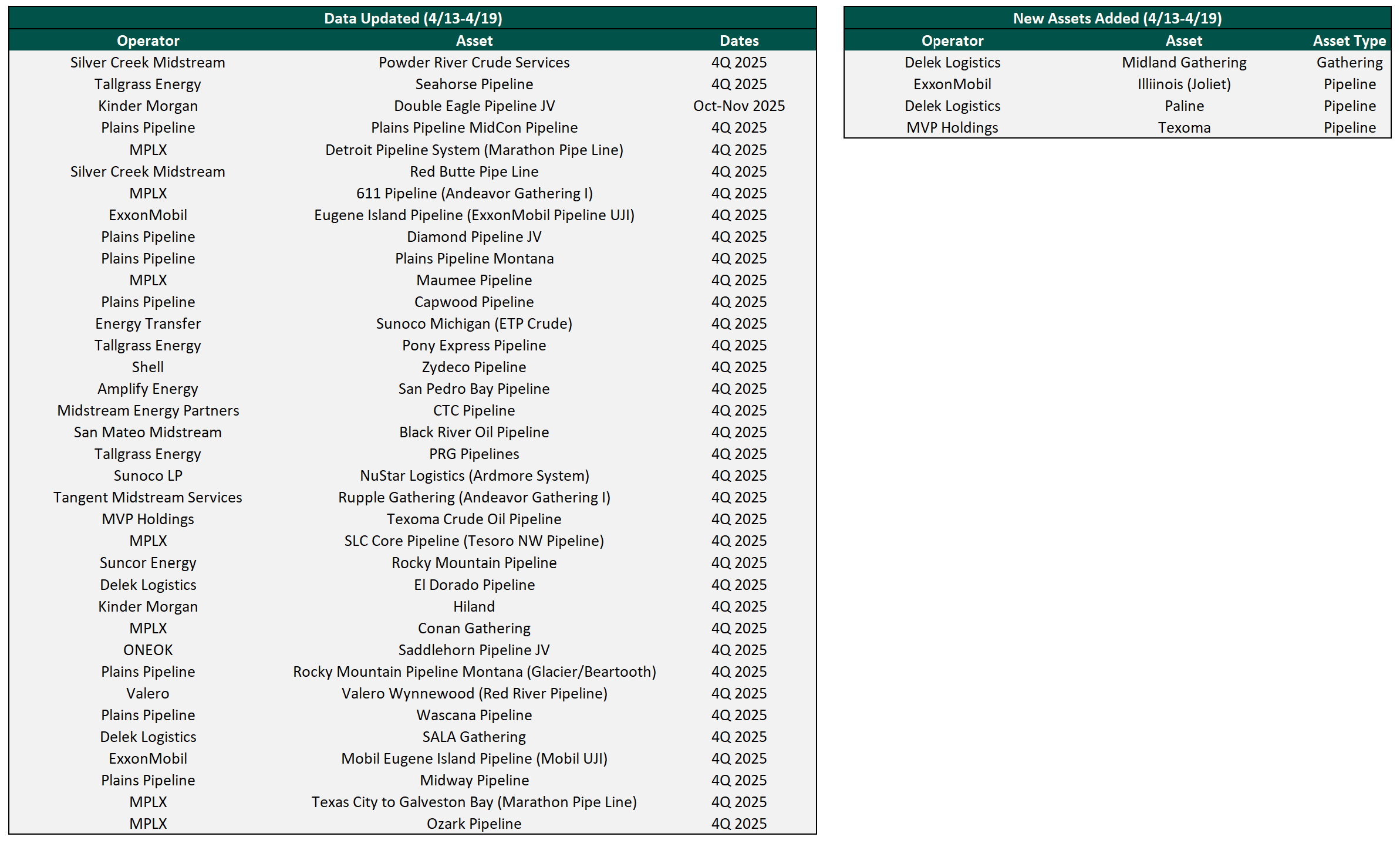
Plainview has over 300 assets with crude oil flow or transactional data on our platform and continues to add more each week. Data for existing assets under coverage are posted as soon as they become available. Below are the assets that were updated this week or newly added to coverage.