Enterprise Gets Aggressive with Permian Crude Volume Surge
Enterprise Products Partners appears to have rapidly intensified competition for Permian Basin crude by reconverting its Midland-to-Echo 2 (ME2) pipeline back to crude service in early 2026. This move followed the startup of the company’s Bahia NGL pipeline, which allowed ME2 to shift back away from natural gas liquids. Since the conversion, Enterprise appears to have aggressively marketed capacity, causing combined volumes on its Midland-to-E1 and ME2 pipelines to spike dramatically. In March, flows across the joint system approached 815,000 barrels per day (see figure below), pushing the lines remarkably close to their estimated nameplate capacity of 840,000 barrels per day.
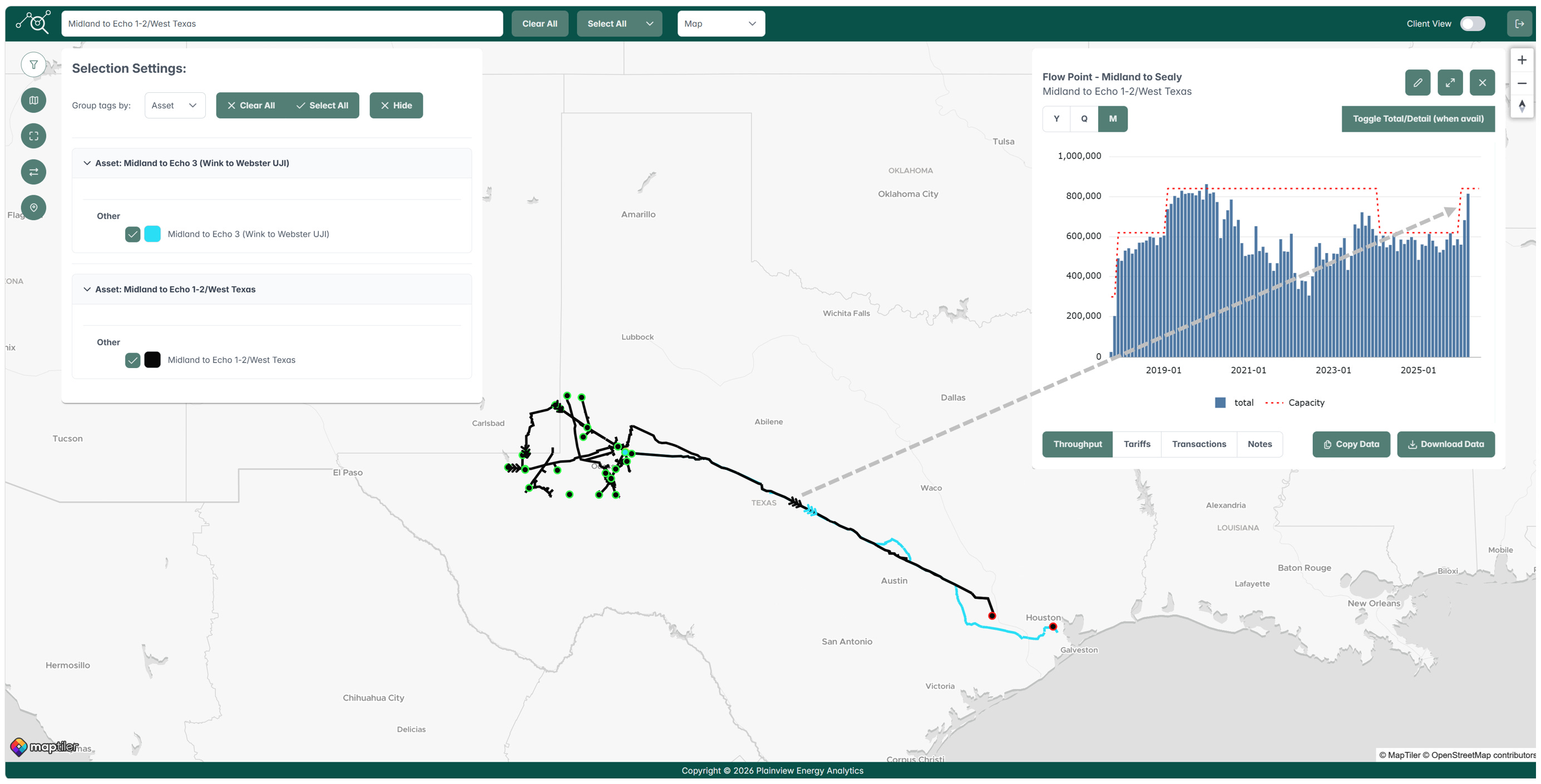
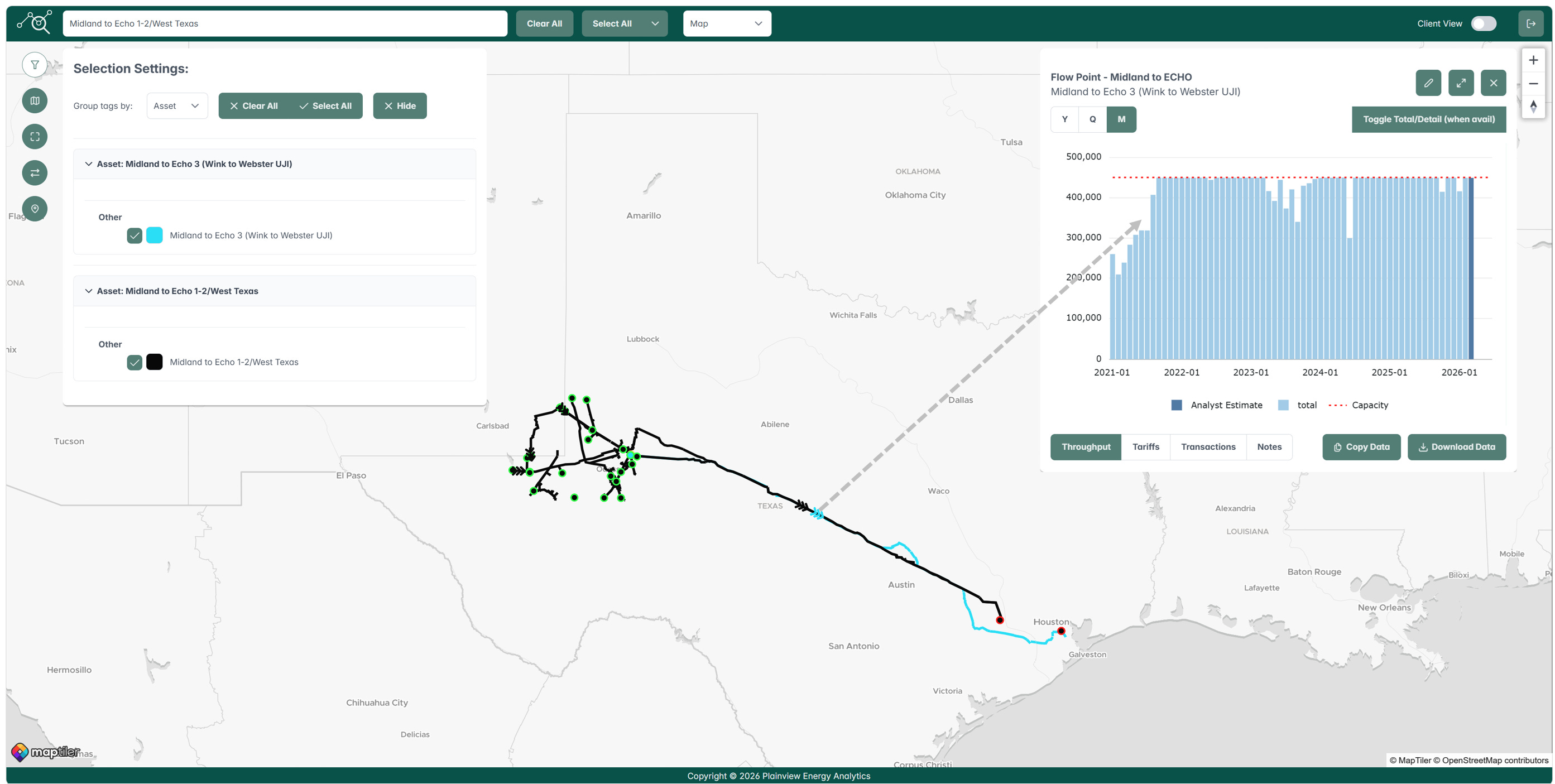
Because total Permian Basin production has not grown significantly during the first half of 2026, Enterprise is almost certainly pulling these massive volumes away from rival operators. The impact appears widespread across the region, as data does not yet show an obvious single, severe drop on any individual competitor line, suggesting Enterprise may be capturing market share incrementally from multiple pipelines. Meanwhile, the company’s separate Midland-to-E3 pipeline, which holds an undivided joint interest in the Wink-to-Webster system, continues to run completely full, consistently moving about 450,000 barrels per day as it has since late 2021.
Phillips 66 Sweeny Refinery’s Shifting Crude Oil Supply
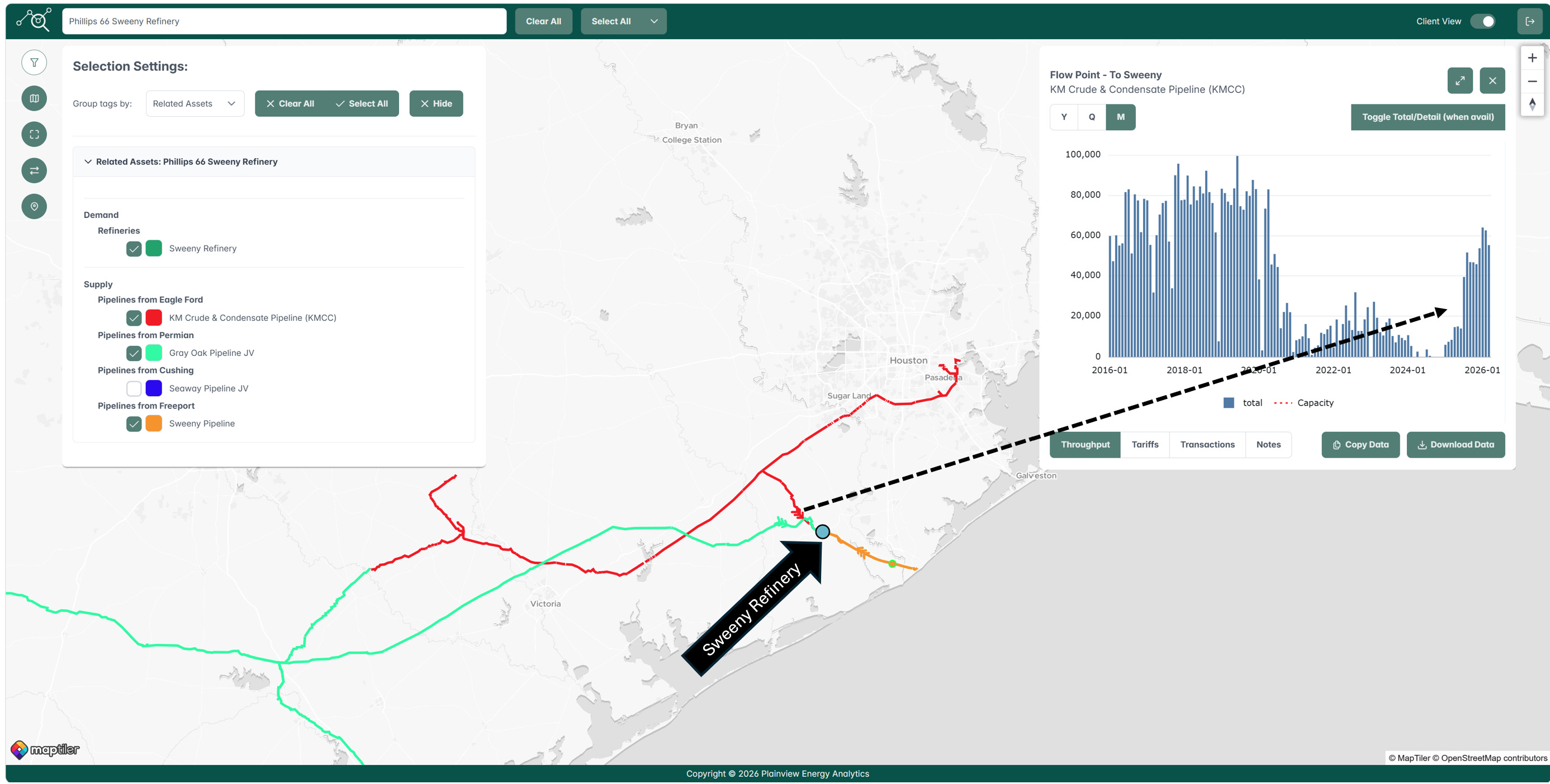
The Phillips 66 Sweeny Refinery, which operates at a daily crude oil capacity of approximately 265,000 barrels, has recently experienced a notable shift in its crude oil supply. Historically, the facility has relied on three major pipeline sources: the Sweeny, Gray Oak, and KMCC pipelines. Phillips 66’s wholly owned Sweeny pipeline (the orange line in the figure below) remains the refinery’s primary anchor, consistently delivering about 150,000 barrels per day of combined waterborne imports from the Freeport marine terminal and Canadian crude coming off the Seaway Pipeline. However, the balance of the refinery’s supply is undergoing a reallocation between the other two competing pipelines.
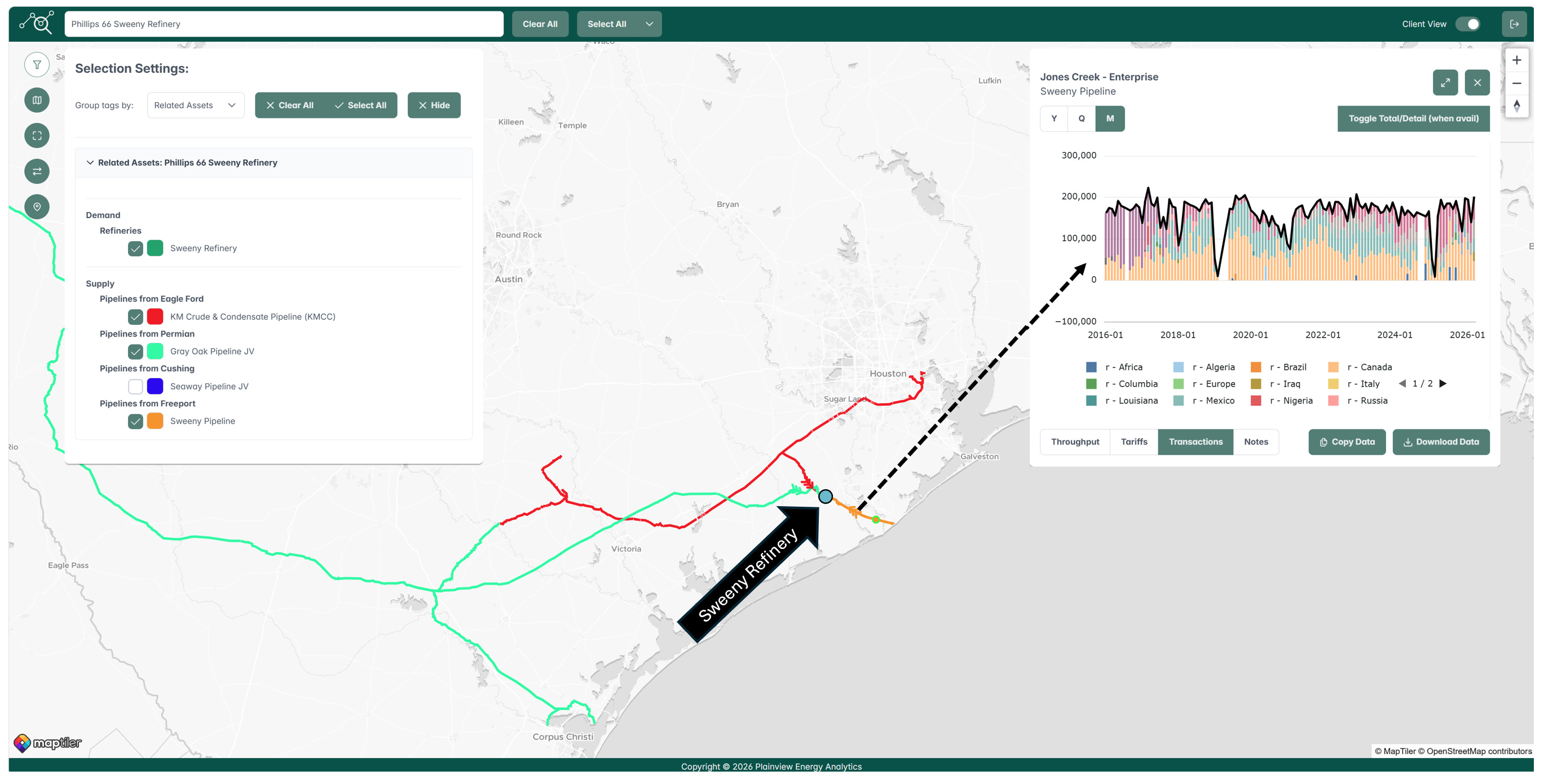
In recent months, volumes from the Gray Oak pipeline (green lines in figure below) dropped significantly from just under 100,000 barrels per day to around 40,000 barrels per day. This missing volume has shifted over to Kinder Morgan’s KMCC pipeline (red lines in figure below), boosting its crude deliveries into Sweeny to over 60,000 barrels per day. This reversal is surprising because Phillips 66 holds a 6.5 percent ownership stake in Gray Oak but owns no part of KMCC. The shift could be driven by highly competitive tariff rates offered by KMCC or a strategic desire for more Eagle Ford barrels, although Gray Oak can also source Eagle Ford barrels. The lower usage on Gray Oak is particularly interesting as it comes at a time when some investors have pressured Phillips 66 regarding the potential sale of some of their midstream pipeline assets.
Flow/Transaction Updates and New Assets Under Coverage
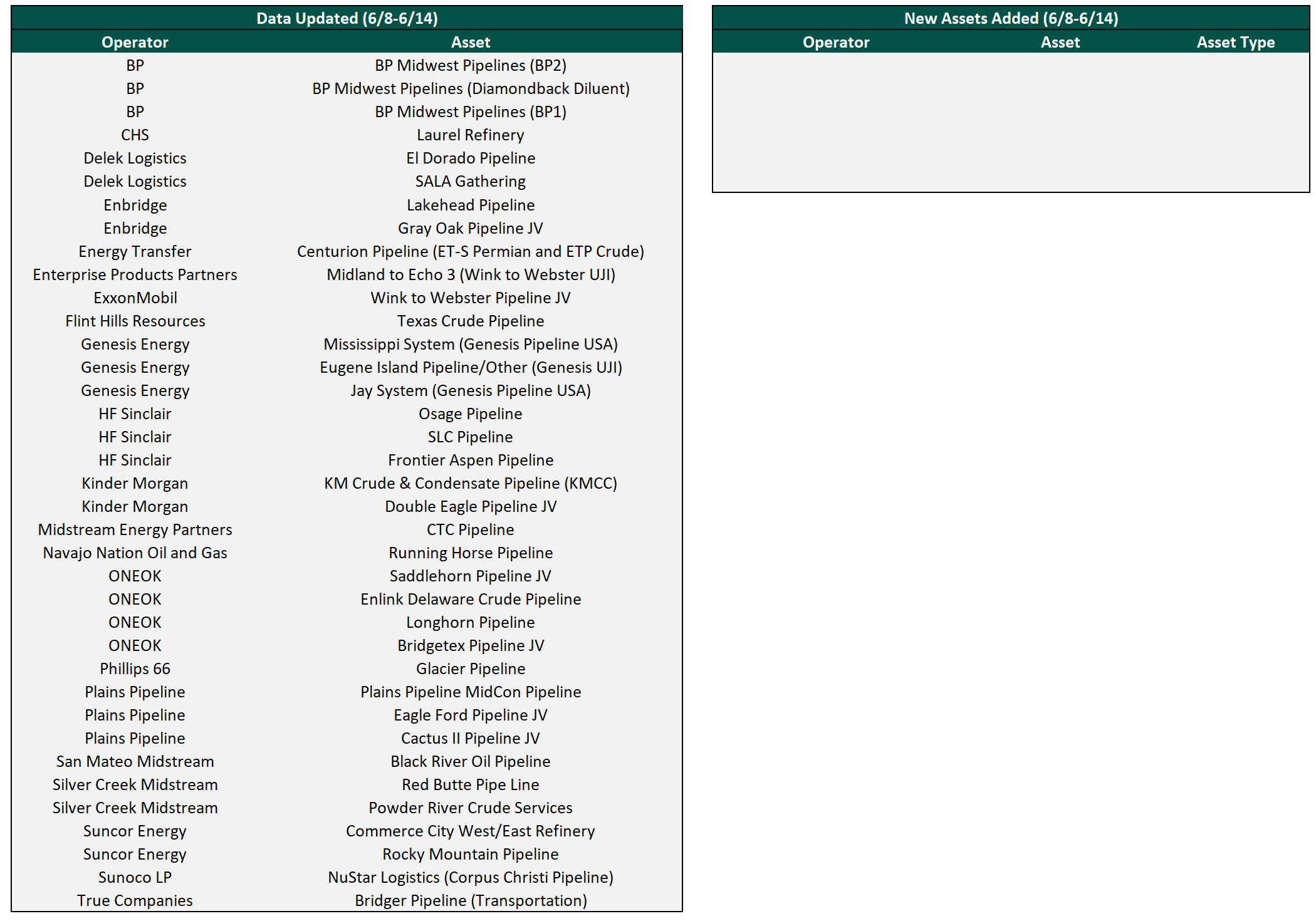
Plainview has over 400 assets with crude oil throughput or transactional data on our platform and continues to add more each week. Data for existing assets under coverage are posted as soon as they become available. Below are the assets that were updated this week or newly added to coverage.