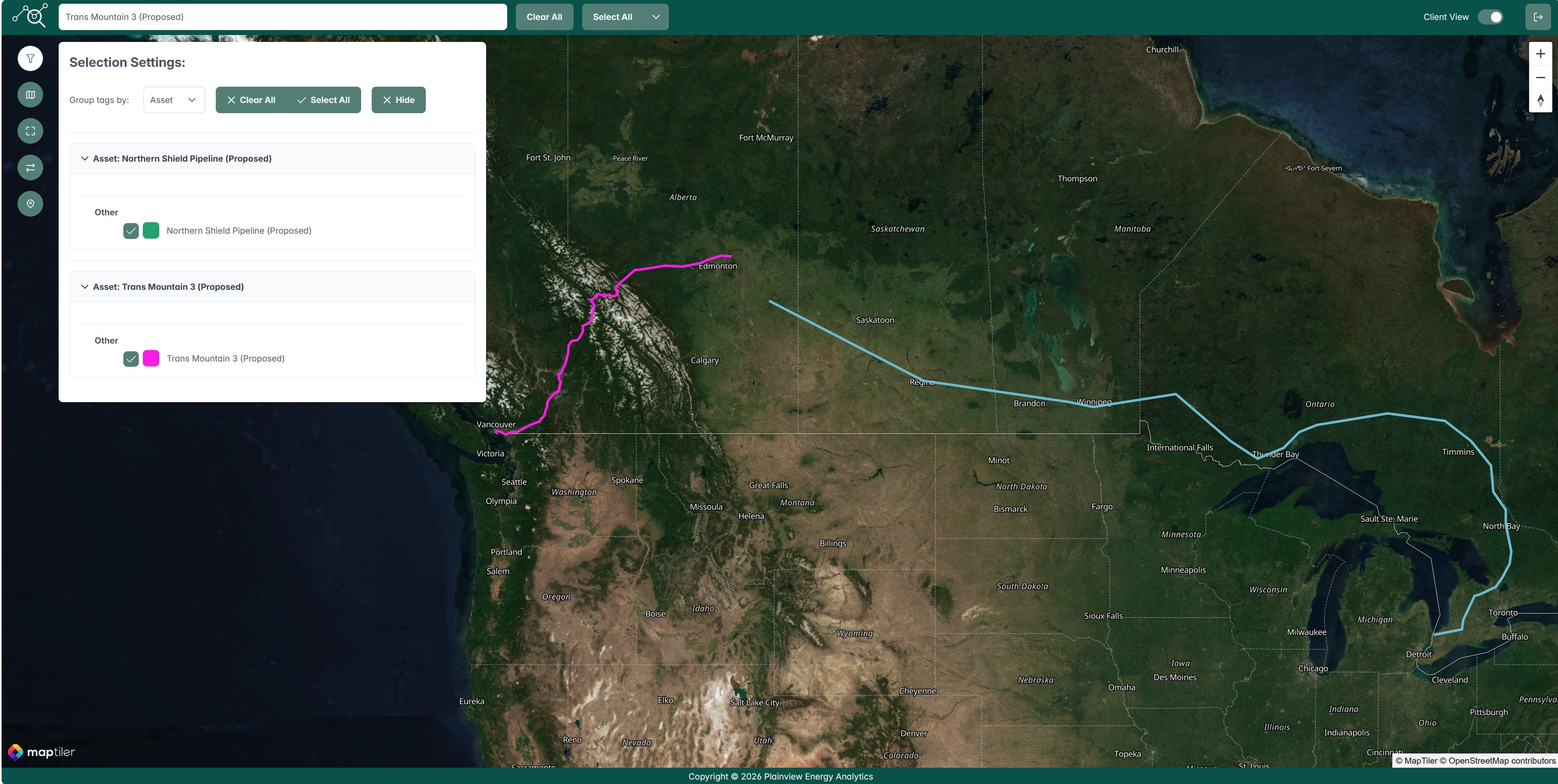
The Canadian government recently unveiled two major state-sponsored crude oil pipeline egress projects. An eastbound proposal, named the Northern Shield Pipeline (blue line in figure below), aims to move 500,000 barrels per day (expandable to 800,000 bpd) of crude from Hardisty, Alberta, to Sarnia, Ontario, to supply eastern refineries domestically. A separate proposal is a massive westbound project that plans to leverage the existing Trans Mountain corridor, carrying approximately 1,000,000 bpd of new crude to the West Coast (pink line). While both projects are designed to secure and diversify Canada's energy transport network, they come with substantial logistical, political, and financial complexities that raise critical questions regarding their commercial viability.
Northern Shield Pipeline
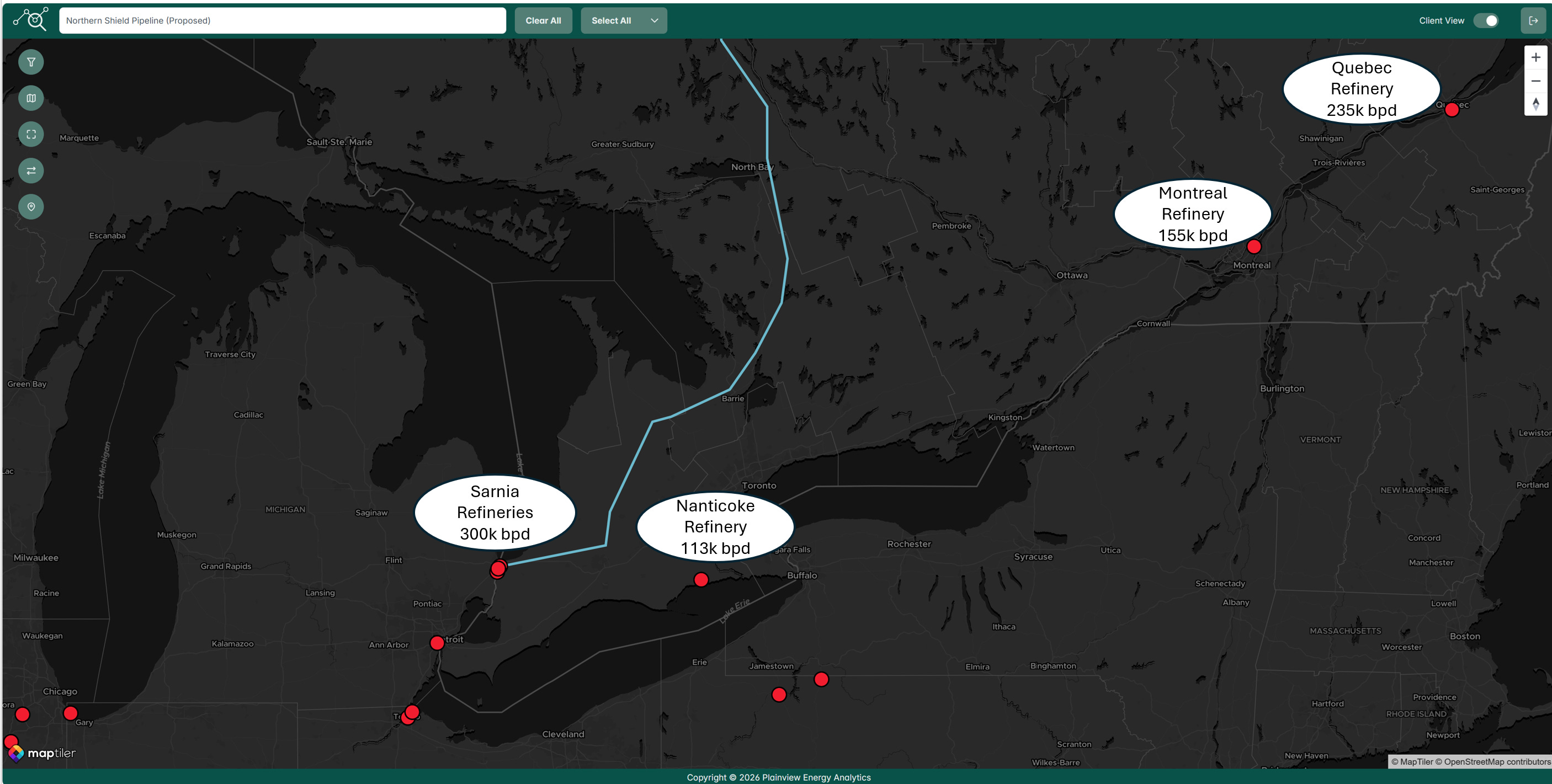
The Northern Shield Pipeline is engineered to directly feed the 300,000 bpd of refining capacity in the Sarnia area (see figure below). The pipeline has the added potential to indirectly serve an additional 500,000 bpd to refineries in Nanticoke, Montreal, and Quebec via third party pipelines and ship traffic up the St. Lawrence River. A potential strategic advantage of Northern Shield is its entirely domestic route. By keeping the pipeline completely within Canadian borders, the government avoids the complex cross-border tariffs and regulatory risks that have recently arisen with energy infrastructure traversing through the United States.
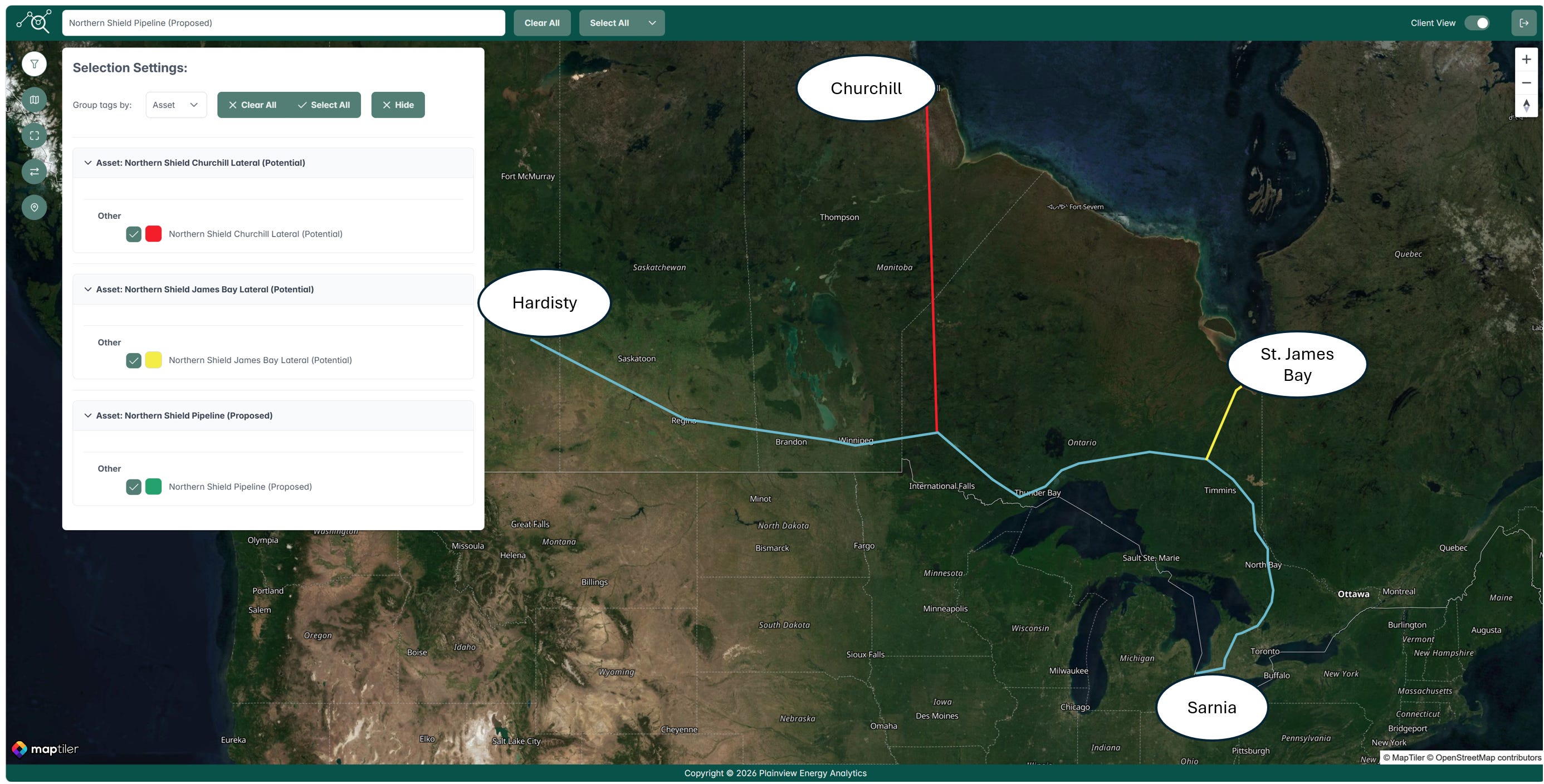
However, outside of its utility as a geopolitical safety net, the commercial viability of Northern Shield is a significant long shot. Assuming it requires entirely new pipeline construction, the project will likely carry an exorbitant price tag just to serve the same Ontario refineries already economically fed by Enbridge pipelines. Furthermore, the project lacks a robust, direct export option to diversify demand beyond these local refineries. While the government has vaguely mentioned possible future northern laterals to Hudson Bay or James Bay (pictured below), analysis indicates these routes would be prohibitively expensive and likely impractical. Without them, Northern Shield will struggle to secure long-term commitments from refiners who can already source crude competitively.
The Trans Mountain Triplet
In contrast, the new westbound Trans Mountain corridor project focuses heavily on global export diversification by routing barrels to the Pacific coast. While it largely follows the existing Trans Mountain right-of-way, it introduces a critical structural improvement: terminating further southwest at Roberts Bank. By extending past the shallow-water bottleneck points that limit the existing Westridge export facility (see below), this new terminal would possess the deep-water capacity to load Very Large Crude Carriers (VLCCs). This gives the project a distinct advantage over the existing Trans Mountain route, unlocking higher-volume maritime access to premium Asian and global markets that were previously restricted to smaller, less economic vessels.
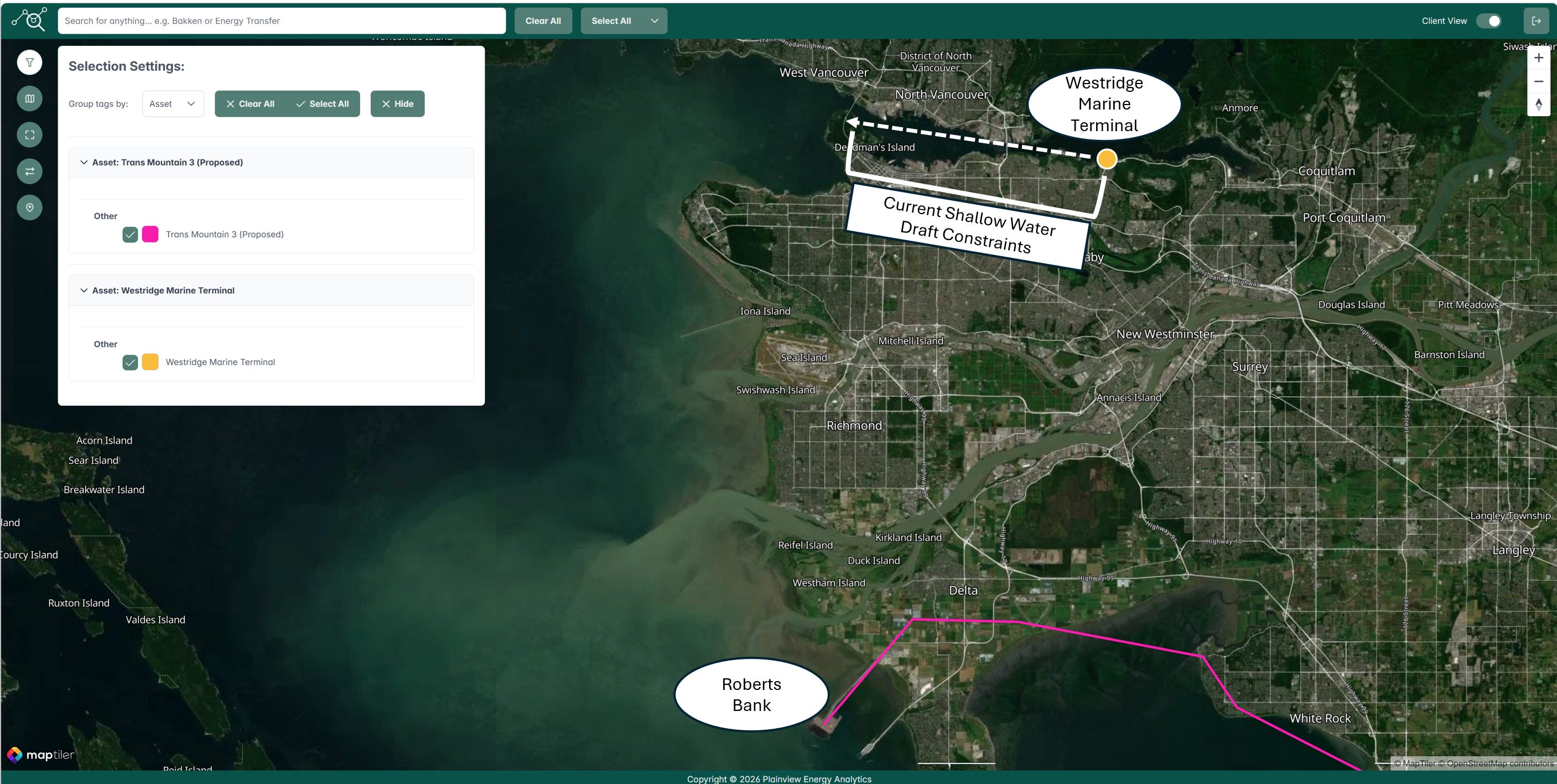
Despite this logistical advantage, the project’s financial outlook is highly precarious, with preliminary costs estimated around $30 billion USD. Even under optimistic assumptions regarding contracting, budget management, and competitive tariff rates, back-of-the-envelope calculations indicate weak economics. Cost-to-EBITDA multiples sit in the mid-teens (see below), metrics that would deter almost any private corporation. Furthermore, securing commercial commitments from shippers will be a steep uphill battle. Given the Canadian government’s track record with severe overruns, shippers will resist signing cost-escalation agreements that could drive up their long-term tariff rates.

Flow/Transaction Updates and New Assets Under Coverage
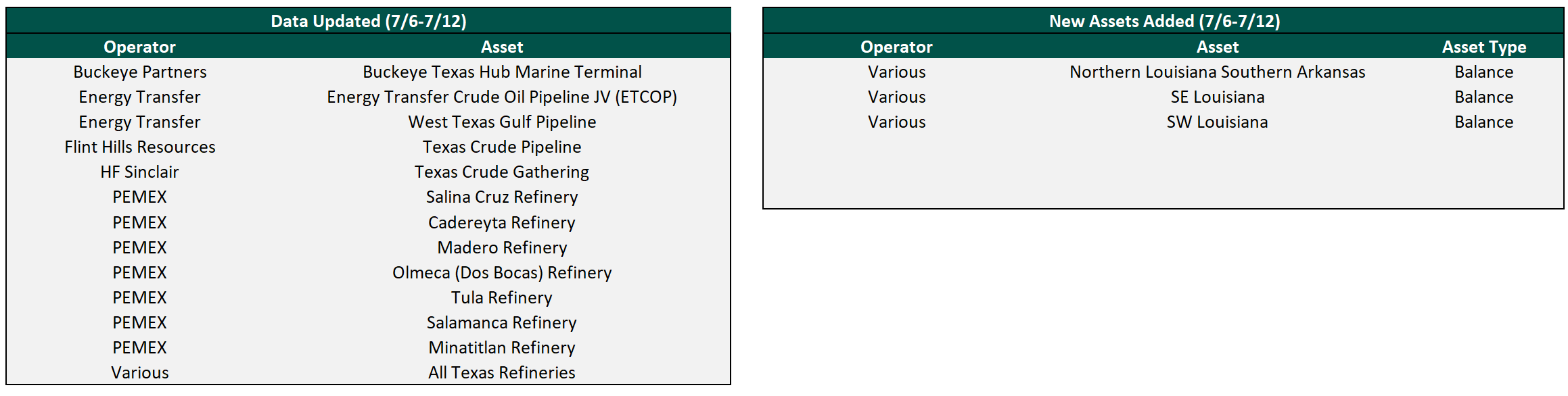
Plainview has over 400 assets with crude oil throughput or transactional data on our platform and continues to add more each week. Data for existing assets under coverage are posted as soon as they become available. Below are the assets that were updated this week or newly added to coverage.