BWC Terminals has brought online the first phase of its newly built terminal in Pascagoula, Mississippi, a project developed specifically to serve Chevron’s Pascagoula refinery. Construction began in September 2025 on the former Mississippi Phosphates Corporation site, and the first assets entered service in July 2026. Chevron has exclusive use of the facility and BWC plans a ribbon-cutting on November 17 to mark the completion of Phase 1.
Phase 1 includes seven new storage tanks, a rail offloading system that can handle a 120-car unit train, and a new marine dock. A central focus appears to be giving the refinery a reliable way to receive waxy crude from Utah’s Uinta Basin, which moves by rail and must be kept heated to flow. The facility’s air permit includes six natural gas-fired boilers for railcar heating and two dedicated storage tanks for yellow wax crude, each holding about 110,000 barrels, which are likely among the Phase 1 tanks. The dock has received U.S. Coast Guard approval and is expected to be fully operational by the end of October (see photo below).
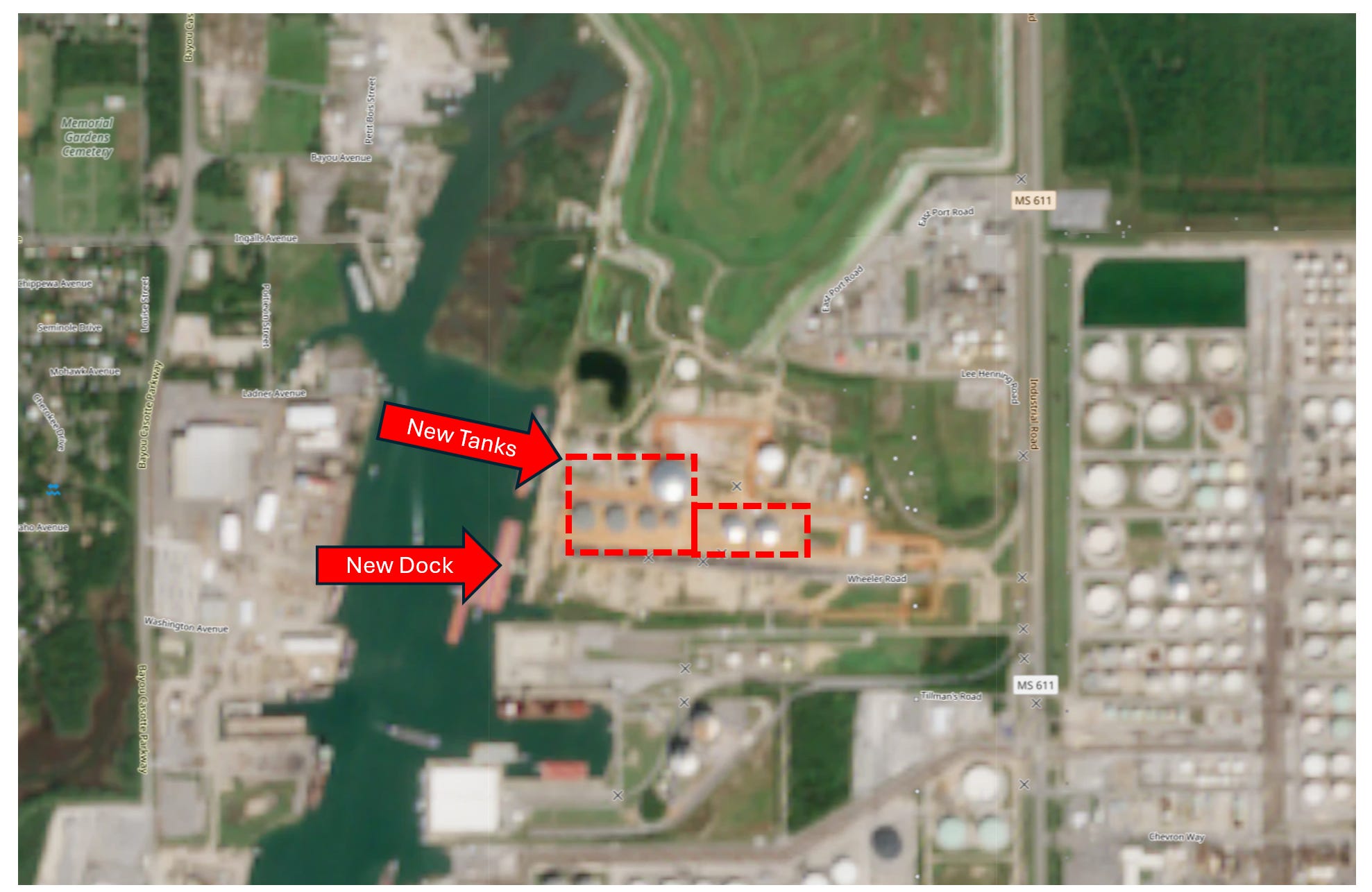
Image credit: Copernicus Sentinel data October 2026
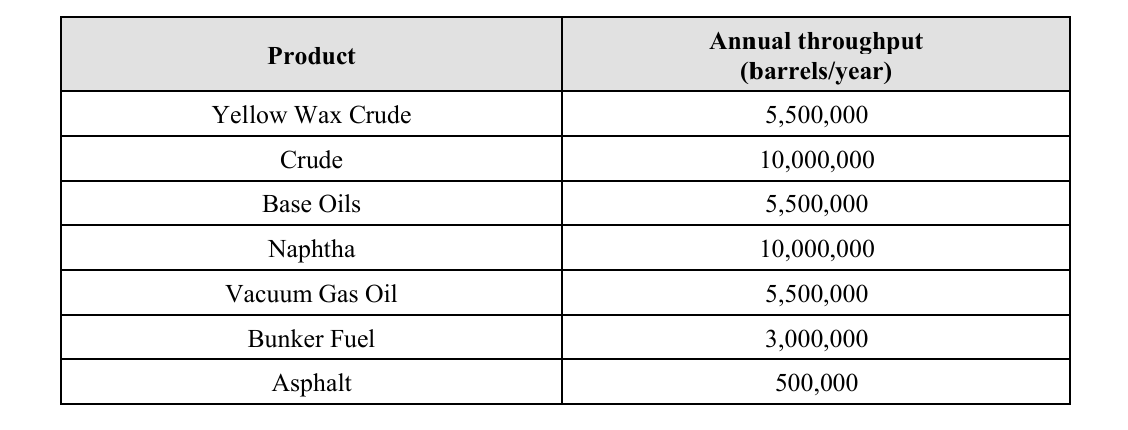
Phase 2 is expected to begin construction in early 2027 and appears designed to support Chevron’s planned refinery expansion at Pascagoula. That project, approved by Mississippi regulators in March 2026, will raise the refinery’s crude capacity from 361,000 to 394,000 barrels per operating day by removing bottlenecks at its crude units, with startup targeted for the third quarter of 2027. BWC’s air permit covers 20 storage tanks totaling roughly 4.1 million barrels, which implies up to 13 additional tanks in Phase 2. The permit caps annual throughput of crude at 10 million barrels and yellow wax crude at 5.5 million barrels, or roughly 42,000 barrels per day combined. That is in line with the roughly 33,000 barrels per day of new refining capacity (see table below).
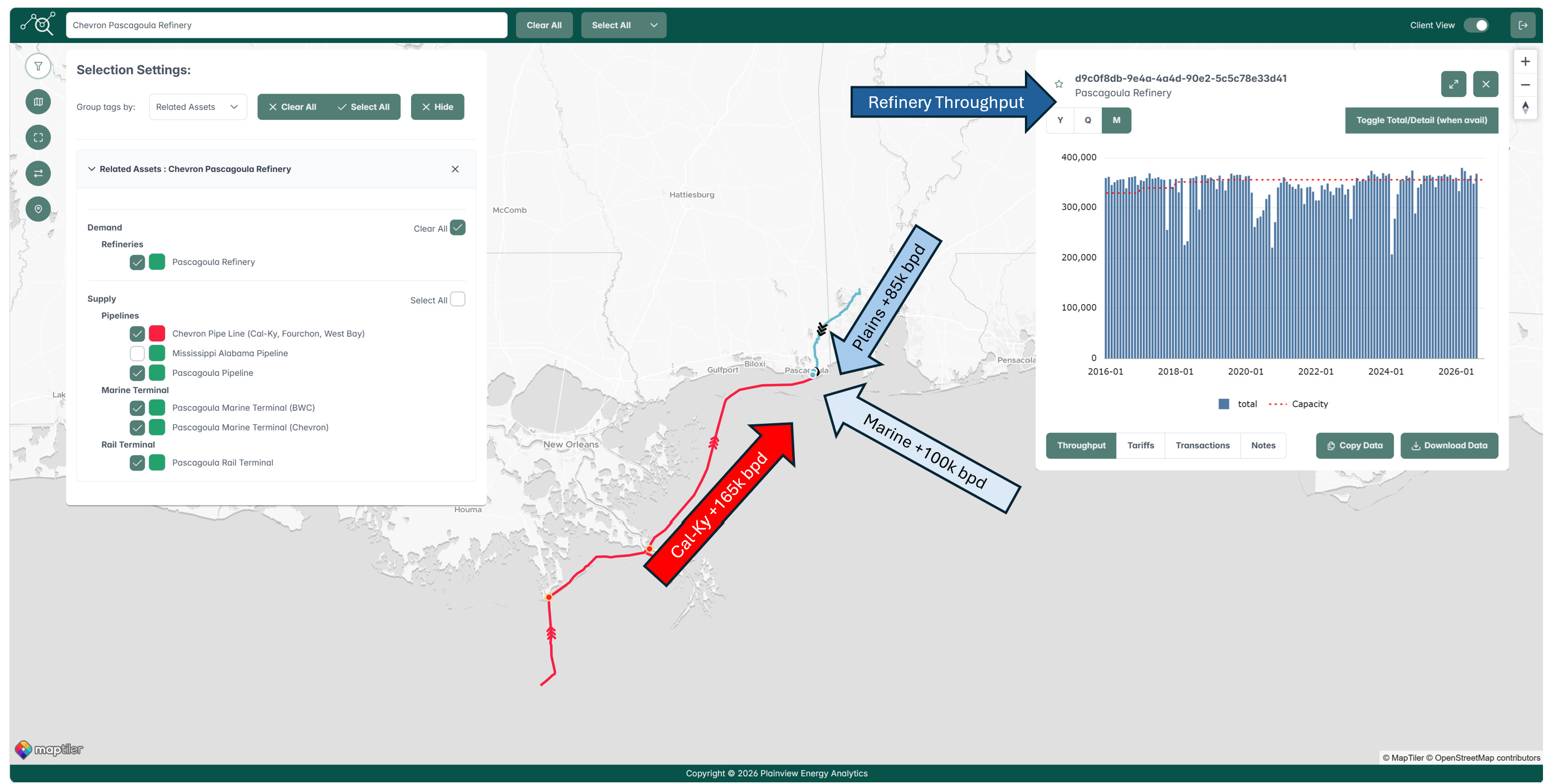
Refinery throughput data show Pascagoula running at or near full capacity, and in some months above nameplate (see below graph), so there is little spare room in the current system. Today, Pascagoula draws its crude from three main sources. The largest is Chevron’s wholly owned Cal-Ky pipeline system, which carries offshore Louisiana production through Chevron’s Empire terminal and on to Pascagoula via a subsea pipeline, moving around 165,000 barrels per day. The second is Chevron’s legacy marine terminal at the refinery, which handles roughly 100,000 barrels per day, mostly foreign imports. The third is Plains’ Mobile-to-Pascagoula pipeline, which brings ~85,000 barrels per day of crude imported through via a marine dock in Mobile, Alabama (see below). That route is likely used in part because marine import capacity at Pascagoula has been limited, a constraint the BWC dock could ease.
Taken together, the BWC terminal gives the Pascagoula refinery more flexibility in its crude supply, especially for Uinta waxy crude, and adds marine import capacity. In principle, that could shift some imports away from Mobile and reduce volumes moving through Plains’ Mobile terminal and Pascagoula pipeline. We think that is the less likely outcome. BWC terminal’s sizing, permit limits, and phasing all point to a project built mainly to feed the refinery’s 2027 expansion, with optionality as a secondary benefit, rather than one meant to displace existing supply routes.
Flow/Transaction Updates and New Assets Under Coverage
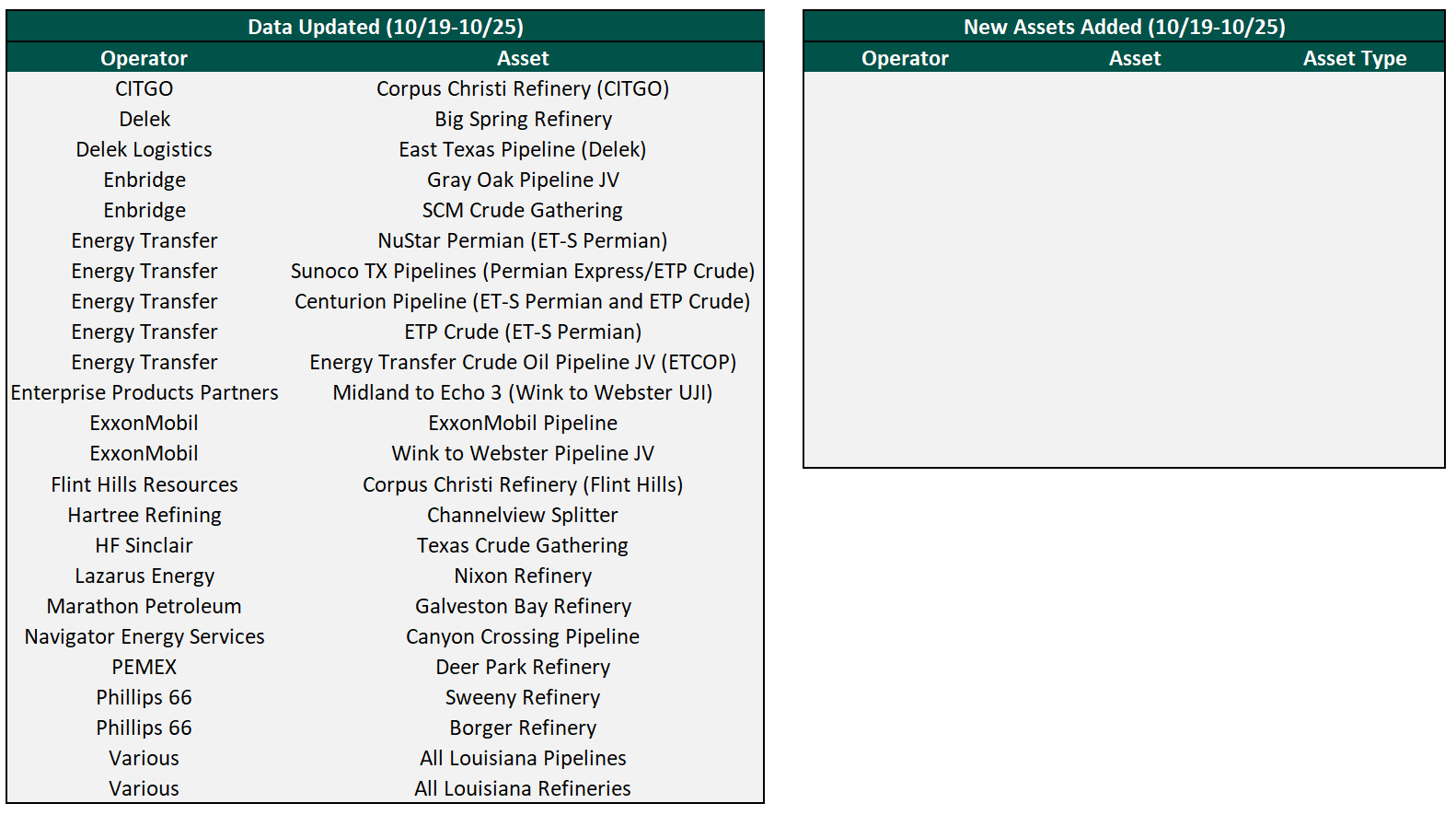
Plainview has over 500 assets with crude oil throughput or transactional data on our platform and continues to add more each week. Data for existing assets under coverage are posted as soon as they become available. Below are the assets that were updated this week or newly added to coverage.